Interested in learning how to understand, develop, and help others make strong financial decisions? Have you ever seen yourself as the expert of preparing personal or business taxes?
Accounting infuses the study of financial activities with economic fundamentals and business decisions such as planning, analysis and problem solving. As a crucial component to organizations in today’s business environment, majoring in Accounting should be the top choice on your spreadsheet.
4 + 1 MSAC Option Available!
Interested in combining an undergraduate degree in accounting with a master’s degree in a five-year program? See our Five-Year B.S./M.S. in Accounting Program where you can complete 150 credits and be better prepared for the Certified Public Accounting (CPA) examination. As an accounting major, you can begin taking graduate courses in your senior year, double counting two courses to save on tuition! Another summer internship opportunity will build your professional skills, and then you complete the requirements of the 30 credit Master of Accounting (MSAC) degree in your fifth year and be sought after by major accounting firms.
Classes you can take:
Computer Law and Ethics, Federal Taxation, Cost Accounting, Auditing, Corporate Finance, Management Statistics, Principles in Information Technology, Business Ethics
Each Ramapo Accounting major is assigned an advisor from among the Accounting faculty and receives personal attention regarding educational and career guidance such as information on corporate job opportunities, CPA certification, on-campus interviews, and internships available with large and small accounting firms.
Examples of internships for Accounting majors at Ramapo include American Cancer Society, Deloitte & Touche, EisnerAmper, Ernst & Young, Stryker Orthopedics, WithumSmith + Brown, and PricewaterhouseCoopers.
About Minor
The goal of the minor in Accounting is to provide all Ramapo College students with an option to develop a competency in the field of accounting which will complement their major program of study. Students with a minor in Accounting will be better prepared to work in their major fields because accounting is an integral part of all aspects of business. The importance of financial statements to a finance, marketing, management, economics, international business or information technology management major is a primary reason for business students to participate in the program. Business students with a minor in accounting are also eligible to join the 4+1 MSAC program and earn both their Bachelor’s degree and a Master’s degree in Accounting in five years.
Interested in becoming a Certified Public Accountant (CPA) someday? Ready to start the journey now, in a five-year B.S./M.S. in Accounting Program? If so, consider Ramapo College, where you can learn the knowledge and skills you need to succeed in the accounting profession and earn both a bachelor’s and master’s degree in Accounting in five years:
Complete your Bachelor of Science in Accounting in four years
Begin taking graduate courses in your senior year
Take a fifth year of full-time coursework and complete your Master of Science in Accounting
Earn the 150 credits required to sit for the CPA examination
Ramapo College accounting graduates are in high demand by local, regional and national accounting firms including the “Big Four” firms. Our graduates also go on to work in accounting and financial roles in corporations of every size as well as non-profit organizations and in the public sector.
The Anisfield School of Business is accredited by AACSB, a recognition that establishes ASB as a member of an elite group of business schools worldwide.
Advanced Auditing and Information Technology Systems
International Accounting and Reporting Issues
Advanced Federal Taxation Issues
Government and Not-for-Profit Accounting
Accounting (MSAC)
About M.S. in Accounting (MSAC)
Looking to take your career to another level as an accounting professional? If you have an undergraduate degree in business and are interested in pursuing a master’s degree in Accounting, this program may be for you. This 30-credit graduate program will allow you to attain advanced knowledge in financial statement analysis, auditing and accounting information systems as well as complete the 150 credits to be eligible for Certified Public Accountant (CPA) certification.
Ramapo College Accounting graduates are in high demand by local, regional and national accounting firms including the “Big Four” firms. Our graduates also go on to work in accounting and financial roles in corporations of every size as well as non-profit organizations and in the public sector.
The Anisfield School of Business is accredited by AACSB, a recognition that establishes ASB as a member of an elite group of business schools worldwide.
Students majoring in Theater and Film with a concentration in Acting learn about the skills needed to become a successful actor.
Required courses include VOICE AND MOVEMENT. Voice and Movement is a studio course designed for students wishing to explore and enhance their abilities as speakers, presenters, teachers, and performing artists. The course introduces and utilizes a range of text analysis techniques, physical and vocal modalities, speech exercises and theater games.
In a supportive and fun atmosphere, students are provided the tools to engage with a variety of poetic and dramatic texts and bring them to life in performance. To further integrate lessons learned in class, students attend 2-3 live performances over the course of the semester. Voice and Movement fulfills a General Education requirement in the Culture and Creativity category as it asks students to critically engage with products of culture, critically interpret history and society, question assumptions about individual and group identity and demonstrate logic and reasoning skills through in-class work, rehearsal, and various creative projects and assignments.
Are you fascinated by learning about the diversity of Africa’s people and their wide-reaching contributions to world culture? Do you strive to make the world a better place by being an active participant in the world community?
Africana Studies prepares you to be a global citizen in our technologically advancing world by developing your critical thinking skills, oral competence, writing ability, technological and ecological literacy in order to facilitate positive change for the betterment of the African Diaspora and humanity.
Classes you can take:
Introduction to African Studies, African American Social and Political Thought, Hip Hop and Society, African Americans in Film
Since many of your Africana Studies courses double-count, a large number of Africana Studies students choose to double major. For example, an Africana Studies major with literature, business, international studies, music, history or communications is recommended and a good way to diversify your knowledge base.
Looking for internship experience? Recent Africana Studies majors have participated in co-op programs with Harriet Jacobs Papers Project, Mahwah Museum, Center for WWII Studies & Conflict, Resolution Jewish Heritage Museum, New York Public Library, The Newark Museum, Englewood (NJ) One Community Black History Projects, and the New Jersey Historical Commission New Jersey Black Heritage Trail Program
About Minor
The African American Studies Minor focuses on African and African American history and culture related especially to the experiences of African people living in the Americas. The program provides students with knowledge and an understanding of an Afrocentric world view and traces the roots of oppression of African people. Additionally, the minor encourages students to continue their involvement in African American scholarship and make strong contributions to the increasingly multicultural American society by becoming proactive members of their communities.
Are you often the one finding the deeper meaning in books, movies, and television shows? Are you looking at the state of the country and telling yourself “there must be a better way”? And do you want to keep your options open for what comes after graduation?
If you said yes to any one of these questions, the American Studies major at Ramapo College could be the right choice for you.
As an American Studies major, you’ll examine all aspects of the United States – its prevailing myths and ideals, its growing role in the world, and its communities around class, gender, sexuality, race, and ethnicity. Our students graduate with broad cultural fluency and highly marketable skills in research and writing.
Classes you can take:
Native Americans, Museums in America, Hip Hop and Society, TV Noir and American Culture, Immigration to America, Discovering Digital History, Voices of Protest in Literature, American Musical Traditions, American Party Politics, Black Experience through Theater
AMER 214 – NATIVE AMERICANS
AMER 313 – MUSEUMS IN AMERICA: HISTORY, ART AND SOCIETY
Career Opportunities (text only without salary table)Hands-On Learning
Looking for internships or other “real-world” experience while in college? American Studies majors have participated in programs at the New York Public Library, Mahwah Museum, Jewish Heritage Museum, and New Jersey Historical Society; worked on New Jersey political campaigns; and have held positions at Ramapo’s own Jane Addams Papers Project and the American History Textbook Project. Looking to study abroad? American Studies majors have embarked on programs around the world while taking classes that count towards graduation at home. Our majors have presented their work at regional conferences and campus events, gaining marketable experience in endeavors that enhance their educations while expanding their resumés.
Anthropology supports the multicultural, international, experiential and interdisciplinary educational philosophy of Ramapo College. As such, Anthropology courses constitute a major component of the General Education program, besides serving the Anthropology minor. Most Anthropology courses count towards the International Studies major as well.Anthropology courses at Ramapo are concentrated in cultural anthropology, the sub-discipline of anthropology that emphasizes the role of culture in human life, and analyzes social and cultural differences and similarities throughout the world. By studying this field, students will become familiar with the diversity of cultural practices in the world, and the effects of global economic and political forces on the lives of people throughout the world.
Important components of anthropology are presented in an integrated manner. In many Anthropology courses, students are required to do field work assignments and to write papers based on this first-hand research.
Art History
About Art History
The Visual Arts major with a concentration in Art History provides a strong foundation in the field of art history, with courses in contemporary art, American art history, European art, African art, alongside foundational courses that introduce students to European and “non-western” traditions. The concentration includes an internship requirement, and students have interned at professional art galleries, museums and non-profits. The Capstone class, Advanced Research in Art History, allows the student to do a semester-long research project on a work of art in an area museum and to present their research to a group of peers. The Art History Concentration prepares students to go on to graduate school in art history, or to careers in museums, galleries, cultural institutions and the private sector.
Basic Sculpture, Gallery Management and Curating, Histories and Concepts of 20th Century Art, Art Since 1945, Africa and Cinema, American Art I: Contact to 1865, American Art: 1865-1945, European Avant-Garde Art & Design
The concentration’s emphasis on writing, research and critical thinking make it an excellent foundation for any future career. Two full-time faculty teach courses in art history, occasionally supplemented by adjuncts with particular specializations. Ramapo Gallery Director Sydney Jenkins teaches the course Gallery Management and Curating periodically, preparing art history concentrators and others for internships in arts professions. Professors integrate museum trips and visits to galleries into each course, allowing students to take advantage of the wealth of arts resources nearby.
Biochemistry
About Biochemistry
Do you get completely absorbed in finding out how living organisms harvest energy from their environment? Could you spend hours studying different organic compounds or DNA binding of bacterial proteins?
Biochemistry is derived from the disciplines of chemistry, physics and biology for understanding the processes that operate in cells and organisms and attempts to understand the uniqueness of complex living systems. The knowledge garnered from biochemical research has been applied to solve problems in areas ranging from agriculture to medicine.
The Biochemistry program curriculum is composed of multi-interdisciplinary course components including the areas of chemistry, biology, physics and mathematics.
Ramapo has modern laboratories for chemistry, biochemistry, genetics, molecular biology and physics that are utilized in the major. There are opportunities for you to do bench level research with faculty and internship and in-depth experiences occur in nearby industries such as Pfizer Pharmaceuticals, Avon Products, Inc., NJ Department of Environmental Protection, Monmouth County Park System and the New Jersey Meadowlands Commission.
Bioinformatics
About Bioinformatics
Are you driven by data? Would you love to use new technology to help prevent diseases or design new drugs and vaccines? Are you hooked on studying the structure and function of proteins? Bioinformatics is a modern interdisciplinary science that uses computational techniques to frame and resolve biological problems. Bioinformatics is practiced in the fields of molecular, personalized and preventative medicine, biotechnology and nanobiotechnology. It is revolutionizing the way medicine is done in the 21st century. Bioinformatics allows scientists to look at the “bigger picture” and use data to answer questions and detect trends to solve some of today’s most pressing scientific issues. For example, several Ramapo College graduates of the Bioinformatics program helped develop an mRNA vaccine against COVID.
Ramapo College gives you a unique interdisciplinary experience with exciting opportunities to combine your undergraduate degree with any of the Master’s programs offered within the Center for Data, Mathematical & Computational Sciences. The DMC 4+1 program puts you ahead in your career while it is just starting. Email Scott Frees at sfrees@ramapo.edu. for information on the 4+1 program.
Benefits
Earn your Master’s in Data Science or Computer Science in only one extra year
30% savings on your graduate tuition
Earn graduate credits towards your 128 credit Bachelor’s degree
Classes you can take:
Bioinformatics, Advanced Bioinformatics, Genetics, Cell & Molecular Biology, Computer Science, Problem Solving with Python, Data Science, Database Design, Biochemistry, Genomics, Machine Learning, Big Data Programing, Research Design & Statistics, Discrete Structures, Energy & Society, History & Systems of Psychology
The bioinformatics curriculum has been designed to lay a solid multidisciplinary foundation in modern life sciences, chemistry, mathematics, as well as cutting-edge computer technology using informatics as an interdisciplinary, cohesive tool. In advanced courses, students are trained to manage biological data, develop computational methods to analyze and interpret data, solve scientific problems and make new discoveries. In addition to the scientific and technical concepts, students are also exposed to the social, business, and ethical aspects of science.
Career Opportunities (text only without salary table)
The career-oriented Bioinformatics program prepares the students to obtain employment in industry and academia, pursue graduate education, careers in medicine and related disciplines, or engage in research in this technological field of great demand. Bioinformatics skill sets are one of the most sought-after in the current market. Therefore, students graduating with this major have many attractive career options.
In addition to the pharmaceuticals and healthcare companies, potential employers include research labs in academia, hospitals, governmental agencies, software industry, biotechnology sector, bioinformatics and genomics service industries and many more. Bioinformatics jobs offer decent salaries and are easy to find. Some of the job placements of RCNJ Bioinformatics majors in the recent years include: research or analytical scientists, computational biologists in Pfizer pharmaceuticals, Suvoda, GSK, Bristol-Myers Squibb, and Santa Cruz Biotechnology.
Some Ramapo Bioinformatics graduates choose to join medical or dental schools. Many others are accepted into Ph.D. programs, mostly with full scholarships. Some of the institutions of higher education in which RCNJ Bioinformatics graduate have been accepted in are: Columbia University, Johns Hopkins University, Harvard University Dental School, RWJ Medical School, Georgia Institute of Technology, Yale University, and University of Pennsylvania.
Ramapo College is one of the few undergraduate colleges in the US and the first in New Jersey to offer a baccalaureate degree in Bioinformatics. Ramapo has well-maintained modern laboratories for bioinformatics, computer science, molecular biology, biochemistry, and genetics that you will use throughout your Bioinformatics program.
Bioinformatics is practiced in the fields of molecular, personalized and preventative medicine, biotechnology and nanobiotechnology. Applying this powerful new technology can help to prevent, diagnose and treat inherited and other diseases, design new drugs and vaccines, shorten the development cycle of new medicines and much more.
As a student of Bioinformatics, you will be assigned at least three separate research projects during your junior and senior years. These projects involve application of interdisciplinary knowledge and skills learned during the semester to solve biological problems. In addition to incorporating research into the curriculum, the bioinformatics program provides extra-curricular research opportunities. RCNJ bioinformatics faculty members are actively engaged in research and encourage involving undergraduate students in their research projects. Several of these research efforts represent cross-disciplinary collaborations, for example, between computer scientists and biologists. You will also be encouraged to present your research findings at conferences and publish your accomplishments in peer reviewed scientific journals. Many of Ramapo College bioinformatics students have won awards and co-authored publications in international peer-reviewed journals for the research that they have performed with Ramapo College faculty.
If you’re interested in gaining internship experience, previous Ramapo students have participated in programs with the New York Blood Center, Pfizer pharmaceuticals, Cornell University, Texas A& M University, Vanderbuilt University, and other companies and institutions.
About Minor
The Bioinformatics minor provides Ramapo College students with an opportunity to develop bioinformatics skills, which will complement their major program of study. Students with a minor in Bioinformatics are expected to be better prepared for professional schools, graduate programs and research oriented jobs in industry and academia. The minor also offers a more thorough preparation for the doctoral programs.
Biology
About Biology
Biology is the scientific study of living things. The biology program at Ramapo College addresses a wide range of biological topics and fields, spanning molecular, cellular, organismic, community and evolutionary perspectives. Students gain experience in problem-solving and data collection & analysis in the classroom, laboratory, and field, while also building other essential academic skills such as writing and oral communication.
Graduates of Ramapo College’s biology program, many of whom go on to graduate school, follow a wide variety of career paths, including those in medicine and other health areas, pharmacy, food science, horticulture, ecology, research, education, government organizations, and more.
Classes you can take:
Genetics, Microbiology, Field Botany, Angiosperms, Evolution, Immunology, Avian Ecology, Paleontology & Paleoenvironments, Food Science, Nutrition and Human Metabolism
Hands on learning occurs in all Biology laboratories and other science laboratories. There are additional opportunities for hands on learning with research with faculty as well as coops.
About Minor
The Biology minor is organized to give our students a firm foundation for understanding the central principles of the study of life processes, yet it permits student flexibility to select courses which reflect their own particular areas of interest. In the core Biology courses, students examine principles of change and continuity, inheritance and evolution, unity and diversity of organisms and their interaction with the environment and the impact of the environment on all life forms.
Business Analytics studies data in order to identify patterns or trends that can then be used to predict future patterns or trends, allowing businesses to make better decisions. We live in a time when large amounts of data are being collected, in almost every aspect of society—and there is a tremendous demand for people with analytics skills. The U.S. Bureau of Labor Statistics predicts a strong demand for people with business analytics skills well into the next decade.The Business Analytics minor curriculum has two required courses: Business Analytics I and Business Analytics II. The Business Analytics I course provides students with the fundamental concepts and tools needed to understand the emerging role of business analytics in organizations. The course covers managerial statistical tools in descriptive analytics and predictive analytics, including probability distributions, sampling and estimation, statistical inference, and regression analysis. Students also learn how to communicate with analytics professionals using basic data visualization techniques to effectively use and interpret analytic models and results for making better business decisions. The second required course, Business Analytics II, provides students with advanced concepts and tools needed to understand the role of business analytics in organizations. Topics would include forecasting, risk analysis, simulation, data mining, and decision analysis. Emphasis is on applications, concepts and interpretation of results as well as conducting statistical analyses. The BA minor also consists of three electives that students can use to develop skills and knowledge in a specialized area of business analytics.
Do you want to learn knowledge and skills that will allow you to contribute to advances in health, food and energy production, environmental and forensic analysis, and next-gen materials technology? Do you want to learn methods and techniques that will prepare you to work on cutting-edge research in academia, government, or industry?
Chemistry is the central science that spans and interacts with physics and biology. Chemistry majors are prepared to step into the job market immediately after graduation or to continue their studies in challenging graduate programs, medical school, dental school, or other professional studies. The study of chemistry coupled with secondary teaching certification is excellent preparation for teaching in high school.
For more information about the chemistry and biochemistry majors at Ramapo College, please click here: https://www.ramapo.edu/tas/chemistry-and-biochemistry/The chemistry curriculum begins in the first year of study with General Chemistry I and II courses that provide a survey of the fundamental ideas and topics in chemistry. In the second year, students continue to build on their mathematical and physical foundation, and they learn how organic compounds are synthesized in the lab and in nature. In the third year, the curriculum emphasizes analysis and characterization by delving deeper into the physical characteristics of materials and showing how to analyze and measure their properties. In the final year of the curriculum, chemistry students apply their fundamental knowledge to specialized areas of chemistry such as biochemistry, inorganic chemistry, and medicinal chemistry.
Career Opportunities (text only without salary table)Hands-On Learning
Ramapo has brand new laboratories for chemistry, biochemistry, genetics, molecular biology, and physics. You’ll have the opportunity to do research with faculty in the Research Honors Program. Chemistry students are able to conduct research with a faculty member in specializations such as surface chemistry, organometallic chemistry, biochemistry, peptide chemistry, analytical chemistry, and environmental chemistry. Computer labs are available to you to supplement what you’ve learned in lectures and laboratories.
Chemistry majors can take part in Ramapo’s cooperative education program to gain industrial work experience at local facilities such as Avon Products, Inc., NJ State Police Office of Forensic Sciences, Bergen County Vo-Tech Schools, Nathan Kline Institute, Johnson & Johnson, and Pfizer Pharmaceuticals.
Junior and senior chemistry students can participate in the teaching assistantship program where they can help students learn laboratory skills and methods.
About Minor
The chemistry minor at Ramapo gives its students an in-depth grasp of theoretical concepts as well as a variety of practical skills. Many of the scientific advances of this modern age are in interdisciplinary areas such as biophysics, materials science, molecular biology, medicinal chemistry, protein biotechnology and environmental science. See Chemistry Minor Requirements >
Chiropractic
About Chiropractic
Chiropractors get people back on their feet through alternative medicine. So in this combined articulation agreement program, you’ll learn all about the ins and outs of soothing a bad back or irked neck. But first things first. As a freshman, you might start as a Biology or a Biochemistry major. You spend your first three years at Ramapo College and your fourth year at the Northeast College of Health Science. If you’re interested in this program, you’ll apply during your junior year at Ramapo.
Classes you can take:
Bio-organic Chemistry, Fundamentals of Biology, Fundamentals of Chemistry, Statistics, Social Issues, Precalculus, Ecology, Anatomy & Physiology
Career Opportunities (text only without salary table)Hands-On Learning
You’ll find well-equipped modern laboratories at Ramapo, which include computer rooms, computerized biology and physiology labs, and a student research lab, so you can explore the many aspects of biological sciences through your courses and as a participant in faculty research.
Want to hang out with other pre-med and pre-health students? Come join our Pre-Med Club or our medical honors fraternity, Phi Delta Epsilon.
Civic and Community Leadership
About Civic and Community Leadership
Representative of Ramapo College’s curricular tradition of cultivating student engagement in civic, local, state and international communities, the Civic and Community Leadership (CIVL) minor brings together coursework that engages students and graduates in the public work of building democracy.
As the founder and co-director of the Center for Democracy and Citizenship, author Harry C. Boyte’s scholarly work on civic engagement and higher education is foundational for reconceptualizing civic learning. He writes: “We need to move beyond narrow views of citizenship as voting and voluntarism, and reinvent citizenship as public work, work that explicitly and intentionally prepares our students (and ourselves) to be builders of democracy, not simply helpers, voters, analysts, informers or critics of democracy.”*
The selection of courses in the Ramapo College CIVL minor creates an opportunity for students to examine their potential for leadership within a number of domains, including interpersonal styles of leadership, ethical traditions, domestic and international politics, and social justice. Through the satisfactory completion of specific elective course offerings, students are able to situate this broad foundation within the field they wish to pursue.
*Democracy’s Education: Public Work, Citizenship, and the Future of Colleges and Universities (2015)In addition to the core courses, the Civic and Community Leadership minor features an array of electives across many majors.
Career Opportunities (text only without salary table)Hands-On Learning
Students minoring in Civic and Community Leadership have abundant opportunities through their courses to experience hands-on learning. In particular, in CIVL 301, students have an opportunity to design their own non-profit organization to address and educate around a social issue that is of importance to them.
Clinical Lab Science (CLS)
About Clinical Lab Science (CLS)
Would you be interested in being a healthcare detective? Picture yourself viewing tissue samples with a microscope to identify a certain disease or illness?
By studying Clinical Lab Science, medical laboratory scientists use their knowledge and skills in science, biotechnology and medicine to provide essential information to physicians and other health care professionals about the presence, extent, or absence of disease, as well as effectiveness of treatment.
Career Opportunities (text only without salary table)Hands-On Learning
This program is jointly sponsored by the School of Theoretical and Applied Science (TAS) of Ramapo College and the School of Health Professions of the Rutgers Biomedical and Health Sciences (Rutgers-SHP). Students must complete 96 credits including the General Education requirements, TAS requirements, and a preprofessional core. Students who transfer to Ramapo College must complete 48 credits at Ramapo, 33 of which are science and math courses in the major before completing the program at Rutgers-SHP. They then complete a 45-credit professional program at Rutgers-SHP. This latter part takes 15 months starting in the summer after the junior year.
Some examples of clinical placements for Clinical Lab Science majors include: Valley Health Systems, Englewood Hospital and Medical Center, Hackensack University Hospital, Chilton Hospital and hospitals in New York City such at Memorial Sloan Kettering Cancer Center and New York-Presbyterian Hospital.
Communication Arts (General)
About Communication Arts (General)
Are you interested in how new technologies and the globalization of media are blurring the lines between previously distinct areas of media production and reception? You should look into the Communication Arts Major and concentrations offered at Ramapo College.
The Communication Arts Major prepares students for a richly interdisciplinary field that exists at the intersection of media, film, and culture. To prepare you to produce outstanding creative work in an increasingly diverse society, the curriculum is both grounded in the liberal arts and committed to teaching the principles, aesthetics and tools of the discipline through the development of new pedagogies based on digital interactive multimedia technologies.
Digital Culture, Media and Technology, The New TV Criticism, Newswriting, Motion Graphics and Title Design, Media Sports and Society,The Social Documentary, Graphic Design, Photojournalism, Global Workplace
Career Opportunities (text only without salary table)Hands-On Learning
Interested? The communication arts major offers five comprehensive programs in the following areas of study to concentrate on:
Digital Filmmaking (documentary, fiction, screenwriting, television and film production and theory)
Global Communication and Media (media studies, communication, persuasion, advertising)
Journalism (community journalism, digital journalism, photojournalism)
Visual Communication Design (graphic, print, digital publishing and web design, interactive animation, motion graphics)
Writing (creative writing, writing for publication, writing for the media, promotions writing)
As a communication arts major, you’ll have access to a wide range of facilities, including computer labs for digital imaging, print design, interactive multimedia production, audio postproduction, Final Cut Pro digital postproduction, and writing; a field production classroom, private editing suites, audio recording studio, student access clusters, and studio facilities for television/digital film/new media production. Out of the classroom, Ramapo offers experiential opportunities and extracurricular activities such as weekly film screenings, the Rho Phi chapter of Lambda Pi Eta, the National Communication Arts Honor Society; a student Creative Media Club; regular presentations by artists, professionals, and alumni, and Media Collision, the annual spring showcase of outstanding student work.
All majors also complete an internship or co-op. Ramapo communication arts majors have gained experience in film, television, and interactive media companies; newspaper, magazine, and book publishers; or museums, public relations, promotions, and other commercial and non-profit organizations. These experiences include interning with NBC Universal, Push to Walk, The Record, ESPN Radio, Mercedes Benz, and Live! With Kelly & Michael.
Community Mental Health
About Community Mental Health
The Social Science contract major with a concentration in Community Mental Health (CMH) is one of the programs offered through the School of Social Science and Human Services.
Community Mental Health constitutes a socially necessary set of institutions that provide services to millions of people on an annual basis and engages the participation of multiple professionals. The concentration in Community Mental Health prepares students to understand the components needed to provide services at the community level and to develop skills for effective delivery. This concentration is a good fit for students interested in public health, public administration, social work, law, and public policy.
To complete the CMH concentration within the Social Science contract major, within the 11 courses required for the major, one required course (SWRK 328 Community Mental Health) and three electives would focus on issues related to CMH. See “Requirements of the Major and Concentrations” for details.
Technology is woven into society and our everyday lives. The career prospects for those with a Computer Science degree are wide-ranging and bright. If you are interested in software development, robotics, big data, financial modeling, artificial intelligence, cybersecurity, or the like, then a Computer Science major may be the path for you.
What is Computer Science?
Computer Science is the study of the representation, storage, and transformation of information. The Computer Science program is designed for those who love working with computers and enjoy solving complex problems. Students learn programming, algorithms, data structures, and more, and will gain a fundamental understanding of hardware and software, and how computing systems work.
4+1 BS to MS
Earn Your BS and MS Degrees in 5 Years
Ramapo College gives you a unique interdisciplinary experience with exciting opportunities to combine your undergraduate degree with any of the Master’s programs offered within the Center for Data, Mathematical & Computational Sciences. The DMC 4+1 program puts you ahead in your career while it is just starting. Email Scott Frees at sfrees@ramapo.edu. for information on the 4+1 program.
Benefits
Earn your Master’s in Computer Science in only one extra year
30% savings on your graduate tuition
Earn graduate credits towards your 128 credit Bachelor’s degree
Computer Science at Ramapo College is in a continual state of evolution, with new courses being added to the program and every course being regularly updated.
Computer Science majors develop professional competence, intellectual maturity and curiosity, and a long-term commitment to keep current with technologies and best practices.
Gain a wide range of computer science experience – including algorithms, data structures, and design patterns – and the ability to apply this knowledge in a problem-solving environment.
Become proficient in industry standard programming languages, with coursework in C++, Java, Python, .NET, and JavaScript.
Develop a fundamental understanding of the way computing systems work — specifically how operating systems are designed and interact with both hardware and software.
Increase your understanding of designing, implementing, and maintaining large software projects, along with the strategies used to overcome these challenges.
Sub-Disciplines
As you progress through the program, you will be exposed to different sub-disciplines – such as Data Science, Artificial Intelligence, Computer Graphics, Cybersecurity, Database Systems, Web Development, and Robotics. This will allow you to be prepared pursue specializations in these disciplines during your postgraduate-professional career.
Making an Impact
At Ramapo, you will also learn how to build a career in the software industry and how technology impacts other disciplines. You will gain an understanding of how Computer Science is a change agent in the modern world – through innovations like AI, quantum computing, and crypto currency – while also learning how those changes will impact your career as both a practitioner and citizen.
Faculty Experience
The Computer Science faculty brings a wide diversity of experience in industry and academia. Artificial intelligence, computer networking, object oriented programming, financial modeling, database design, web development, Linux, .NET and Windows programming, virtual reality, software methodologies, programming languages, and computer graphics are areas well represented by your professors.
Senior Projects
As a graduation requirement in the Computer Science major, you will be expected to design and implement a significant piece of software as your senior project. Your project will enhance your knowledge and skills and will be a good talking point for your resume.
Additionally, your professors will encourage you to actively participate in off campus learning through one of the many opportunities available through internships such as Google, Storis, Inc., PSE&G, Bergen County Technical Schools, and UPS.
Careers & Outcomes
Technology is at the core of nearly every field, making those graduating with a Bachelor of Science degree as a Computer Science major highly sought after. Jobs in software development, cybersecurity, AI, and data science continue to grow rapidly across industries, including tech, finance, healthcare, gaming, cybersecurity, and entertainment. A high earning potential is often associated with Computer Science positions.
Ramapo College Graduates
Ramapo Computer Science graduates have established careers in many areas. These include: software development, project management, financial research, web development, cybersecurity, marketing, database development and administration, health care, systems administration, quality assurance, education, management, consulting, game development, and sales.
Alumni have found employment as software engineers and other Computer Science positions with companies such as Google, Amazon, Lockheed Martin, Apple, IBM, Q-Games (Japan), National Basketball Association, AccuWeather, US Department of Defense, Viaplay (Sweden), Sony Music, Microsoft, Verizon Wireless, Sandvik, Dunn and Bradstreet, Moody’s Analytics, Wells Fargo, Cisco Systems, Jaguar Land Rover, Goldman Sachs, JPMorgan, CBS, UPS, Crestron Electronics, Lockheed Martin, Storis, Unilever, Geico, Curtiss Wright, American Discount Cruises, Vontage, Amper Music and the Walt Disney Company/Marvel.
Many of our students continue on to graduate school as well and have gone to such colleges as Columbia University, Carnegie Mellon University, Pace University, Southern Methodist, Tel Aviv University, Florida State University, Emory University, University of Pittsburgh, University of Chicago, University of Tennessee, Iona College, New York University, Boston University, Rutgers, New Jersey Institute of Technology, Stevens Institute of Technology and The University of Chicago.
Read more about Careers
Career Paths
Some jobs for computer scientists:
Software Developer
Research, design, and develop computer and network software or specialized utility programs. Analyze user needs and develop software solutions, applying principles and techniques of computer science, engineering, and mathematical analysis. Update software or enhance existing software capabilities. May work with computer hardware engineers to integrate hardware and software systems, and develop specifications and performance requirements. May maintain databases within an application area, working individually or coordinating database development as part of a team. Overall employment of software developers, quality assurance analysts, and testers is projected to grow 17 percent from 2023 to 2033, much faster than the average for all occupations.
Computer and Information Systems Managers
Plan, direct, or coordinate activities in such fields as electronic data processing, information systems, systems analysis, and computer programming. Excludes “Computer Occupations.” Employment of computer and information systems managers is projected to grow 17 percent from 2023 to 2033, much faster than the average for all occupations.
Computer Systems Analysts
Analyze science, engineering, business, and other data processing problems to develop and implement solutions to complex applications problems, system administration issues, or network concerns. Perform systems management and integration functions, improve existing computer systems, and review computer system capabilities, workflow, and schedule limitations. May analyze or recommend commercially available software. Employment of computer systems analysts is projected to grow 11 percent from 2023 to 2033, much faster than the average for all occupations.
Database Architects
Design strategies for enterprise databases, data warehouse systems, and multidimensional networks. Set standards for database operations, programming, query processes, and security. Model, design, and construct large relational databases or data warehouses. Create and optimize data models for warehouse infrastructure and workflow. Integrate new systems with existing warehouse structure and refine system performance and functionality. Excludes “Database Administrators.” Overall employment of database administrators and architects is projected to grow 9 percent from 2023 to 2033, much faster than the average for all occupations.
Financial and Investment Analysts
Conduct quantitative analyses of information involving investment programs or financial data of public or private institutions, including valuation of businesses. Excludes “Budget Analysts” “Financial Risk Specialists”, and “Securities, Commodities, and Financial Services Sales Agents.” Overall employment of financial analysts is projected to grow 9 percent from 2023 to 2033, much faster than the average for all occupations.
Information Security Analysts
Plan, implement, upgrade, or monitor security measures for the protection of computer networks and information. Assess system vulnerabilities for security risks and propose and implement risk mitigation strategies. May ensure appropriate security controls are in place that will safeguard digital files and vital electronic infrastructure. May respond to computer security breaches and viruses. Excludes “Computer Network Architects.” Employment of information security analysts is projected to grow 33 percent from 2023 to 2033, much faster than the average for all occupations.
Software Quality Assurance Analysts and Testers
Develop and execute software tests to identify software problems and their causes. Test system modifications to prepare for implementation. Document software and application defects using a bug tracking system and report defects to software or web developers. Create and maintain databases of known defects. May participate in software design reviews to provide input on functional requirements, operational characteristics, product designs, and schedules.
Web Developers and Digital Designers
Web developers create and maintain websites. Digital designers develop, create, and test website or interface layout, functions, and navigation for usability. Overall employment of web developers and digital designers is projected to grow 8 percent from 2023 to 2033, faster than the average for all occupations.
Computer and Information Research Scientists
Computer and information research scientists design innovative uses for new and existing computing technology. Employment of computer and information research scientists is projected to grow 26 percent from 2023 to 2033, much faster than the average for all occupations.
Game Developers**
A game developer, often referred to as a programmer, is responsible for bringing the game designer’s vision to life through coding. They focus on the technical aspects of game creation, ensuring that the game runs smoothly and is free from bugs.
Scott Frees, PhD, Computer Science, first joined Ramapo as a professor in 2006. He collaborates with both faculty and students on research projects.
Scott was awarded a National Science Foundation grant, which led to the creation of a virtual reality lab at Ramapo. This allowed him and dozens of students to further research modeling and exploiting interaction context in 3D UI. Professor Frees is the Director for both the MS Computer Science and MS Data Science programs.
Related Programs
Computer Science Minor
The subject areas of the Computer Science Minor include algorithms and data structures, programming languages, object oriented programming, web based development, operating systems, compiler design, simulation, data communication and network programming, database design, artificial intelligence, computer graphics, security, and software methodologies.
4+1 BS to MS
Ramapo College gives you a unique interdisciplinary experience with exciting opportunities to combine your undergraduate degree with any of the 4+1 BS to Master’s programs offered within the Center of DMC.
Cybersecurity Major
The bachelor of science in Cybersecurity major is interdisciplinary, with the curriculum designed for students to develop their skills in programming, computer architecture, networking and cryptography.
Data Science Major
Data Science sits at the intersection of mathematics and computer science and is applied to a boundless set of disciplines. This program requires mathematics, statistics, computer programming, ethics, and a disciplinary minor as a basis for the integrated projects required within the Data Science program.
Ready to apply? Need more information? Click below. Or visit us in person.
Contemplative Studies
About Contemplative Studies
Contemplative Studies is an emerging interdisciplinary field. It features specific themes from across a wide spectrum of knowledge such as Philosophy, Religious Studies, Psychology, Sociology, Social Justice and Environmental Studies as well as the professions and the arts. Contemplative Studies address the meditative, contemplative or ‘mindfulness’ practices studied as:
elucidated by the contemporary methods of the social and natural sciences, and
as embedded within contextualized cultural-historical traditions.
The Core Courses:
Foundation Course. The first 2 credit core course is a systematic 8 week mindfulness training program that was developed at the University of Massachusetts Medical Center.
Contemplative Studies Course. Students can choose one of two academic courses that are specifically contemplative in their scope and taught by instructors with a background in contemplative studies.
Experiential Course. In the Contemplative Practice category students choose one 2 credit course offered by the Bradley Center.
Cultural-Historical Course. In the Contemplative Culture and Traditions category students select one of four courses that delve into the cultural and historical aspects of contemplative practices.
The Electives:
Elective Courses: Students select 2 courses from a list of 9 courses from across the college.
Classes you can take:
CNST 240 – MINDFULNESS BASED STRESS REDUC
COND 104 – YOGA I
EDUC 205 – PHILOSOPHY AND PRACTICE OF CONTEMPLATIVE EDUCATION
Required Service Learning Project (noncredit 15 hours): Students participate in a service activity related to promoting mindful values and projects in the Ramapo community and beyond. Activities such as promoting sustainability through work with Mahwah Environmental Volunteers Organization Farm, bringing meditative activities to underserved populations through Kula for Karma, and/or the creation of CSM service projects, could enhance students’ capacity for compassion and commitment to use mindfulness and contemplative practices for the greater good.
Contemporary Arts
About Contemporary Arts
The Contemporary Arts major is an interdisciplinary contract major that allows students to design their own major to reflect their particular interests and career goals such as Public Relations or Animation. Working in consultation with a faculty advisor, students select courses from the offerings across the School of Contemporary Arts and across the whole college. For example, a student interested in pursuing a career in Animation may elect to take courses from the fine arts programs of Theater and Visual Arts, combined with courses from the Communication Arts program. Or, a student interested in Business Communications may combine communications journalism and writing with courses from the Anisfield School of Business.
Introduction to Non Western Art Traditions, Photography: Concepts and History, Renaissance Art, Arts, Artists, and Society, Music in Our Time, Development of Modern Theater, European Avant-Garde Art & Design, Performance and Art, Art as Therapy, Apocalyptic Visions in Anime, Film & Media, American Photography and Visual Culture
ARHT 204 – INTRODUCTION TO GLOBAL ART TRADITIONS
ARHT 214 – PHOTOGRAPHY CONCEPTS AND HISTORIES
ARHT 220 – RENAISSANCE ART
ARHT 245 – MASTERPIECES IN WESTERN CIVILIZATION
MUSI 201 – MUSIC IN OUR TIME
THEA 233 – HISTORY OF GLOBAL THEATER & FILM
ARHT 338 – EUROPEAN AVANT- GARDE ART & DESIGN
ARHT 340 – PERFORMANCE AND ART
ARTS 331 – ART AS THERAPY
COMM 310 – APOCALYPTIC VISIONS IN ANIME, FILM & MEDIA
AMER 311 – AMERICAN PHOTOGRAPHY AND VISUAL CULTURE
This major requires self-motivation and serious planning, but it can be especially rewarding for the student who has specific goals that cannot be met in a regular major at the college, or who wishes to have the flexibility to take a wider array of courses than would be possible in a regular major. After an initial consultation with the Convener of the major, each student will be assigned to work in developing the major with a faculty member who is most knowledgeable in the area of the student’s interest.
Contemporary Arts: Professional Communication
About Contemporary Arts: Professional Communication
Ramapo College’s Degree Completion Program (DCP) provides returning adult students ages 25 and older a fully mapped pathway to finishing their undergraduate degree on an accelerated schedule. The DCP offers two accelerated contract majors:
Social Science contract major with a Society and Culture concentration
Contemporary Arts contract major with a Professional Communications concentration
These accelerated majors combine online and evening classroom study on a part-time, year-round schedule (fall, winter, spring and summer).
Generally, Degree Completion Program (DCP) students have earned at least 64 credits either through an Associate’s Degree or through a combination of transfer credits from previous institutions. DCP majors provide the entirety of any courses required by the major, along with any school core requirements, as part of the mapped curriculum. Students must also be part of a Degree Completion Program cohort in order to enroll in either of the accelerated majors or in a DCP section of a course.
The Degree Completion Program assumes that a student has successfully completed Ramapo’s general education requirements prior to enrollment. However, students who need to complete outstanding General Education requirements or elective credits can do so through advisement from the program director.The accelerated Contemporary Arts: Professional Communication major focuses on how information is created, managed, distributed and consumed. Students in this program engage in coursework in four key areas: Business and Non-Profit Communication, Written Communication, Visual Communication; and Persuasion and Oral Communication. With this degree, you will be prepared for careers in fields as diverse as public affairs, advertising and marketing, as well as opportunities in business, government and non-profit administration.
The English and Literary Studies major offers a concentration in Creative Writing, as well as a Creative Writing minor for non-majors. Our program combines intensive instruction in creative writing with conventional coursework in literary studies. In doing so, it prepares students for a life of thoughtful, informed, independent-minded citizenship. It is our position that students who write fiction, poetry, and nonfiction at the same time they are studying published and historical works of literature are uniquely positioned to gain insight into the writing process, the complexities of the verbal imagination, textual analysis, and the malleability of culture. Creative Writing students leave college ready to take on most challenges, and, indeed, our graduates have been as likely to make their mark in civic institutions or the corporate world as to devote their lives to authorship.
In addition to a complement of literature courses, students in Ramapo’s Creative Writing program enroll in workshops in which they produce original literary works, critique those of classmates, and learn how a variety of literary and nonliterary texts are constructed. While on this journey through the creative process, they have opportunities to meet and learn from nationally regarded authors who visit through the Readings at Ramapo Series. They meet fellow creative writers and interact through clubs and formal societies and organizations like Sigma Tau Delta and COPLAC, and they have opportunities to work on the college’s literary magazine Trillium, or, if they wish, to go off and make their own. They enjoy internships with New York publishers and literary organizations like Wiley and Sons or The Center for Fiction, use their coursework as preparation for graduate study or a career in editing and publishing or teaching, or simply take their knowledge, skills, and well-founded confidence into the world when they are ready to find it has been waiting for them.
Classes you can take:
LITR 226 – AMERICAN SHORT STORY
LITR 234 – CONTEMPORARY AMERICAN LITERATURE
LITR 263 – SURVEY OF SCIENCE FICTION
LITR 279 – THE GRAPHIC NOVEL
LITR 280 – INTRODUCTION TO CREATIVE WRITING
LITR 282 – FICTION WRITING WORKSHOP
LITR 283 – POETRY WRITING WORKSHOP
LITR 284 – PERSONAL ESSAY: CREATIVE WRITING WORKSHOP
Career Opportunities (text only without salary table)Hands-On Learning
The Creative Writing Concentration/Minor provides students the opportunity to explore the discipline of Literature by focusing on the production of literary works with courses in poetry, fiction and creative nonfiction. By creating literature, students are asked to embody and express the formal, aesthetic and thematic concerns that we share with the scholarly aspects of literary study. Additionally, the Creative Writing minor fosters the knowledge and talents of students who have demonstrated promise as writers and allows others to find talents they did not know they had.
About Minor
Besides pursuing a English and Literary Studies major, students may choose to minor or concentrate in Creative Writing.
Crime and Justice Studies
About Crime and Justice Studies
The Crime and Justice Studies minor is an interdisciplinary minor drawing primarily from Sociology and Law and Society that provides students with knowledge and analytical skills to understand the problem of crime in its broad societal context—social, cultural, political, and economic, both nationally and internationally. This includes fostering an understanding of the causes and consequences of crime, criminal justice policy, and the role of law in redressing or reinforcing inequality and social problems with criminogenic ramifications.
Classes you can take:
The Crime and Justice Studies Minor brings together critical sociological, legal and psychological foundations for examining crime and societal responses to crime. The cluster of courses in the minor is meant to sharpen the students understanding of how ideological mechanisms and institutions are reproduced in the context of the criminal justice system.
Recognizing the international character of contemporary life, the Sociology program at Ramapo College emphasizes internships in local New Jersey and New York communities, as well as in study abroad programs. By engaging in field study internships, sociology majors develop a broad and refined world perspective, and become highly prepared for graduate school and the workforce.
Criminal Justice
About the Law and Society Major with Criminal Justice Concentration
Interested in how the criminal justice system works and how you could improve it? Thinking about a career in law? The Law and Society major with Criminal Justice concentration provides students with the opportunity to focus on various areas including juvenile justice, forensic genealogy, and transitional justice, and issues relating to the death penalty, and wrongful convictions.
A number of Law and Society Ramapo graduates enter law school each year including Boston College Law School, Georgetown Law, New York Law School, Pace Law School, Rutgers School of Law, John Jay College, Seton Hall, and Syracuse University. Ramapo also offers a joint B.A./J.D Degree with Seton Hall Law School; this guaranteed admissions program is designed so that high achieving high school students who meet outlined criteria can be accepted to Ramapo and be guaranteed admission to Seton Hall Law School four years later.
What You’ll Learn
Students will gain an understanding of crime in its broad societal context—social, cultural, political, and economic, both nationally and internationally, and the criminal justice system.
The Investigative Genetic Genealogy (IGG) Certificate Program
Along with earning a B.A. in Law and Society with a concentration in Criminal Justice, those interested in forensic genetic genealogy may consider Ramapo College’s Investigative Genetic Genealogy (IGG) Certificate Program. IGG combines traditional genealogy and genetic genealogy to provide investigative leads in cases involving violent crime and unidentified human remains. IGG can also be used to help exonerate the wrongfully convicted.
The vision of the IGG Center is to secure justice through the ethical and proficient use of investigative genetic genealogy. The Investigative Genetic Genealogy (IGG) program at Ramapo College of New Jersey is an entry-level course in the practical application of IGG on investigative cases. It is designed to teach students how to work an IGG case from beginning to end.
Students will apply their skills by working on a real, unsolved IGG case involving unidentified human remains. Those in our education programs, including the IGG Certificate Program, have helped to resolve nearly a dozen cold cases since its inception in 2023.
Career Opportunities (text only without salary table)Hands-On Learning
As a Law and Society Major, you’ll dive deeper into your studies through independent study, field work, and your Senior Thesis. Popular internships for our students have included the Mahwah Police Department, Bergen County Police Department, Bergen County Municipal Court, Drug Enforcement Agency (DEA), county and city courts, law firms, and state senators. Recent internship highlights include the United Nations, White House, and the international law firm White & Case (Germany).
The Ramapo Investigative Genetic Genealogy (IGG) Center offers another opportunity for Law and Society majors to obtain hands-on experience in a new and exciting field in the only undergraduate training program in IGG in the country. The IGG Workshop (LAWS 365), where students learn how to conduct IGG and work on real cases from the IGG Center, provides 4-credits towards the Law and Society major. After completing the IGG Workshop, select students may continue to work on real cases of violent crime, unidentified human remains, and wrongful convictions at the IGG Center
All students in law and society must write a substantial thesis as their capstone. The best theses are published in the Ramapo Journal of Law and Society (www.ramapo.edu/law-journal), one of the few undergraduate law and society journals in the country. The Journal is run by Ramapo students, most of whom are law and society majors.
Our students also have an opportunity to organize and participate in our signature event series, the World of Law and SCOTUS (Supreme Court of the United States) Discussion Series. The program is open to the entire college community, and has featured speakers from, among others, the Bronx Defenders, Passaic County Prosecutor’s Office, Children’s Rights, Center for Reproductive Rights, Legal Aid, American Friends Service Committee, Outten & Golden.
Cybersecurity
About Cybersecurity
Do you enjoy solving problems? Interested in Computer Science, Data Science, Mathematics or Information Technology? Want to use your programming powers for good? If so, you should consider majoring in Cybersecurity. Cybersecurity experts protect and defend software, systems and networks, ultimately safeguarding people in the digital realm.
Cybersecurity Roles
With the increase in cyberattacks, malware and hacking, along with a huge labor shortage in the field, there is a high demand for cybersecurity professionals. Organizations have a range of positions they need to fill. This includes roles such as computer forensic analysts, who have the knowledge and skills to recover data from devices and systems which, at times, may involve police investigations in cybercrimes. Network security engineers secure networks and protect data traveling from computer to computer over the internet. While machine learning engineers create algorithms for artificial intelligence to identify and defend against cyberattacks.
What You’ll Learn
The bachelor of science in Cybersecurity major is interdisciplinary, with the curriculum designed for students to develop their skills in programming, computer architecture, networking and cryptography. Foundational courses will ensure your understanding of security protocols, principles of information technology, as well as ethical and legal issues pertaining to computing technology and security. The training in this major will enable you to apply your knowledge in the real world, identifying and assessing cyber threats, vulnerabilities, testing and defending against common cyberattacks and more.
4+1 BS to MS
Earn Your BS and MS Degrees in 5 Years
Ramapo College gives you a unique interdisciplinary experience with exciting opportunities to combine your undergraduate degree with any of the Master’s programs offered within the Center for Data, Mathematical & Computational Sciences. The DMC 4+1 program puts you ahead in your career while it is just starting. Email Scott Frees at sfrees@ramapo.edu. for information on the 4+1 program.
Benefits
Earn your Master’s in Data Science or Computer Science in only one extra year
30% savings on your graduate tuition
Earn graduate credits towards your 128 credit Bachelor’s degree
Career Opportunities (text only without salary table)Bureau of Labor Statistics highlights cybersecurity as an occupations grouping “much faster than average,” with a projected growth of 33% from 2023-2033. The average salary for cybersecurity professionals is over $110,000/yr. October has even been designated Cybersecurity Awareness Month by the National Cybersecurity and Infrastructure Security Agency (CISA).
Hands-On Learning
All students working towards a bachelor of science in Cybersecurity are required to complete a capstone project, which is a hands-on experience involving large scale project development (CMPS 450). Some examples of senior projects that a Cybersecurity major might undertake include:
Develop a tool to scan for vulnerabilities in web applications or servers
Build a basic firewall that filters and monitors network traffic
Create a decentralized identity verification system using blockchain technology
Design a tool that automates common penetration testing tasks, generating security reports with important statistics
Cybersecurity/MS Computer Science 4+1
About the Cybersecurity/MS Computer Science 4+1 Program
Considering a Cybersecurity degree? Want to take it to the next level with our five-year BS Cybersecurity to MS Computer Science 4+1 Program?
Pursuing a Master’s in Computer Science after earning a Bachelor’s in Cybersecurity will help you build a stronger technical foundation and improve your problem-solving skills for complex security issues. Your undergraduate courses will focus on the basics of keeping systems and data safe. Your graduate studies will broaden your understanding of software engineering, machine learning, and systems design. This pathway increases your skills and adaptability in technology roles and prepares you for leadership positions and growth in a fast-changing field.
Earn Your BS and MS Degrees in 5 Years
Complete your Bachelor of Science in Cybersecurity in four years
Begin taking graduate courses in Computer Science in your senior year
Take a fifth year of full-time coursework and complete your Master of Science in Computer Science
Benefits
Earn your Master’s in Computer Science in only one extra year
30% savings on your graduate tuition
Earn graduate credits towards your 128 credit Bachelor’s degree
All students working towards a bachelor of science in Cybersecurity are required to complete a capstone project, which is a hands-on experience involving large scale project development (CMPS 450). Some examples of senior projects that a Cybersecurity major might undertake include:
Develop a tool to scan for vulnerabilities in web applications or servers
Build a basic firewall that filters and monitors network traffic
Create a decentralized identity verification system using blockchain technology
Design a tool that automates common penetration testing tasks, generating security reports with important statistics
Careers & Outcomes
A bachelor of science in Cybersecurity prepares students for the rapidly changing technology field. Students will acquire broad knowledge, applicable not just to a current trend, but to all of the critical skills required of the larger field.
Cybersecurity is becoming a priority at both the corporations we work within and in our personal lives. Dice.com reports that for every 100 cybersecurity positions open, there are 69 available professionals to fill the positions. The Bureau of Labor Statistics highlights cybersecurity as an occupations grouping “much faster than average,” with a projected growth of 33% from 2023-2033. The average salary for cybersecurity professionals is over $110,000/yr. October has even been designated Cybersecurity Awareness Month by the National Cybersecurity and Infrastructure Security Agency (CISA).
A Master’s in Computer Science can open your career opportunities wider to include positions such as software developer, data scientist, systems architect, and research engineer, and is not limited to security-focused roles. This versatility enables career changes as your interests grow.
Read more about Careers
Career Paths
Some professions for graduates in the Cybersecurity/MS Computer Science 4+1 Program include*:
Software Developers
Software developers create the computer applications that allow users to do specific tasks and the underlying systems that run the devices or control networks. Software quality assurance analysts and testers design and execute software tests to identify problems and learn how the software works.
Information Security Analysts
Information security analysts plan and carry out security measures to protect an organization’s computer networks and systems.
Computer and Information Research Scientists
Computer and information research scientists design innovative uses for new and existing computing technology.
Computer and Information Systems Managers
Computer and information systems managers, often called information technology (IT) managers, plan, coordinate, and direct computer-related activities in an organization. They help determine the IT goals of an organization and are responsible for implementing computer systems to meet those goals.
*United States Department of Labor: Bureau of Labor Statistics, https://www.bls.gov/. Accessed 7/8/2025.
About the Cybersecurity/MS Data Science 4+1 Program
Considering a Cybersecurity degree? Want to stand out in the competitive tech landscape? Our five-year BS Cybersecurity to MS Data Science 4+1 Program could be the edge you need.
While your undergraduate Cybersecurity studies teach you how to defend systems and respond to threats, a Master’s in Data Science takes you deeper into the data driving those threats. You’ll learn how to analyze large-scale patterns, build predictive models, and apply statistical and machine learning techniques to anticipate and mitigate risks before they emerge. This combination makes you a rare asset—someone who understands both the operational side of cybersecurity and the analytical depth of data science. It’s a smart path for students who want to lead in security analytics, threat intelligence, and other data-driven roles at the forefront of cybersecurity.
Earn Your BS and MS Degrees in 5 Years
Complete your Bachelor of Science in Cybersecurity in four years
Begin taking graduate courses in Data Science in your senior year
Take a fifth year of full-time coursework and complete your Master of Science in Data Science
Benefits
Earn your Master’s in Data Science in only one extra year
30% savings on your graduate tuition
Earn graduate credits towards your 128 credit Bachelor’s degree
All students working towards a bachelor of science in Cybersecurity are required to complete a capstone project, which is a hands-on experience involving large scale project development (CMPS 450). Some examples of senior projects that a Cybersecurity major might undertake include:
Develop a tool to scan for vulnerabilities in web applications or servers
Build a basic firewall that filters and monitors network traffic
Create a decentralized identity verification system using blockchain technology
Design a tool that automates common penetration testing tasks, generating security reports with important statistics
Careers & Outcomes
A bachelor of science in Cybersecurity prepares students for the rapidly changing technology field. Students will acquire broad knowledge, applicable not just to a current trend, but to all of the critical skills required of the larger field.
Cybersecurity is becoming a priority at both the corporations we work within and in our personal lives. Dice.com reports that for every 100 cybersecurity positions open, there are 69 available professionals to fill the positions. The Bureau of Labor Statistics highlights cybersecurity as an occupations grouping “much faster than average,” with a projected growth of 33% from 2023-2033. The average salary for cybersecurity professionals is over $110,000/yr. October has even been designated Cybersecurity Awareness Month by the National Cybersecurity and Infrastructure Security Agency (CISA).
A Master’s degree in Data Science helps you use advanced data analysis and machine learning to find threats, evaluate risks, and improve online security. It combines two important skills that are useful for today’s security issues, making your knowledge and skills even more valuable to businesses.
Read more about Careers
Career Paths
Some professions for graduates in the Cybersecurity/MS Data Science 4+1 Program include*:
Software Developers
Software developers create the computer applications that allow users to do specific tasks and the underlying systems that run the devices or control networks. Software quality assurance analysts and testers design and execute software tests to identify problems and learn how the software works.
Information Security Analysts
Information security analysts plan and carry out security measures to protect an organization’s computer networks and systems.
Computer and Information Research Scientists
Computer and information research scientists design innovative uses for new and existing computing technology.
Database Administrators and Architects
Database administrators and architects create or organize systems to store and secure data.
*United States Department of Labor: Bureau of Labor Statistics, https://www.bls.gov/. Accessed 7/8/2025.
Are you a person that enjoys statistics? Do you love computer programming? Would you like to join a growing field to utilize both skills to communicate solutions to problems from various industries? If so, then you should consider majoring in Data Science.
Data Scientists collect, synthesize, and analyze big data to drive scientific discovery and business opportunities. Data Scientists are skilled in programming languages, like R and Python, and leverage advanced knowledge in statistics, machine learning, and data visualization to meet the demands of modern business and science.
Data Science sits at the intersection of mathematics and computer science and is applied to a boundless set of disciplines. This program requires mathematics, statistics, computer programming, ethics, and a disciplinary minor as a basis for the integrated projects required within the Data Science program.
Ramapo College gives you a unique interdisciplinary experience with exciting opportunities to combine your undergraduate degree with any of the Master’s programs offered within the Center for Data, Mathematical & Computational Sciences. The DMC 4+1 program puts you ahead in your career while it is just starting. Email Scott Frees at sfrees@ramapo.edu. for information on the 4+1 program.
Benefits
Earn your Master’s in Data Science in only one extra year
30% savings on your graduate tuition
Earn graduate credits towards your 128 credit Bachelor’s degree
This project-based major asks students to apply their skills to real problems throughout the curriculum. The culminating experience of this program is a capstone project, ideally a problem from the minor or second major discipline. The student works on an extensive project to produce a solution to a data related problem and must communicate their results to the College community.
About Minor
Data Science is an interdisciplinary field at the intersection of mathematics and statistics, computer science, and a domain discipline from which the data is applied. The Data Science major program provides a strong technical background in mathematics and computer science and uses an embedded minor to allow students to explore another discipline more deeply. This Data Science minor offers the exact opposite experience. This is meant for students that have a deep understanding of their major discipline to add technical skills to better understand how to utilize data. The goal of this program is to ensure that students with a minor in Data Science have a solid foundation to effectively work with data in their chosen field.
The proposed minor in Data Science program consists of four required courses and one elective. The key courses are DATA 101: Introduction to Data Science to understand the landscape of data science and develop skills to address problems, and DATA 301: Data Analysis and Visualization to utilize and communicate data effectively. The courses CMPS 130: Scientific Problem Solving in Python and CMPS: 240 Data Analytics in Python are to develop their technical skills in Python and prepare them for DATA 301. The statistics elective is to allow students the opportunity to explore statistical analysis that is the foundation of the field. We include many disciplinary courses to hopefully encourage students in quantitatively related disciplines to explore this data science minor. See Data Science Minor Requirements >
Data Science (4+1 BS/MS)
About Data Science (4+1 BS/MS)
Interested in becoming a Data Scientist or Data Analyst someday? Ready to start the journey now, in a five-year B.S./M.S. in Data ScienceProgram? If so, consider Ramapo College, where you can learn the knowledge and skills you need to succeed in the computer and data science profession and earn both a bachelor’s and master’s degree in Data Science in five years:
Complete your Bachelor of Science in Data Science, Computer Science, Math or Bioinformatics in four years.
Begin taking graduate courses in your senior year. Take a fifth year of full-time coursework and complete your Master of Science in Data Science.
Ramapo College Data Science graduates are in high demand by local, regional and national tech firms. Our graduates also go on to work in computer, financial, scientific, and organizational corporations of every size as well as non-profit organizations and in the public sector.
This project-based major asks students to apply their skills to real problems throughout the curriculum. The culminating experience of this program is a capstone project, ideally a problem from the minor or second major discipline. The student works on an extensive project to produce a solution to a data related problem and must communicate their results to the College community.
Dentistry
About Dentistry
Do pearly whites make you smile? Perhaps you obsessively brush your own teeth. You were born to be a dentist, and now it’s time to follow that dream. Our Pre-Dentistry program is designed to get you perfectly prepped for higher learning as a dentist.
Here’s how it works. High school seniors who wish to follow the D.M.D. track while attending Ramapo College should apply as Biology majors with a concentration in Dental.
Classes you can take:
Fundamentals of Biology, Fundamentals of Chemistry, Organic Chemistry, Fundamental of Physics, Calculus, Genetics, Cell and Molecular Biology, Anatomy and Physiology, Microbiology, Biochemistry, Introduction to Psychology, English, Calculus
Career Opportunities (text only without salary table)
Students following the Pre-Dental track are well equipped for dental school. Students may apply to Rutgers School of Dental Medicine (Rutgers-SDM) through our articulation agreement during your fourth semester at Ramapo College. Admission to Rutgers School of Dental Medicine is contingent upon completion of all Ramapo College requirements and meeting the Rutgers School of Dental Medicine standards. (line break) Recent Ramapo graduates have pursued their Doctor of Dental Medicine (DMD) degree or Doctor of Dental Surgery (DDS) outside of our articulation agreement at New York University and Columbia University.
Hands-On Learning
While Pre-Dentistry is not a major degree, it consists of a concentration track with a strong focus on chemistry and biology courses that will prepare you for your admission into dental school. You’ll work in modern laboratories, have the opportunity to conduct research with faculty as well as gain experience in dentist offices working as an assistant.
Want to hang out with other pre-med and pre-health students? Come join our Pre-Med Club or our medical honors fraternity, Phi Delta Epsilon.
Digital Filmmaking
About the Digital Filmmaking Minor
Have you ever practiced your Oscar or Emmy speech? Do you get lost in writing and creating short films or YouTube videos?
Students minoring in Digital Filmmaking are immersed in the world of cinematic storytelling and film production processes. They develop a sophisticated narrative understanding and technical virtuosity in screenwriting, cinematic language, digital postproduction, audio and sound design, and film producing. They graduate from Ramapo with the ability to pursue many career options.
You will learn the art and craft of filmmaking using the latest digital technology with professors currently working in the field. Through hands-on experience, students learn the full production process from idea development to audience engagement and distribution. The curriculum provides you with the knowledge and experience you will need to succeed in the workplace as an engaged, knowledgeable and creative filmmaker, editor, screenwriter, production director, sound designer and cinematographer.
As a digital filmmaking student at Ramapo, you’ll have access to a wide range of facilities and equipment including HD cameras, rigs, audio and lighting equipment, audio recording and postproduction suites, a Final Cut Pro digital postproduction lab, private editing suites, and a film studio for production use.
There are also computer labs for digital imaging and print design available for your use. As part of the experiential curriculum, you will complete an internship. Ramapo students have interned for many productions houses, TV networks and corporations including NBC Universal, CBS, Cablevision, Deep Focus, Magnolia Pictures, Viacom, and MLB Network among others.
Directing
About Filmmaking: Directing Concentration
Students majoring in Filmmaking with a concentration in Directing learn about the skills needed to become a successful directors.
Required courses include DIRECTING ACTORS FOR FILM, where you will focus on a method that helps performers act authentically in auditions, sight-reading, improvisation, and performances for film and television. You will use script examples and practical exercises to clearly express their vision and evoke real emotions on camera. You will also examine the work of influential directors through case studies to better grasp the concepts taught in the course.
Are you an artistic person who loves to draw and/or paint? Can you spend hours perfecting your brushwork on your latest canvas? Would you love to hone your skills and push your creativity to the next level?
The Visual Arts major with a concentration in Drawing and Painting offers a multidisciplinary education in the arts. To begin your studies, you can take courses in art history, art and technology, 3-D modeling and animation, drawing, painting, photography, sculpture and video. You can continue more advanced study by specializing in drawing and painting.
Intermediate Drawing & Painting, Figure Drawing & Sculpture, Life Drawing, Identity & Culture, The Artist’s Book, Installation Art, Art as Therapy, Art & Interaction
Fine Artists, Including Painters, Sculptors, and Illustrators
Multimedia Artists and Animators
Hands-On Learning
You will learn technical skills at the foundation levels, then augment these with experimental and conceptual approaches at the advanced levels. Just as drawing and painting have informed other visual media, you will understand how photography, video, film, and digital media have fundamentally changed drawing and painting.
Frequent class trips to major exhibitions at local world-class museums and galleries, and a rich program of visiting artist lecturers offers co-curricular enchantments to your classroom learning. Plus, if you’re interested in pursuing a counseling career in Art Therapy, you can take specialized advanced courses offering hands-on situational experience with therapy groups.
Earth Science
About Earth Science
The minor provides students with a firm grounding in physical and historical geology. Students will gain experience in geological cartographic techniques, be able to identify the major minerals and rocks (in the laboratory and the field), and gain practice in geological field techniques. The electives provide an opportunity to explore a wide range of aspects of earth science. Research opportunities in geology and paleontology are available.
CLASSES YOU CAN TAKE:
Fundamentals of Geology, Paleontology Paleoecology and Paleoenvironments, Introduction to Astronomy, Water Resources, Geology of New Jersey, Environmental Geology, Climate Change Science, Meteorology
Career Opportunities (text only without salary table)
East Asian Studies
About East Asian Studies
In recent years, the center of the global economy has shifted to the Pacific Basin. The United States is on one side of this vast area, and the Asia Pacific region is on the other. East Asia, with the world’s greatest concentration of population and its most volatile economies, comprise the epicenter of Asia Pacific. It has, therefore become imperative for Americans to understand an area that includes China, Japan, the two Koreas, Hong Kong, Taiwan Mongolia, Southeast Asia and Far Eastern Russia.
America’s role in the world, its economic competitiveness, and its ability to meet the challenges of the new millennium – all rely on a clear perception of the history, politics, economics, sociology, culture and languages of East Asia. Learning about East Asia is in fact learning about those forces that affect our country, our jobs, our businesses, our households and indeed ourselves.
The East Asian Studies minor, totaling 20 credits, is offered by a faculty with various disciplines in anthropology/sociology, political science, business/ economics, psychology, and languages. Its two interdisciplinary foundation courses of three credits each are: East Asia: History and Politics of China, Japan, and Korea, and peoples and cultures of Asia. These basic courses provide the student with a broad historical, political and cultural background to the region as a whole. One 200-level course and two additional 300-level courses also are required from an approved list of course offerings. An East Asian language course of the appropriate level may be substituted for these requirements. Many other upper division courses on the politics and history of specific East Asian countries, courses in law, religion, immigration, business, sociology, and others, are offered each year.
CLASSES YOU CAN TAKE:
Introduction to East Asian Civilizations, The United States and East Asia, Modern Korea and the World, East Asia: History and Politics, Peoples and Cultures of Asia, Contemporary South Asia, Music in Asia,
HIST 277 – INTRODUCTION TO EAST ASIAN CIVILIZATIONS
Career Opportunities (text only without salary table)Hands-On Learning
Ramapo College has established study abroad programs with educational institutions in East Asia. Our students have studied in Wuhan, China, Ramapo’s last summer program in China has drawn many students who wish to study in Shanghai or in Hong Kong. We regularly have visiting professors from China who teach the language and culture of their country. Visiting scholars from Japan have also enriched our courses. More individualized programs of study in conjunction with other programs in East Asia, such as the New Jersey State Consortium for International Studies, have been arranged for Ramapo students.
Economics
About Economics
Does learning about the relationship between business and government interest you? Are you fascinated about society and the production, distribution, and consumption of goods and services? Are you looking to understand booms and busts in the economy?
Economics is a rigorous and intellectually demanding field of study combining practical knowledge with historical understanding, analytical techniques with philosophical inquiry, and economic theory with government policy.
4+1 FLEX MBA Option Available!
As a student in the Anisfield School of Business, you may also want to consider the pathway to the 4+1 Flex MBA Program, where you can earn both your undergraduate and your Master’s degree in just five years. Undergraduate business majors get 12 credits of MBA Foundational courses waived, so you can get your MBA by taking just ten more courses (30 credits) after graduation. Having an MBA is a universally-recognized credential that gives you an advantage in the job market and the skills and knowledge to take on leadership roles in business. For more information please go to https://www.ramapo.edu/mba/ or email Dr. Juan Cabrera, MBA Program Director, at jcabrera@ramapo.edu
Classes you can take:
Politics of International Investment, Environmental Economics, Econ of the Sports Industry, Financial and Economics Forecasting, Microeconomics, and Money & Economic Activity
Career Opportunities (text only without salary table)Hands-On Learning
Besides classroom learning, students are strongly encouraged to further their studies through internship opportunities. Ramapo students have had cooperative education experiences with organizations such as Pearson Education, Citibank, Merrill Lynch, JHO Realty LLC, Red Bull New York, and USB Financial Services. As an Economics Major you’ll also advised by a member of the program’s faculty.
The Social Science contract major with a concentration in Education Studies is offered through the School of Social Science and Human Services.
The Education Studies concentration allows students to explore the history of educational institutions and the social and cultural forces shaping educational thoughts and practices. Students who complete this concentration could find employment in many settings outside of schools that have educational functions; it may be of particular interest to students who are interested in working in educational settings, but do not wish to teach.
To complete the Education Studies concentration within the Social Science contract major, within the 11 courses required for the major, one required course (EDUC 221 Social Context of Education) and three electives would focus on issues related to Education Studies. See “Requirements of the Major and Concentrations” for details.
Participation in fieldwork that allows students to observe current educational practice and work with professional educators to hone their craft is recommended.
Participation in fieldwork that allows students to observe current educational practice and work with professional educators to hone their craft is recommended.
Educational Leadership (MAEL)
About M.A. in Educational Leadership (MAEL)
Are you a prospective educational leader who is seeking leadership opportunities in your profession, or simply wishes to enhance your overall knowledge and skills? Would you like to obtain standard NJ Supervisor and Principal Certificate of Eligibility – and – a Master of Arts in Educational Leadership degree in only one year? The MAEL program of study is uniquely designed to provide you with the opportunity for intensive professional study and development.
The program is comprised of a cohesive framework of courses that are well-grounded in important theoretical studies and a progressive sequence of field-based opportunities to allow for the application of such theoretical models in the school environment.
Classes you can take:
Effective Educational Leadership and School Management, Evaluation and Supervision to Promote Student Academic Success, Change Leadership: Administrators as Change Agents and Instructional Leaders, School Law: Legal Issues Affecting Contemporary American Education
EDLD 601 – EFFECTIVE LEADERSHIP & SCHOOL MANAGEMENT IN CONTEMPORARY EDUCATION
EDLD 603 – EVALUATION AND SUPERVISION TO PROMOTE STUDENT ACADEMIC SUCCESS
EDLD 605 – CHANGE LEADERSHIP: ADMIN AS CHANGE AGENTS&INST LEADERS
Career Opportunities (text only without salary table)
The successful completion of the MAEL degree presents a range of professional opportunities, including supervisor, assistant principal, principal, program director and assistant superintendent of curriculum and instruction.
Hands-On Learning
At Ramapo, you will learn through an accelerated hybrid or online format, uniquely designed in a manner that is practical, flexible and accommodating to the specific needs of the practicing educational professional. Harnessing the power of modern communication and distance learning technologies, both the hybrid and online formats allow you to effectively complete all program requirements within one calendar year. Essentially, you can become a supervisor in a summer, if you already hold a Master’s degree, or a school administrator in just one year.
The program is specifically designed to address the critical need for a new and progressive style of leadership. It is the mission of the Ramapo College Master of Arts in Educational Leadership program to provide prospective educational leaders the opportunity for professional growth and development that is effectively balanced in both theory and practice, allowing for experiential learning in authentic contexts that reflect the changing social, economic and political climate that currently shape our contemporary educational communities.
Electronic Art & Animation
About Electronic Art & Animation
Are you really into typography or learning how to create animations? There’s a major you can take to dive into how culture and art are tied to social, political and ideology concerns.
The Visual Arts major with a concentration in Electronic Art and Animation is an interdisciplinary path of study in the arts with a commitment to the integration of technology with art and culture.
Video Art, Physical Computing, Intermediate 3-D Computing, Art on the Internet, Installation Art, The Artist’s Book, Identity & Culture, Fund of Drawing, Basic Painting, Basic Sculpture, Digital Photography, Basic Art & Technology
Career Opportunities (text only without salary table)Hands-On Learning
As a visual arts major, you’ll be able to take courses taught within a liberal arts context in art history, art and technology, 3-D modeling and animation, drawing, painting, photography, sculpture and video. If a career in education interests you, you can look into taking the Visual Arts Teaching Certification program.
You’ll take specialized courses with cutting edge technological tools helping to promote creativity and combining the areas of video, animation, social and electronic interactivity, and language to expand ideas of artistic expression. Ramapo students have gained internship experience with companies such as One on One Ads, Gallery Aferro, Harvestworks, and Brand Candy Media. Looking for a network for your art and ideas? Consider joining our Visual Artists Society on campus. Students have also been accepted into the Riverview Arts District Mural Program in Jersey City and screened their animations at the Jersey City Let It Glow outdoor video festival.
Elementary Education (4+1 BS/MA)
About Elementary Education (4+1 BS/MA)
The MASE 4+1 Dual Certification program offers students the option of a five-year integrated undergraduate and graduate program that prepares them to be both elementary or secondary content area teachers, as well as teachers of students with special needs. The MASE 4+1 Dual Certification program option is ideal for students who are specifically interested in:
the academic rigor and opportunity to achieve:
a Bachelor of Science in Elementary Education (BSEE) and Master of Arts in Special Education (MASE) degree in just five years; or
a bachelor’s degree in a Content Area aligned with Secondary Certification and Master of Arts in Special Education (MASE) degree in just five years; and
obtaining either:
NJ Elementary (K-6) Certificate of Eligibility with Advanced Standing (CEAS) and NJ Teacher of Students with Disabilities Endorsement; or
NJ Subject Area (K-12) Certificate of Eligibility with Advanced Standing (CEAS) and NJ Teacher of Students with Disabilities Endorsement.
Are you interested in teaching but are unsure what major to choose?
The Elementary Education Program prepares teachers from a variety of majors to become K-5 educators. We strongly recommend that you major in content areas that are related to what you will teach every day in an elementary classroom—mathematics, literature, science, and social studies. We also recommend considering combined majors such as American Studies and Integrated Science Studies, as these majors give students a breadth of content across a variety of subject areas.
Career Opportunities (text only without salary table)
Graduate Opportunities:
Ramapo has three specific programs geared toward teaching professionals and furthering your career options:
The Master of Arts in Educational Leadership
The Master of Science in Educational Technology
The Master of Arts in Special Education
Hands-On Learning
The Teacher Education Program has a specific partnership with PS 28 in Paterson as one option for students interested in becoming elementary teachers. This course and experience focuses on introducing our students to a variety of reading and writing strategies and then implementing those with PS 28 students.
In addition, we place students in a variety of schools to complete the requirements of Literacy Theory and Practice.
Your final hands-on experience will be student teaching for a semester. Ramapo has many connections to assist in student teaching placement in the Bergen County area, but also encourages students to conduct their student teaching in a district closer to their hometown if they wish.
Engineering Physics
About Engineering Physics
Interested in how the universe works? Want to learn skills to solve real-world problems? If you have a passion for innovation and aim to work with cutting-edge technologies, consider majoring in Engineering Physics.
Physics is considered the most basic science. It covers both life and physical sciences. Engineering uses science to design, build, and test machines, processes, or projects for practical use. The skill in combining science and engineering is important for helping society grow.
The Engineering Physics program at Ramapo is designed for students who both enjoy and excel at physics, and are interested in how it relates to engineering. You will discover how to take on big challenges, such as developing clean energy solutions, enhancing medical technologies, or improving communication systems.
Graduates in Engineering Physics are needed in many fields. These include aerospace, robotics, electronics, optoelectronics, telecommunications, materials science, energy systems, and data science. The problem-solving skills you develop will make you a good candidate for jobs in consulting, finance, and software development.
The project aims to serve the national need of preparing well-qualified and experienced STEM secondary education teachers who are committed to teaching in high-needs school districts and prepared for the future of education. The grant provides funding over the next five years to create pathways and communities of practice to prepare STEM scholars for the future of education.
Some Jobs for Graduates with an Engineering Physics Degree
Aerospace Engineers
Perform engineering duties in designing, constructing, and testing aircraft, missiles, and spacecraft. May conduct basic and applied research to evaluate adaptability of materials and equipment to aircraft design and manufacture. May recommend improvements in testing equipment and techniques.
Agricultural Engineers
Agricultural engineers solve problems concerning power supplies, machine efficiency, the use of structures and facilities, pollution and environmental issues, and the storage and processing of agricultural products.
Bioengineers and Biomedical Engineers
Bioengineers and biomedical engineers combine engineering principles with sciences to design and create equipment, devices, computer systems, and software.
Chemical Engineers
Chemical engineers apply the principles of chemistry, physics, and engineering to design equipment and processes for manufacturing products such as gasoline, detergents, and paper.
Civil Engineers
Perform engineering duties in planning, designing, and overseeing construction and maintenance of building structures and facilities, such as roads, railroads, airports, bridges, harbors, channels, dams, irrigation projects, pipelines, power plants, and water and sewage systems. Includes architectural, structural, traffic, and geotechnical engineers. Excludes “Hydrologists.”
Computer Hardware Engineers
Research, design, develop, or test computer or computer-related equipment for commercial, industrial, military, or scientific use. May supervise the manufacturing and installation of computer or computer-related equipment and components. Excludes “Software Developers” and “Web Developers.”
Electrical Engineers
Research, design, develop, test, or supervise the manufacturing and installation of electrical equipment, components, or systems for commercial, industrial, military, or scientific use. Excludes “Computer Hardware Engineers.”
Electronics Engineers, Except Computer
Research, design, develop, or test electronic components and systems for commercial, industrial, military, or scientific use employing knowledge of electronic theory and materials properties. Design electronic circuits and components for use in fields such as telecommunications, aerospace guidance and propulsion control, acoustics, or instruments and controls. Excludes “Computer Hardware Engineers.”
Environmental Engineers
Research, design, plan, or perform engineering duties in the prevention, control, and remediation of environmental hazards using various engineering disciplines. Work may include waste treatment, site remediation, or pollution control technology.
Operating Engineers and Other Construction Equipment Operators
Operate one or several types of power construction equipment, such as motor graders, bulldozers, scrapers, compressors, pumps, derricks, shovels, tractors, or front-end loaders to excavate, move, and grade earth, erect structures, or pour concrete or other hard surface pavement. May repair and maintain equipment in addition to other duties. Excludes “Extraction Workers” and “Crane and Tower Operators.”
Physicists
Conduct research into physical phenomena, develop theories on the basis of observation and experiments, and devise methods to apply physical laws and theories. Excludes “Biochemists and Biophysicists.”
Sources of Information: *”Occupational Employment and Wage Statistics.” United States Department of Labor: Bureau of Labor Statistics, https://www.bls.gov/oes/current/oes_stru.htm.
Hands-On Learning
While majoring in Engineering Physics, you will learn how to effectively apply concepts from theoretical physics to solve practical engineering problems.
Practical Skills
Engineering Physics majors can learn many important skills needed for working in a lab. These include:
the ability to gather and analyze data effectively
identifying and understanding errors in their work
creating graphs to represent your findings
applying statistical methods to interpret results
This comprehensive skill set not only enhances your hands-on experience but also prepares you for future work in scientific fields.
Engineering Physics Labs
Our facilities include laboratories equipped for electronics, advanced physics, computers, instrumentation, optics, and a machine shop.
The Engineering Physics major offers in-depth study into advanced topics such as electronics; mechanics, thermodynamics, electromagnetic theory and optics; relativity, atomic, and quantum theory; nuclear, sub-nuclear, and solid state physics; and computer science. You can learn about nanotechnology, quantum computing, renewable energy, semiconductor technology, and advanced materials.
Faculty
Ramapo faculty actively supports students pursuing undergraduate research in fields such as computer science, electronics, renewable energy, and optics. Professor Daniela Buna has had several of her students, supported through the McNair grant, present their work at national conferences. Dr. Buna developed the Materials Science laboratory, a research and teaching lab where students work on fabrication and characterization of thermoelectrics, superconductors and other materials.
The National Science Foundation (NSF) recently awarded a $192K grant to Dr. Catalin Martin, professor of engineering physics, to study magneto-optical properties of a new class of materials called Weyl semimetals. The grant included financial support for students to work on research in the summer and their research was presented at the American Physical Society.
In the Optics Lab, students conduct research on terahertz imaging and photonics under the mentorship of Professor Caroline Brisson. Students presented at COPLAC conference.
Internships
Ramapo Engineering Physics majors have had internships with local organizations such as UPS, Glatt Air Techniques, A&J Consulting Engineering Services, PC,and European-American Business Organization, Inc.
Do you have a passion for the written word? Enjoy exploring themes such as love, conflict, identity, and power through storytelling and language? Majoring in English and Literary Studies allows you to delve into the English language and translated world literature in depth. You will study how culture, history, and theory have influenced and shaped the texts.
The English and Literary Studies major aims to empower students to better understand and interpret the world around them through literature. The curriculum is comprehensive and designed to enhance and refine students’ reading comprehension, writing skills, and research capabilities. English and Literary Studies is also home to the major’s creative writing concentration, and is offered as a minor for non-majors.
The English and Literary Studies major balances survey and seminar, American, British, and world literature while you study genre, period, and theme. Your courses will emphasize the interdisciplinary and multicultural dimensions of literature and life.
This program prepares you for a wide variety of careers and opportunities, equipping you with the knowledge and skills you need to become an informed and engaged global citizen, ready to navigate and contribute to an increasingly interconnected world.
Majoring in English and Literary Studies is a practical choice that helps you develop the communications skills employers want. At the same time, you will enjoy studying your favorite authors and discovering new ones. With an eye toward your future, you will:
Practice critical reading and develop your verbal skills using various interpretive approaches and tools
Write in a range of forms, hone your research skills, and embrace the writing process
Consider multiple perspectives and learn to recognize, read, and write in different literary traditions and genres
Explore professional pathways through internships, co-op programs, and service learning
By the end of this program, you will have become a stronger thinker, reader, and writer. You will also have a clearer vision of how to achieve personal happiness and professional success.
Connect & Engage
Fire up your imagination by getting involved with the college’s literary magazine Trillium, attend performances by visiting writers, join the English and Literary Studies Club and the Omega Omega Chapter of Sigma Tau Delta (the national English Honor Society).
Internships & Co-Ops
Ramapo College students have had internships, co-ops, and service learning placements at organizations such as John Wiley & Sons, Simon & Schuster, the New York Public Library, the Margaret Sanger Papers Project, the Jane Addams Papers Project, The Feminist Press, Foxbusiness.com, Paterson Public Schools, and Stryker Orthopaedics, The Washington Post, NBC Universal, and Penguin Random House.
Careers & Outcomes
The versatility of the English and Literary Studies major means there are many fields in which you can establish a career. These include media, publishing, education, law & government, business, advocacy, and more.
Our students have had their work published in such publications as Salon, The Guardian, The Hairpin, Truth-Out, Buzzfeed, Esquire, Paste, Hazlitt, Bustle, Femsplain, The New Republic, and The Toast.
In addition, employers from various sectors, such as STEM, “deeply value the skills, competencies, and mindsets of humanities majors, particularly when it comes to oral and written communication.”
“College students who graduate as English majors actually find jobs at about the same rate as those who major in other subjects, according to a recent report commissioned by the Modern Language Association (MLA).”* (Diverseeducation.com)
Read more about Careers
Career Paths
Some professions for graduates in English & Literary Studies include**:
Writers and Authors
Develop content for various types of media, including advertisements; blogs; books; magazines; speeches; and movie, play, and television scripts.
English Language and Literature Teachers, Postsecondary (College Professors)
Teach courses in English language and literature, including linguistics and comparative literature. Includes both teachers primarily engaged in teaching and those who do a combination of teaching and research.
Public Relations Managers
Plan and direct the creation of material that will enhance the public image of their employer or client. Public relations managers help clarify their organization’s point of view to its main audience through media releases and interviews.
Market Research Analysts
Study consumer preferences, business conditions, and other factors to assess potential sales of a product or service. They help companies understand what products people want, who will buy them, and at what price.
Lawyers
Advise and represent clients on legal proceedings or transactions. English and Literary Studies majors have strong writing and research abilities, are able to communicate well, can understand complex texts, know how to think critically and argue on certain points, and, with practice, can often speak well in public.
**United States Department of Labor: Bureau of Labor Statistics, https://www.bls.gov/. Accessed 6/15/2025.
Faculty Spotlight
Todd Landon Barnes, Ph.D. is a Professor of Literature and Director of Critical Reading and Writing at Ramapo College. His articles on Shakespeare have been published widely and he has presented at conferences and lectures both nationally and internationally. His book Shakespearean Charity and the Perils of Redemptive Performance (Cambridge University Press, 2020) “examines recent documentaries depicting marginalized youth who are ostensibly redeemed by their encounters with Shakespeare.”
American Studies
As an American Studies major, you’ll examine all aspects of the United States – its prevailing myths and ideals, its growing role in the world, and its communities around class, gender, sexuality, race, and ethnicity.
Communication Arts Major with a Concentration in Digital Journalism and Writing
The Communication Arts program equips students with good research, writing, editing, and storytelling skills. These skills serve as a foundation for exploring careers in various media fields.
Teacher Education Teacher Education candidates are prepared to become student oriented teachers who design high quality learning activities to meet a broad spectrum of learning styles and learning needs.
K-12 Content Area Certification: English and Literary Studies
For those interested in teaching primary or secondary education, choosing the K-12 Content Area Certification Concentration Program option will allow you to: 1) Earn a degree that is not specifically focused on education and 2) Obtain the degree/content area-aligned NJ K-12 Content Area Certificate of Eligibility with Advanced Standing.
Apply, request more information or visit us in person.
Entrepreneurship
About Entrepreneurship
Entrepreneurs are people who have an urge to create change in the world. For some people, this may mean creating an innovative product, starting a business to market the product, and scaling the business to generate a profit. Others are less interested in profit and aspire to transform the world by solving big societal problems, while others prefer to exercise their entrepreneurial ambitions within an existing organization, and work on behalf of their employer.
Regardless of the type of entrepreneur, all need the skills to be effective leaders, and the passion and drive to convert unique ideas and concepts into new products and services.
The Anisfield School of Business offers a Minor in Entrepreneurship that encourages the development of an entrepreneurial mindset among students and prepares them with the knowledge, skills, tools, and competencies required to foster actual startups. This program is for the recklessly optimistic, those with an irrepressible urge to create, and bold dreamers who imagine a different world and ask, “Why not?”
Through courses, clubs, and events, we offer a variety of opportunities for students to network with other prospective entrepreneurs. There are also a multitude of opportunities to participate in statewide and national pitch competitions, attend meetups, talks, demo sessions and other events, both on and off of campus, and on your own.
The Entrepreneurship minor is for students in any major who want to craft their dreams into a career and lead it in the direction of their choosing. If you are a maverick, renegade, eccentric, free spirit, or rule breaker who refuses to conform to the status quo, we’ve been waiting for you.
Required Classes:
The 4-course, 16-credit minor consists of the following:
BADM 235 – ENTREPRENEURIAL ESSENTIALS
MGMT 205 – CREATIVITY — IDEATION AND EVALUATION
MGMT 321 – ENTREPRENEURSHIP or MGMT 325 – SOCIAL ENTREPRENEURSHIP
MGMT 466 – LAUNCHPAD:ENTREPRENEURIAL SKILL BUILDING
Are you a champion of preserving the local forest or wetland ecosystems? Is climate change or alternative energy fascinating to you?
The Environmental Science major is designed to help you understand environmental complexities at local, regional and global scales from a scientific perspective. Students take an integrated, multi-disciplinary approach to environmental problem solving, while gaining essential laboratory, field, communication, analytical and learning skills.
Classes you can take:
Field Botany: Angiosperms, Avian Ecology, Biological Conservation, Global Climate Change, Geology of N.J., Water Resources, Theoretical & Field Ecology, Environmental Physics, Paleontology & Paleoenvironments
BIOL 315 – FIELD BIOLOGY AND ECOLOGY
ENSC 303 – ENVIRONMENTAL SCIENCE METHODS AND MODELS
Career Opportunities (text only without salary table)
Our graduates enter a wide range of careers, including environmental testing, ecological field research, environmental consulting and impact assessment, environmental education, alternative energy, environmental planning, and working with local, state and federal government agencies.
The major is structured so that you may continue your studies at the graduate level in a variety of environmental-related areas. If you’re planning a career in education, you can also complete the Earth Science track.
Hands-On Learning
As an environmental science major, your curriculum is heavily experiential in nature, with strong laboratory and fieldwork
components in nearly every course, much of which takes place in the local scenic Highlands region. Advanced courses will help you acquire extensive theoretical and practical knowledge in advanced geology, environmental chemistry, field ecology and research.
You will also be encouraged to conduct independent research projects with environmental science faculty, and to participate in co-op education and fellowship opportunities with environmental consulting firms in the region.
Do you see yourself as citizen of the planet? Do you have a vision to create a sustainable world by working side by side with government, business, and civil society to develop public policy and advocacy?
Environmental Studies will prepare you to be a leader in building an environmentally, economically, and socially sustainable society, that balances the needs of people today with the needs of future generations, while promoting environmental justice and enhancing ecological diversity. Your studies will focus on the spectrum from global to local, with an emphasis on critical thinking, effective communication, and hands-on participatory implementation.
Classes you can take:
World Sustainability, Natural History and Field Ecology, Environmental Law, Global Ethics, and Energy and Society
Career Opportunities (text only without salary table)Master of Arts in Sustainability Studies
Hands-On Learning
As an Environmental Studies major, you will actively participate in fieldwork, internships, and study abroad opportunities, such as the American West program, the Venice program, and our semester-long South India program. A cutting-edge, hands-on learning site, the Sharp Sustainability Education Center is a custom-designed and green-built facility designed to demonstrate the components of a sustainable community, and currently includes solar and geothermal energy sources. The major also offers close faculty-student relationships through advisement, independent study, small classes, and interactive student organizations. You’ll have many opportunities for collaboration on projects, conferences, the annual Earth Week/ Month celebration, and the emerging movement to enhance campus sustainability while reducing the carbon footprint and ecological impacts of our collective everyday life at Ramapo.
The Social Science contract major with a concentration in Ethnicity & Race Studies is offered through the School of Social Science and Human Services.
The Ethnicity & Race Studies concentration focuses on historical and sociocultural scholarship related to race and ethnicity including, but not limited to: contemporary race relations, intergroup dynamics, the African Diaspora, intersections with gender and class, and inequalities, privilege, and oppression. This concentration is a logical component of a student’s preparation for a career with international agencies, law, business, and public health, the social services, and teaching.
To complete the Ethnicity & Race Studies concentration within the Social Science contract major, within the 11 courses required for the major, students must complete one required course (either AFST 212: Introduction to African Studies or SOCI 215: Sociology of Race Relations) and three electives that focus on issues related to Ethnicity & Race.
The major in Filmmaking is your chance to turn your ideas, stories, and creativity into something powerful you can see and share. Whether you’re into writing, acting, directing, editing, or shooting videos, filmmaking majors will learn bring stories to life in a way that moves people and makes an impact. You’ll get to collaborate with with a team, use professional gear, and master the tools behind your favorite movies, shows, and viral videos. Plus, you’ll start to see how film shapes culture and changes how we see the world.
Graduates of the Filmmaking program are prepared to work in professional fields within the film industry and media production industries, including narrative and documentary filmmaking, television, advertising, content creation, social advocacy, and more.
If you’ve got a passion for storytelling and want to make your voice heard, filmmaking offers an exciting opportunity to do so—potentially paving the way for a remarkable career.
In the Filmmaking major, students learn directing, screenwriting, cinematography, editing, producing, sound recording and sound design. Classes also provide a foundation of knowledge in the history of film, television, and creative media. You will develop your ability to analyze and evaluate media from diverse perspectives, and learn about ethics, civic responsibility, and accountability in the work you produce.
Concentrations
Filmmaking students are required to choose a concentration in Directing, Post Production, or Screenwriting. Class assignments will encourage creative risk-taking and problem-solving to help students develop their unique voice and personal vision as filmmakers.
Experiential and hands-on learning is at the heart of the filmmaking program, and from your first semester you will build your collaboration skills to effectively work with others as a member or leader of a creative team.
The program aims to provide both comprehensive knowledge and a variety of skills for making films and media content. You will acquire strong abilities in all areas of filmmaking, including screenwriting, cinematography and lighting, editing, film audio, directing both documentaries and narratives, and producing. Collaborating with the Ramapo College Cahill Career Center, you will also participate in an internship for credit to help prepare for your future career.
After completing core filmmaking requirements, you will take intermediate production courses that prepare you for 400-level course Web Series Production and your capstone portfolio Senior Project courses.
Careers & Outcomes
Whether aiming for a career in film, television, digital media, or content creation, the Filmmaking major equips students with versatile skills to influence, inspire, and connect with audiences.
Having a B.A. in Filmmaking enables our graduates to pursue careers as producers, camera operators and cinematographers, editors, writers, and directors as well as hybrid filmmakers and media producers who often combine a number of these skills. The curriculum provides students with the ability to adapt to emerging media and evolving modes of working. With the skills and knowledge gained in the Filmmaking major, graduates of the program are prepared to work in a number of professional fields within the film industry and hold positions as editors, cinematographers, sound designers, screenwriters, directors, assistant directors, producers, and more.
Read more about Careers
Career Paths
Some professions for graduates majoring in Filmmaking include**:
Producers and Directors
Producers and directors make business and creative decisions about, film, television, stage, and other productions. They interpret a writer’s script to entertain, inform, or instruct an audience.
Film and Video Editors and Camera Operators
Film and video editors and camera operators manipulate images that entertain or inform an audience. Camera operators capture a wide range of material for television, movies, and other media. Editors arrange footage shot by camera operators and collaborate with producers and directors to create the final content.
Writers and Authors
Writers and authors develop content for various types of media, including advertisements; blogs; books; magazines; and movie, play, and television scripts.
Photographers
Photographers use their technical expertise, creativity, and composition skills to produce and preserve images that tell a story or record an event.
**United States Department of Labor: Bureau of Labor Statistics, https://www.bls.gov/. Accessed 7/7/2025.
Faculty Spotlight
Kelly Dolak is an Associate Professor of Filmmaking. Her short films have been screened at film festivals both nationally and internationally. Her short, Purse, was showcased on PBS’s Reel New York and screened at more than 10 film festivals. She began her producing career working for the Emmy-award winning show Behind the Screen for five years at AMC and now is an independent documentary film producer. Postcards from Tora Bora is her first feature-length documentary.
Related Programs
Visual Arts Major with a Concentration in Photography
With a concentration in Photography, students are trained to master technical skills required for the commercial, documentary, and fine arts photography world and to develop a vision as a visual artist.
Theater Major with a Concentration in Acting
The Acting concentration at Ramapo is an immersive, challenging and transformative pursuit. In addition, the Acting and Film programs benefit from ever-expanding collaborations, producing award-winning web series and films that are screened both at Ramapo and in festivals.
Theater Major with a Concentration in Theater Studies
With a concentration in Theater Studies, you’ll focus on the theory, history, and practice of theater as a part of the larger context of art and culture.
Ready to apply? Have questions? Request more information or visit us in person. Click below.
Finance
About Finance
Are you considering becoming a financial analyst or adviser? Ramapo’s Finance major is designed for students who are interested in working in these areas as well as in banking and corporate offices.
Ramapo’s Finance major will give you the knowledge, background and analytical skills necessary to manage money and investments within a rapidly changing business and regulatory environment.
4+1 FLEX MBA Option Available!
As a student in the Anisfield School of Business, you may also want to consider the pathway to the 4+1 Flex MBA Program, where you can earn both your undergraduate and your Master’s degree in just five years. Undergraduate business majors get 12 credits of MBA Foundational courses waived, so you can get your MBA by taking just ten more courses (30 credits) after graduation. Having an MBA is a universally-recognized credential that gives you an advantage in the job market and the skills and knowledge to take on leadership roles in business. For more information please go to https://www.ramapo.edu/mba/ or email Dr. Juan Cabrera, MBA Program Director, at jcabrera@ramapo.edu
Classes you can take:
Corporate Finance, Management Statistics, Principles in Information Technology, Business Ethics
Career Opportunities (text only without salary table)Hands-On Learning
As a student, you’ll have real-time access to the world’s financial data and state-of-the-art trading systems in our Global Financial Markets Trading Laboratory, especially when you take Corporate Finance and Securities and Investments courses. The lab allows your professors to give you valuable insights into how the financial and economic theories taught in the classroom apply in real financial markets.
Every student works closely with an assigned faculty advisor, especially if you decide to participate in a co-op or internship program at organizations such as: First Investor Corp, Gucci, Hanabergh & Associates, Merrill Lynch, Nationwide Planning Associates, Team-Baker and WorkplaceDiversity.com. You can also consider studying abroad with our China Immersion Experience and at the American University of Rome.
About Minor
The Finance minor is designed for students who want to obtain a background in the tools and
techniques of finance and financial analysis. The minor is open to all students regardless of
school affiliation. The required courses are:
ACCT 221 – PRINCIPLES OF FINANCIAL ACCOUNTING
BADM 225 – MANAGEMENT STATISTICS
FINC 301 – CORPORATE FINANCE I (must obtain at least a C in this course)
Once a student has completed the required courses, you may take any 3 other Finance electives. Please note that at least half of the courses fulfilling a minor must be distinct from the student’s
major. That is, three of the six courses required for a minor cannot be used towards fulfillment of
major requirements. The Anisfield School of Business (ASB) core courses do not need to be completed for the minor. See Finance Minor Requirements >
Food Studies
About Food Studies
The minor in Food Studies focuses on the production, distribution and consumption of food in the context of social, biological and cultural analyses. It will provide students with a foundation to prepare them for graduate studies and/or a career in the industry. Students will have an intensive experience which will allow them to use their theoretical knowledge in practice and to provide them with opportunities for meaningful research.
Classes you can take:
Food and Culture, Nutrition and Human Metabolism, Food Science, Sustainable Agriculture, Food and Population
Career Opportunities (text only without salary table)Hands-On Learning
Students will understand why some of the plants, animals, and microbes are chosen for our meals. Topics include: milk and dairy products, eggs, meat and fish, edible plant parts, candy and chocolate, wine and beer, processed food and food preservation, food safety and analysis. The biological basis and nutritional value of foods, and changes in food molecules during food preparation will be emphasized. The pathways of energy metabolism and the general metabolism of macro-nutrients will be studied. Students will learn about the metabolic rate and health impact of vitamins, minerals and fiber as well as the importance of energy balance and body composition and their relationship to obesity.
Students will also gain an understanding of conventional agricultural systems and sustainable agricultural systems (agro-ecology), with an emphasis on their environmental impacts. The needs and mechanics of growing food crops and livestock will be given. A review of the requirements for the conversion to a sustainable farm and the necessary information needed to start a farm will be provided.
Students will develop an awareness of the meanings of food among different cultures, and explore the ways in which geographic, cultural, political, and economic forces interact to influence food preferences, health, and nutritional status. The program will consider how gender, ethnicity, class, religion, the media, and corporate capitalism influence the manner in which we perceive, acquire, prepare, and consume food. Moreover, the courses will examine how we, through what and how we eat and do not eat, construct relationships with our bodies, with others, with our histories, with animals, and the environment.
Students will analyze the social structures and processes that influence food production, distribution, consumption, and how each of these affect human populations in developed and developing societies.
Internships in community supported agriculture and food science available.
French
French language students at Ramapo work in small classes and receive close, individualized attention and encouragement from their professors. In addition, technical support and personal assistance are available in the Electronic Learning Facility (ELF). The Electronic Learning Facility is a ultra-modern lab where, leading-edge technology allows interactive communications around the world.
In all our courses, French language is used as often as possible. Classes are conducted with an emphasis on oral communication, but writing, reading and the study of grammar are fully incorporated in our methodology. The appropriate sequence of courses enables a student to acquire a degree of fluency in the language and some insight into the diverse cultural aspects of the countries where the language is spoken.
Classes you can Take:
Intermediate French I, Intermediate French II, French Conversation and Composition, French Civilization, Business French I, French Cinema, Readings in French Literature
Additional materials are inserted in the general syllabus in order to motivate the students to participate effectively in their language acquisition. Cultural features are conveyed in order to present an authentic image of the language community. Texts, documents and other materials are presented with a global perspective, and stimulate honest, critical thinking among students on moral, social, political and economic values. Students are able to enroll in civilization, advanced conversation, cinema, business, or independent study courses.
Game Design
About Visual Communication Design: Game Design Concentration
Students majoring in Visual Communication Design with a concentration in Game Design learn about the skills needed to become a successful game designer.
Required courses include INTRO TO VIDEO GAME STUDIES, where you will examine the history, culture and structure of modern video and computer gaming from Spacewarl to present time. Video games are an important part of contemporary culture – video games sales rival if not exceed receipts from Hollywood films – yet little attention has been paid to their critical analysis. In this course, you will develop a vocabulary to discuss and analyze the component of gaming from visuals, music and procedural narrative.
The Social Science contract major with a concentration in Gender & Sexuality Studies is offered through the School of Social Science and Human Services.
The Gender and Sexuality Studies concentration focuses on interdisciplinary scholarship about women, gender, and sexuality across cultures and their intersections with race, class, nationality, ability, age, among others. Students will also become acquainted with the current realities and history of feminism, gender, and sexualities in the U.S. and worldwide. Through courses in Gender and Sexuality Studies students gain a clearer sense of how to be engaged, ethical participants in the social world. The concentration is a logical component of a student’s preparation for a career in law, business, public health, the social services, and teaching.
To complete the Gender & Sexuality Studies concentration within the Social Science contract major, within the 11 courses required for the major, students must complete one required course (either PSYC 335: Sexualities & Gender Identities: LGBTQA+ or SOSC 280: Women in Contemporary Society) and three electives that focus on issues related to Gender & Sexuality Studies.
Gerontology is the interdisciplinary study of the social, physical and cultural dimensions of aging. Gerontologists are concerned with creating environments for successful aging and with ensuring the maintenance of quality life experiences for the aging in our population. Since increasing numbers of Americans are living longer, there is a need for people trained in understanding the complex interaction between aging and society.
Classes you can Take:
Psychology of Aging, Sociology of Aging, Death and Dying, Introduction to Gerontology, Law and the Elderly, Physiology of Aging, Facing Death and Loss in Later Life, Human Behavior and Social Environment
Career Opportunities (text only without salary table)Hands-On Learning
The gerontology program at Ramapo College is designed to introduce students to the various aspects of aging: the biology of aging, the psychology of aging, the sociology of the aging population, and issues of death and dying. In addition, we require gerontology students to do fieldwork with the aged or in an agency devoted to issues of aging to enable the students to get hands-on experience. The study of gerontology is highly recommended for students majoring in social work, psychology, sociology, nursing, or business administration.
The faculty who teach in the gerontology program come from a variety of disciplines within the college, and collectively have tremendous experience in the field. Some of their areas of expertise include:
The development of programs for caregivers
Direct service provision for older adults
Art therapy
Issues of death and dying
Human development over the life cycle
Community programs for older adults
Global Communication and Media
About Global Communication and Media
Do you enjoy deciphering messages embedded in print and electronic media? Would you be interested in learning more about how language, technology and economic structure are involved in the creation of those messages across different mediums?
Communication Arts majors learn the study and practice of the many tools, languages, technologies, media and discourses of and about culture. With a concentration in Global Communication and Media, your education will focus on developing research and writing skills in analyzing media forms and representations in order to become more effective producers and more critical consumers of media content.
Intercultural Communication, Campaign in Media and Film, Media and Popular Culture, Research and Writing Methods, Global/Multicultural Media Issues, Fundamentals of Interactive Media, Global Media, Local Change, Reporting & Producing Online News, Writing for Publication, Promotions Writing, Writing for Public Relations, Creative Advertising and Public Relations
Career Opportunities (text only without salary table)Hands-On Learning
As a GC&M student, you’ll learn how to research, analyze, write, communicate and create media. Graduates leave with hands-on experience in the research, development and execution of communication and media campaigns in public relations, promotions, and/or related areas of media programming, production and management. You’ll also complete an internship that will provide valuable professional connections and experience. Ramapo students continue to intern for many organizations including 95.5 WPLJ Radio, The Rachel Show, Sesame Street, American Cancer Society, MTV, CBS, Fox Sports, Sony Records, NY Jets, Good Housekeeping, Clear Channel Media and BBC WorldWide Americas.
Graphic Design
About Visual Communication Design: Graphic Design Concentration
Students majoring in Visual Communication Design with a concentration in Graphic Design learn about the skills needed to become a successful graphic designer.
Required courses include IDEA DEVELOPMENT. This writing intensive course explores structured processes used to recognize, cultivate, and transform ideas into working prototypes. Working in teams, you will learn to employ innovative approaches to creative problem solving, using methodologies that include lateral and convergent thinking, and design thinking, a human-centered model used in both the public and private sectors.
Research, critical thinking, writing in the discipline, and presentation skills will be developed in this course. Students actively learn strategies to solve human centered design problems that exist on both local and global levels. “Design” and “design thinking” in this course refers to inspiration, insight, ideation, and implementation—methods adopted from multiple design disciplines to strengthen creative problem-solving skills and provide structure to the idea development process.
Are you ready to step into a career where healthcare meets leadership and impact? The Bachelor of Science in Healthcare Administration is your pathway to making a difference while learning how to manage healthcare organizations effectively and ethically. This program blends the best of liberal arts and business into one dynamic experience. By choosing this path, you’re not just earning a degree in healthcare administration; you’re becoming a change-maker in healthcare, driving teamwork, smart decision-making, and high-quality care for your community.
As a graduate, you’ll understand the complexities of the healthcare reimbursement system, apply effective management theories to lead your team, and develop strategies to improve population health. You’ll feel inspired knowing your work can truly benefit your community and make a lasting difference.
You’ll learn how to manage teams and understand how healthcare really works, from insurance and reimbursement to patient care. Build in-demand skills in communication, leadership, and use data and technology to improve lives. Gain real-world insight into how healthcare organizations operate. By the time you graduate, you’ll feel prepared and motivated to step in and make a meaningful impact in your community.
At Ramapo College, the Bachelor of Science in Healthcare Administration combines hands-on learning with real-world experience to prepare you for a career in one of today’s fastest-growing fields. You’ll build practical skills in healthcare management, finance, and operations while tackling real challenges. Through partnerships with organizations like The Valley Hospital, Hackensack University Medical Center, Englewood Health, Valley Home Care, and Eva’s Village, you’ll gain firsthand experience, so you graduate ready to lead with confidence from day one.
Internships & Co-Ops
Hands-on learning isn’t optional; it’s built into your experience. As a Healthcare Administration major, you’ll gain real-world exposure through internships and co-ops with leading regional healthcare providers. Building on our strong clinical partnerships, students have opportunities to engage with organizations such as The Valley Hospital, Hackensack University Medical Center, Englewood Health, Morristown Medical Center, and Bergen New Bridge Medical Center. These experiences allow you to apply what you learn in the classroom to real healthcare settings, developing the skills, confidence, and professional network needed to lead from day one.
Careers & Outcomes
At Ramapo College, you’re not just preparing for a job; you’re stepping into one of the fastest-growing, high-impact careers in the country. According to the U.S. Bureau of Labor Statistics, careers for medical and health services managers are projected to grow 23% from 2024 to 2034, with over 62,000 job openings each year and a median salary of $117,960.
Through Ramapo’s hands-on approach, you’ll gain the skills to lead in hospitals, health systems, insurance organizations, and government agencies. Graduates pursue roles such as hospital or practice manager, healthcare analyst, medical records manager, and community health leader.
With a strong foundation in management, finance, operations, and healthcare systems, you’ll be prepared to navigate complex challenges, improve patient outcomes, and build a career that combines purpose, leadership, and real-world impact from day one.
Faculty Spotlight
Rikki Abzug, Ph.D., is a Professor of Management in the Anisfield School of Business at Ramapo College. A Fulbright Specialist and nationally recognized scholar, her work focuses on organizational governance, nonprofit leadership and social purpose organizations.
She holds a B.A. from Swarthmore College and earned her M.A., M.Phil., and Ph.D. in Sociology from Yale University. Her research has been widely published in leading academic journals and informs her teaching on leadership, strategy, and organizational impact.
Related Programs
Make your Healthcare Administration degree your own. Build your business edge with Management, Accounting, Finance, Economics, or Marketing. Interested in policy or advocacy? Law and Society adds a powerful layer. Want to sharpen your analytical skills? Mathematics or Bioinformatics gives you a data-driven advantage.
Great healthcare starts with strong leadership. Learn how to manage teams, navigate challenges, and build effective organizations. You’ll graduate ready to lead across hospitals and healthcare systems.
Understand the forces driving healthcare systems. Learn how costs, policy, and resource allocation impact decisions and outcomes. Gain a strategic edge in planning, operations, and healthcare leadership.
Healthcare runs on smart financial decisions. Gain skills in budgeting, cost management, and financial analysis. You’ll help organizations stay efficient, compliant, and financially strong.
Explore how laws, policy, and social systems shape the world around us. Examine issues of justice, ethics, and equity across diverse communities and institutions. Ideal for students interested in advocacy, public service, or careers that intersect with law and social impact.
Turn data into decisions. Build strong analytical and problem-solving skills. Stand out in a healthcare industry driven by data and performance metrics.
Ready to apply? Have questions? Request more information or visit us in person. Click below.
History
About the History Major
If you’re curious, love asking “why” and want to make a difference in the world, a history degree from Ramapo College is for you. Historians don’t just study the past—we shape the future. With a major in history, you’ll gain the skills for careers in history, education, law and beyond. Plus, our hands-on learning, and expert faculty will set you up for success in your chosen path.
View "Making History - History & Digital Humanities at Ramapo College"
At Ramapo College, you won’t just learn about history—you’ll be part of it. From day one, you’ll be involved in hands-on projects that sharpen your research, analytical and problem-solving skills—qualities that set you apart in careers for history majors.
You’ll dive into archival research, curate museum exhibits and bring history to life through digital storytelling. Internships with organizations like Goldman Sachs, New York Transit Museum and The Library of Congress give you real-world experience, whether you’re interested in law, finance, media or policy-making.
Your education also extends beyond campus. Field studies and digital history projects give you even more opportunities to explore the past in meaningful ways. You might contribute to a documentary, create an interactive history exhibit or develop digital archives that bring historical research to a wider audience.
By the time you graduate, you’ll have a portfolio of work demonstrating your ability to think critically, communicate effectively and apply historical knowledge. Whether you’re interested in education, business, law, or journalism, your experiences at Ramapo College will prepare you for success.
Careers & Outcomes
Choosing a history degree at Ramapo College means opening doors to exciting careers far beyond the classroom. Whether you’re passionate about uncovering the past, analyzing complex issues or developing skills that translate into real-world success, studying history equips you with the tools to make an impact. Employers value the ability to research, think critically and communicate effectively—skills that are at the core of our history courses.
You might wonder, “What can I do with a history degree?” The answer is—more than you think. Studying history prepares you for careers in law, business, education, media, government and even tech. History graduates work as researchers, analysts and strategists in industries that rely on critical thinking and problem-solving.
Read more about Careers
Some of the top careers for history majors include:
Education: Teaching in high schools or universities
Law and Government: Preparing for law school or working in public policy
Museums and Archives: Preserving history as a curator or archivist
Business and Finance: Analyzing market trends and business strategies
Media and Journalism: Writing, researching and reporting on historical and current events
A history degree is a powerful foundation for many careers. According to the U.S. Bureau of Labor Statistics, the 2024 median annual salary for historians is $74,050, and museum-related careers are projected to grow 11% by 2033. Additionally, history graduates often pursue law degrees, where the 2024 median annual salary for lawyers is $151,160.
At Ramapo College, you won’t just learn history—you’ll experience it through internships, research opportunities and study abroad programs. Whether you dream of becoming a historian, lawyer, educator or business professional, your history degree will prepare you for success.
Success Story
“Ramapo College provided me with a well-rounded interdisciplinary undergraduate education that has supported me into fulfilling many of my life goals. It is where I found my calling to be an attorney, and gained recognition for my hard work. I built friendships with fellow students and received valuable mentorships from my professors. I am a proud alumna and am forever grateful for the experiences and the knowledge I gained there.”
Taylor graduated summa cum laude with dual majors in Law and Society and in History. She earned her Juris Doctorate from Rutgers Law School Newark in May 2023, and is a member of the New York and New Jersey bars. She currently works as an attorney at a top law firm in the NJ/NY area.
– Taylor Puluse ’20
Related Programs
History Minor
A minor in History is five HIST courses. It is a useful way to sharpen your research, writing, and speaking skills as you pursue a different major.
Social Studies Certification
For those interested in teaching secondary education (middle and high school), Ramapo’s Teacher Education and Certification Program will allow you to obtain a teaching certification in Social Studies (history).
Ready to apply? Have questions? Request more information or visit us in person. Click below.
Human Resources Management
About Human Resources Management
The Anisfield School of Business Minor in Human Resource Management prepares students to have the knowledge, skills, tools, and competencies required to undertake and understand how to effectively manage human resources.
Human Resource Management is an inherently interdisciplinary applied discipline that builds on the foundations of psychology and business administration as well as the liberal arts and humanities. Students majoring in any subject will benefit from both the required and elective courses which cover principles of “maximizing human capital”. Students who combine a Human Resource Management minor with a management and/or psychology major will be well qualified for graduate education, masters or doctoral programs in Industrial/Organizational Psychology and Management and/or a career as a human resource professional. These students will also be acquiring the foundational knowledge that will prepare them to take professional certification exams offered by the Society for Human Resource Management (SHRM) and the HR Certification Institute. Given the demand for human resource professionals in a broad range of for-profit and not-for-profit enterprises, minoring in Human Resource Management is both a practical and savvy academic choice.
Coops and Internships are highly encouraged for the Minor in Human Resources Management. Minors in Human Resource Management will find many opportunities to engage in hands on learning in their courses, research, and through work assignments both internal and external to the College.
Human Rights and Genocide Studies
About Human Rights and Genocide Studies
The program emphasizes the study of human rights and genocide as academic and practical pursuits and aims to prepare students for graduate school, as well as career opportunities in international organizations, government, non-profits, multinational corporations, and the media. It is firmly anchored in the belief that establishing legal frameworks and erecting viable international support systems represent the best hope that humankind has to prevent genocide, torture, religious persecution, and other assaults upon human dignity and rights.
Classes you can Take:
INTL 250 – CONTEMPORARY INTERNATIONAL HUMAN RIGHTS
Students will achieve an understanding of the origins, theory and practice of international human rights and the treatment of genocide as a crime under international law. Linkages to human rights and genocide prevention organizations and agencies located in the New York metropolitan area will be developed. Students will be encouraged to understand and question the implementation of human rights and genocide prevention theories and policies, as well as to acquire practical work experience through internships and other experiential learning opportunities. The development of communication skills, foreign language proficiency, and participation in study abroad opportunities will be promoted and supported. Student-faculty research projects will be encouraged. Co-curricular opportunities related to human rights will be provided by colloquia, guest lectures, and film screening, as well as by events organized by the Gross Center for Holocaust and Genocide Studies. The Cahill Center will provide valuable assistance in developing meaningful experiential learning opportunities for students.
About Minor
The program emphasizes the study of human rights and genocide as academic and practical pursuits and aims to prepare students for graduate school, as well as career opportunities in international organizations, government, non-profits, multinational corporations, and the media. It is firmly anchored in the belief that establishing legal frameworks and erecting viable international support systems represent the best hope that humankind has to prevent genocide, torture, religious persecution, and other assaults upon human dignity and rights.
Information Technology Management
About Information Technology Management
More so than ever, 21st century organizations recognize the value of information and the competitive advantage that it can provide. The result has been a huge demand for professionals who understand how to manage information and the related technology. The Information Technology Management (ITM) program provides students with the skills needed to evaluate, design and implement information systems and manage organizational technology and IT personnel.
As an ITM Major, you will take business, management and liberal arts courses related to information systems and technology to receive an integrated, interdisciplinary and international education in the theory and practice of information, technology and modern business.
The typical ITM student would have an interest in problem solving using technology, business and management. The program stresses “hands on” learning using real world applications and projects. Students can use electives to tailor the degree to specific interests such as cyber security, web development and data analytics.
4+1 FLEX MBA Option Available!
As a student in the Anisfield School of Business, you may also want to consider the pathway to the 4+1 Flex MBA Program, where you can earn both your undergraduate and your Master’s degree in just five years. Undergraduate business majors get 12 credits of MBA Foundational courses waived, so you can get your MBA by taking just ten more courses (30 credits) after graduation. Having an MBA is a universally-recognized credential that gives you an advantage in the job market and the skills and knowledge to take on leadership roles in business. For more information please go to https://www.ramapo.edu/mba/ or email Dr. Juan Cabrera, MBA Program Director, at jcabrera@ramapo.eduThe ITM degree provides the flexibility to prepare the student for a number of occupations within the high demand technology and business fields. By combining the required courses with selected electives and co-ops, internships and certifications, the student can tailor their degree to fit the requirements of a specific technology-related occupation. Students can focus on cyber security, web development, data analytics or management of technology and people.
Career Opportunities (text only without salary table)Hands-On Learning
Classes are taught in a modern technological environment featuring laboratory networks with the latest software and the web, cloud and application technologies widely used for in-class, blended and online methods of learning and collaboration.
You can also choose from a wide range of current advanced topics including app and web development, decision support systems, Internet-based technologies, computer law and ethics, and information security management.
Ramapo students have held internships at workplaces such as UPS, Global Image Works, Glatt Air Techniques, Mercedez-Benz, NBC Universal, the United Nations and Storis Inc.
About Minor
The goal of the Minor program in Information Technology Management (ITM) is to provide Ramapo College students with an option to develop a competency in the field of information systems/technology that will complement their major program of study. Students with a Minor in Information Technology Management will be better prepared to work in their major fields since information systems/technology is an integral component of the world today. A Minor in Information Technology Management should have strong appeal for students majoring in accounting who are required to earn 150 credits of academic coursework in order to qualify for the CPA examination. See Information Technology Management Minor Requirements >
Interaction Design
About Visual Communication Design: Interaction Design Concentration
Students majoring in Visual Communication Design with a concentration in Interaction Design learn about the skills needed to become a successful motion and interaction designer.
Required courses include MOTION GRAPHICS & TITLE DESIGN, where you will learn to animate static images and create composites using multiple forms of media. Weekly projects challenge students to use critical and creative thinking skills as you analyze cultural and artistic influences, research similar models, and explore the deeper meaning of the visual message you are conveying. Tools used in this course include After Effects, DVD Studio Pro, Photoshop, camcorders, and DSLRs. Lab Fee.
Would you love to examine how global political and economic forces are shaping the future? Or consider potential risk factors for US business in the world markets?
International Business uniquely combines specialized business skills with interdisciplinary opportunities to take courses in political science and history to broaden your perspectives and intellectual abilities. Focusing on the role of the U.S. in the international business environment, you’ll develop a heightened awareness of the changing political and social aspects of countries around the globe.
4+1 FLEX MBA Option Available!
As a student in the Anisfield School of Business, you may also want to consider the pathway to the 4+1 Flex MBA Program, where you can earn both your undergraduate and your Master’s degree in just five years. Undergraduate business majors get 12 credits of MBA Foundational courses waived, so you can get your MBA by taking just ten more courses (30 credits) after graduation. Having an MBA is a universally-recognized credential that gives you an advantage in the job market and the skills and knowledge to take on leadership roles in business. For more information please go to https://www.ramapo.edu/mba/ or email Dr. Juan Cabrera, MBA Program Director, at jcabrera@ramapo.edu
Classes you can take:
Chinese Culture & Civilization, Politics of Globalization, European Business Community, American Government, Effective Hiring, International Marketing, Multinational Finance, Cost Accounting, Politics of International Investment
Career Opportunities (text only without salary table)
Our International Business graduates have made careers with corporations engaged in international business activities in accounting, marketing, finance, government, education and management. Employers who have hired our our International Business majors include Mercedes-Benz, NBC Universal, and Toys “R” Us.
Ramapo studies have continued their education as well with graduate work with focuses in business, liberal arts, and language studies. Graduate schools that our International Business majors have attended include the University of Edinburgh.
Hands-On Learning
Did you know Internationalism is at the core of Ramapo’s mission? Your courses will introduce you to international studies, fundamentals of international business, macroeconomics/microeconomics, language studies, and international business. You’ll select a concentration in a part of the world to specialize in, such as East Asian, European, Global, Latin American or American (U.S.) Studies. Finally you’ll also choose an area of business to focus on in management, accounting, finance, marketing, economics, or computer information systems.
Your major requires an international experience such as a corporate internship or study abroad – Ramapo is affiliated with programs in over 70 countries. Consider our China Immersion Experience where you will live and visit Shanghai and Beijing while learning first hand from local and international business communities, officials, students and professors.
Ramapo students have gained internship experience at European-American Business Organization, Merrill Lynch, Ralph Lauren Polo, Venezuelan Consulate, and Global Alliance for Women’s Health.
Do you want to know more about the world and experience it as a ‘global village’? Are you curious about other cultures? Does learning about the world through international experiences appeal to you? Are you interested in learning a foreign language to better understand others and to engage with people from other countries?
The InternationalStudies program seeks to prepare students for the complex, challenging, dynamic, and interdependent global world of the 21st century. The program focuses on the political, economic, and cultural interdependencies and their effects on people in the emerging global system.
Classes you can take:
As an interdisciplinary major, courses from many different disciplines count toward the major. These include anthropology, communications, history, and political science. While there are a few required courses, students can choose the fields they would like to take for most of their requirements. Some students choose to focus primarily in one discipline, while others take a broad range of courses across disciples.
Popular courses include: Comparative Politics, International Politics, Food and Culture, World Cultures, Urban Anthropology, Politics of Developing Nations, Chinese Culture and Civilization, Contemporary Latin America, Women in Middle East Societies.
Career Opportunities (text only without salary table)
We are often asked what specific of careers a major in InternationalStudies might lead to. The interdisciplinary nature of the major and the wide array of courses that count towards the program mean that our graduates pursue a broad array of career paths. We also maintain strong connections with our graduates who often serve as mentors to current students and guide them into their future career paths.
A degree in InternationalStudies provides an excellent basis for a wide range of careers, as well as for admission to graduate and professional schools, which are increasingly seeking “globally literate” individuals. Recent graduates have been accepted to prestigious graduate programs in international relations, political science, anthropology, public health, public policy, law, social work, and education at institutions such as Johns Hopkins University, Boston University, Columbia University, George Washington University, New York University, The New School, and The School for International Training. Additionally, many of our students have received prestigious grants and fellowships such as the Fulbright and Boren.
Typical career tracks for InternationalStudies students include government, international business, law, non-governmental organizations and non-profits, international education, and multinational organizations.
Examples of positions that some of our alumni hold:
Economist & Operations Analyst, The World Bank Group;
Consular and Administrative Officer, Consulate General of Ireland in New York;
Proctor, United States Senate;
Logistics Management Specialist, United States Department of Defense;
Senior Financial Analyst, Johnson & Johnson;
Assistant Vice-President – Prime Brokerage Client Operations, Credite Suisse;
Manager of Academic Programs, CIEE Council on International Education Exchange;
Manager of Digital Initiatives, American Museum of Natural History NYC;
Senior Grants Writer, NJ Transit;
Membership and Special Events Coordinator, Long Beach Island Foundation of the Arts and Sciences;
Program Manager, Office of Global Experiences at the University of Pittsburgh;
Law Clerk, United States District Court Judicial Law Clerk, New Jersey Superior Court;
Litigation Associate -Government Contracts, Fox Rothschild LLP;
Immigration Paralegal, Santana Law Group;
Lecturer in International Relations, University of Pennsylvania;
ESL Faculty, Bergen Community College;
High School Social Studies Teacher, Immaculate Heart Academy;
Senior Wellness Coordinator & COVID-19 Case Management Assistant, Premise Health;
Health Policy Advisor, Partners in Health in Sierra Leone;
Resident Medical Officer, Queensland Health Australia;
Licensed Professional Counselor, Safe Haven Counseling;
Group Manager – Lifecycle Marketing, The Washington Post;
Editorial Staff, Carnegie Corporation of New York;
Hands-On Learning
InternationalStudies majors are required to fill an experiential learning requirement (ideally a semester-long study abroad, or an international cooperative education, internship, or service-learning course). You can enrich and broaden your academic program through participation in The Model United Nations Club, the International Student Organization, and other college organizations and clubs.
Ramapo students have gained real-world work experience with organizations such as Global Alliance for Women’s Health, Margaret Sanger Papers Project, Mercedes Benz, Seiko Corporation of America, National Organization for Women, Thomson Reuters, and American Business Forum on Europe. On the global stage, our students have studied abroad in a wide array of locations such as Argentina, Chile, Italy, Japan, Nepal, South Korea, and Spain to name a few.
About Minor
The International Studies minor seeks to prepare students for the complex, challenging, and dynamic interdependent world of the 21st century. As we enter this “global village,” the acquisition of new skills, additional knowledge and wisdom will be necessary for effective citizenship and career aspirations. The International Studies minor is designed to meet this challenge.
The program focuses on political, economic, and cultural interdependencies and their effects on people in the emerging global system. Interdisciplinary issues of war and peace, economic and political development, and cross-cultural communication are examined, as are global concerns of population, environment, and human rights. International Studies students become knowledgeable about another world culture, and become proficient in another language.
A minor will complement Political Science, History, International Business, Spanish Language Studies, Communication Arts, and a variety of other majors. See International Studies Minor Requirements >
Italian
About Italian
Italian language students at Ramapo work in small classes and receive close, individualized attention and encouragement from their professors. In addition, technical support and personal assistance are available in the Electronic Learning Facility (ELF). The Electronic Learning Facility is a ultra-modern lab where, leading-edge technology allows interactive communications around the world.
In all our courses, Italian language is used as often as possible. Classes are conducted with an emphasis on oral communication, but writing, reading and the study of grammar are fully incorporated in our methodology. The appropriate sequence of courses enables a student to acquire a degree of fluency in the language and some insight into the diverse cultural aspects of the countries where the language is spoken.
Classes you can Take:
Intermediate Italian, Italian Cinema, Italian Culture and Society, Italian Conversation & Composition, Business Italian
Additional materials are inserted in the general syllabus in order to motivate the students to participate effectively in their language acquisition. Cultural features are conveyed in order to present an authentic image of the language community. Texts, documents and other materials are presented with a global perspective, and stimulate honest, critical thinking among students on moral, social, political and economic values. Students are able to enroll in civilization, advanced conversation, cinema, business, or independent study courses.
Jewish Studies
About Judaic Studies
The Judaic Studies minor offers a program of study in Jewish history and culture that provides understanding of Jewish heritage and contributions to Western and Middle Eastern culture. Students may use the facilities of the Center for Holocaust and Genocide Studies housed at Ramapo College.
Classes you can Take:
Jews in 20th Century Europe, Paradigms of Genocide, Biblical Archaeology and History, The Hebrew Bible, Sociology of Religion, Foundations – Hebrew, Intermediate Hebrew
At Ramapo College, the Communication Arts major with Journalism concentration focuses on developing skills of a digital journalist with a grounding in basic reporting and writing. Students learn how to develop and pitch story ideas, find and interview diverse sources, mine documents and social media to gather news and information. Students report, write and produce multimedia stories across platforms, and learn how to tell immersive stories on mobile and emerging technology.
News Writing, Reporting and Producing Online News, Producing Radio Documentaries and Podcasts,
Community Journalism, Producing the Newspaper, Video Journalism, Media Issues and Ethics, Mobile Journalism, Writing for Social Networking, Copy Editing and Photojournalism
Career Opportunities (text only without salary table)Hands-On Learning
As a Ramapo student studying Journalism, you’ll have plenty of options for internships and co-ops in the area. Ramapo students have gained experience interning at CBS News, NBC, The New York Post, Newsmax Media, Inc. Next Play Sports, WABC-TV, Telemundo, Seventeen Magazine and The Record. You can also hone your reporting, writing and online production skills by joining our campus newspaper, The Ramapo News and radio station, WRPR.
Labor, Work, & Organizations
About Labor, Work, & Organizations
The Social Science contract major with a concentration in Labor, Work, & Organizations is offered through the School of Social Science and Human Services.
The concentration in Labor, Work and Organizations focuses on the historical and socio-economic aspects of the labor process, work organizations and the relationship between work and other aspects of life including, but not limited to: the state, the legal apparatus, and the family. In addition, students enrolled in the concentration will understand the role of human resources, education and training in the work environment.
To complete the Labor, Work, and Organizations concentration within the Social Science contract major, within the 11 courses required for the major, students must complete one required course (either PSYC 345: Industrial & Organizational Psychology or SOCI 361: Gender, Work, & Family) and three electives that focus on issues related to Labor, Work, & Organizations.
Latino/a and Latin American Studies is an exciting interdisciplinary minor. Traditional disciplines (such as history, sociology, literature, language) are organized into a program of study so that the student may develop familiarity with history, politics and social issues in Latin America as well as a knowledge of the complexity of Latino/a cultures and studies in the United States. Students who complete this minor should be able to demonstrate a critical understanding of U.S.–Latin American relations and sensitivity to the global, diverse nature of cultural issues in Latin America and those surrounding the Latinx community in the U.S.
The minor is offered by a faculty with varied backgrounds. Classes are offered on a regular basis in sociology, history, Spanish language and literature. In addition, there are courses offered in art, music, media and migration, to name a few.
Latinos are now 60 million or 18% of the U.S. population, and are expected to nearly double by 2050, according to U.S. Census Bureau projections. College graduates will increasingly encounter Latinos in the workplace and community, and so learning about their history, culture, social and economic issues will add depth to future interactions with Latinx in the U.S. and Latin America.
Classes you can Take:
Latin American Culture and Civilization, Latin American Culture and Society, Contemporary Latin America, Latino Images and Hollywood, Colonial Latin America, Doing Business in Latin America, Human Rights in Latin America, U.S. – Latin American Relations, New York as a Latino Cityscape, Music in Latin America
HIST 284 – LATIN AMERICAN CULTURE AND CIVILIZATION
Your Law and Society degree is a broad-based interdisciplinary study in the humanities and social sciences. That means that it provides a solid foundation for many career options, including public service, law enforcement, healthcare, social services and legal administration.
A number of Law and Society Ramapo graduates enter law school each year including Boston College LawSchool, Georgetown Law, New York Law School, Pace Law School, Rutgers School of Law, John Jay College, Seton Hall, and Syracuse University. Ramapo also offers a joint B.A./J.D Degree with Seton Hall Law School; this guaranteed admissions program is designed so that high achieving high school students who meet outlined criteria can be accepted to Ramapo and be guaranteed admission to Seton Hall Law School four years later.
Career Opportunities (text only without salary table)
Your Law and Society degree is a broad-based interdisciplinary study in the humanities and social sciences. That means that it provides a solid foundation for many career options, including public service, law enforcement ,health care, social services, and legal administration.
A number of Law and Society Ramapo graduates enter law school each year including Boston College LawSchool, Georgetown Law, New York Law School, Rutgers School of Law, John Jay College and Syracuse University. Ramapo also offers a joint B.A./J.D Degree with Seton Hall Law School; this guaranteed admissions program is designed so that high achieving high school students who meet outlined criteria can be accepted to Ramapo and be guaranteed admission to Seton Hall Law School four years later.
Hands-On Learning
As a Law and Society Major, you’ll dive deeper into your studies through independent study, field work, and your Senior Thesis. Popular internships for our students have included the Mahwah Police Department, Bergen County Police Department, Bergen County Municipal Court, Drug Enforcement Agency (DEA), county and city courts, law firms, and state senators. Recent internship highlights include the United Nations, White House, and the international law firm White & Case (Germany).
The Ramapo Investigative Genetic Genealogy (IGG) Center offers another opportunity for Law and Society majors to obtain hands-on experience in a new and exciting field in the only undergraduate training program in IGG in the country. The IGG Workshop (LAWS 365), where students learn how to conduct IGG and work on real cases from the IGG Center, provides 4-credits towards the Law and Society major. After completing the IGG Workshop, select students may continue to work on real cases of violent crime, unidentified human remains, and wrongful convictions at the IGG Center
All students in law and society must write a substantial thesis as their capstone. The best theses are published in the Ramapo Journal of Law and Society (www.ramapo.edu/law-journal), one of the few undergraduate law and society journals in the country. The Journal is run by Ramapo students, most of whom are law and society majors.
Our students also have an opportunity to organize and participate in our signature event series, the World of Law and SCOTUS (Supreme Court of the United States) Discussion Series. The program is open to the entire college community, and has featured speakers from, among others, the Bronx Defenders, Passaic County Prosecutor’s Office, Children’s Rights, Center for Reproductive Rights, Legal Aid, American Friends Service Committee, Outten & Golden.
About Minor
Crime and Justice Studies Minor
The Crime and Justice Studies minor provides students with the knowledge to understand the problem of crime in its broad societal context—social, cultural, political, and economic, both nationally and internationally. This includes understanding the causes and consequences of crime, criminal justice policy, and the role of law in redressing or reinforcing inequality and social problems with criminogenic ramifications.
Law and Society/Master of Public Policy 4+1
About the Law and Society/Master of Public Policy 4+1 Program
The Law and Society degree offers a comprehensive interdisciplinary education in the humanities and social sciences. This provides a strong basis for a wide range of professions, such as public service, law enforcement, healthcare, social services, and legal administration.
Earn Your BA and MPP Degrees in 5 Years
If you’re looking to accelerate your career and expand your opportunities, consider the Law and Society/Master of Public Policy (MPP) 4+1 program. You will learn how to analyze complex issues, engage in informed discussions, and make a real impact on society. The program will give you the knowledge needed to navigate the complexities of public policy, as well as a deeper understanding of the mechanisms involved in policy formulation, analysis, and implementation.
The MPP will cover areas such as climate justice, criminal justice reform, public health, and urban development. You will develop the leadership skill needed to influence public decision-making, ultimately allowing you to contribute meaningfully to your communities and society as a whole.
Some courses in the Law and Society/Master of Public Policy 4+1 program include:
LAWS 131 – LAW & SOCIETY
LAWS 206 – HUMAN RIGHTS
LAWS 224 – CONSTITUTIONAL LAW
LAWS 228 – CRIMINAL LAW
PUBL 602 – STATE AND LOCAL PUBLIC POLICY & GOVERNANCE
PUBL 616 – ECONOMETRICS AND ANALYSIS
PUBL 621 – POLITICAL ECONOMY
Hands-on/Experiential Learning
As a Law and Society major, you’ll dive deeper into your studies through independent study, field work, and your Senior Thesis. Popular internships for our students have included the Mahwah Police Department, Bergen County Police Department, Bergen County Municipal Court, Drug Enforcement Agency (DEA), county and city courts, law firms, and state senators. Recent internship highlights include the United Nations, White House, and the international law firm White & Case (Germany).
The Ramapo Investigative Genetic Genealogy (IGG) Center offers another opportunity for Law and Society majors to obtain hands-on experience in a new and exciting field in the only undergraduate training program in IGG in the country. The IGG Workshop (LAWS 365), where students learn how to conduct IGG and work on real cases from the IGG Center, provides 4-credits towards the Law and Society major. After completing the IGG Workshop, select students may continue to work on real cases of violent crime, unidentified human remains, and wrongful convictions at the IGG Cente
All students in law and society must write a substantial thesis as their capstone. The best theses are published in the Ramapo Journal of Law and Society (www.ramapo.edu/law-journal), one of the few undergraduate law and society journals in the country. The Journal is run by Ramapo students, most of whom are law and society majors.
Our students also have an opportunity to organize and participate in our signature event series, the World of Law and SCOTUS (Supreme Court of the United States) Discussion Series. The program is open to the entire college community, and has featured speakers from, among others, the Bronx Defenders, Passaic County Prosecutor’s Office, Children’s Rights, Center for Reproductive Rights, Legal Aid, American Friends Service Committee, Outten & Golden.
The Master of Public Policy provides students with the chance to intern in various policy settings, such as local and state governments and the offices of U.S. Senators, allowing you to follow your areas of interest. Ramapo College leverages its strong network and community partnerships throughout the program.
Careers & Outcomes
A number of Law and Society major graduates enter law school each year. In addition, your path may lead you to the education field as a university administrator or a researcher in criminology, a grant writer or program coordinator at a non-profit organization, or a corporate ethics officer for a business.
A Master of Public Policy is an interdisciplinary degree that prepares students to work with and for the government in public and private sector jobs. Many people who earn a Master of Public Policy will seek positions with non-profits, advocacy organizations, think tanks, and corporations in addition to more traditional pathway of work at the local, state, or federal government level.
Many jobs pertaining to an MPP are growing faster than the national average. In New Jersey, positions such as public relations and fundraising managers are expected to grow by 12% in the next eight years.
Read more about Careers
Career Paths
Some professions for Law and Society or Master of Public Policy graduates include*:
First-Line Supervisors of Police and Detectives
Directly supervise and coordinate activities of members of police force.
First-Line Supervisors of Firefighting and Prevention Workers
Directly supervise and coordinate activities of workers engaged in firefighting and fire prevention and control.
Lawyers
Represent clients in criminal and civil litigation and other legal proceedings, draw up legal documents, or manage or advise clients on legal transactions. May specialize in a single area or may practice broadly in many areas of law.
Judges, Magistrate Judges, and Magistrates
Arbitrate, advise, adjudicate, or administer justice in a court of law. May sentence defendant in criminal cases according to government statutes or sentencing guidelines. May determine liability of defendant in civil cases. May perform wedding ceremonies.
Market Research Analysts**
Market research analysts study consumer preferences, business conditions, and other factors to assess potential sales of a product or service.
Urban and Regional Planners
Urban and regional planners develop comprehensive plans and programs for use of land and physical facilities in cities, counties,
metropolitan areas, and other jurisdictions.
Budget Analysts
Budget analysts help public and private organizations plan their finances.
*United States Department of Labor: Bureau of Labor Statistics, https://www.bls.gov/.
The Law and Society degree is a broad-based interdisciplinary study in the humanities and social sciences. That means that it provides a solid foundation for many career options, including public service, law enforcement, healthcare, social services and legal administration.
Political Science
Political Science is the study of power and authority and the forms they take in life. It deals with a whole range of human behavior, relationships, and values that affect the daily lives of everyone.
Masters of Public Policy (MPP)
The Master of Public Policy (MPP) is for individuals who aspire to create a significant and positive impact in the world. This includes areas related to policymaking, public service, or driving social change.
How to Apply
Ready to apply? Have questions? Request more information or visit us in person. Click below.
Management
About Management
The IDEALs of Management – Inclusive, Dynamic, Entrepreneurial and Adaptive Leaders of Tomorrow
Students with a Management major learn how to innovate and thrive in the large, small, family-run and social purpose organizations that will shape our collective future. This objective is reached through coursework that carefully examines how to recruit, develop, engage, manage, motivate and retain an organization’s workforce and cultivate its future leaders; how to effectively lead during a crisis; how to envision, build and maintain inclusive, ethical, forward-looking organizational cultures; how to foster creativity and innovation; and how to optimize the operations function in support of a sustainable future.
Whether you plan to be a leader of tomorrow through entrepreneurship, to support the development of leadership skills in others through a career in human resource management, to specialize in organizational analysis for positive social impact or to focus on helping organizations optimize and green their operations function, the Management program at Ramapo College will help you reach your goals.
4+1 FLEX MBA Option Available!
4+1 FLEX MBA Option Available!
As a student in the Anisfield School of Business, you may also want to consider the pathway to the 4+1 Flex MBA Program, where you can earn both your undergraduate and your Master’s degree in just five years. Undergraduate business majors get 12 credits of MBA Foundational courses waived, so you can get your MBA by taking just ten more courses (30 credits) after graduation. Having an MBA is a universally-recognized credential that gives you an advantage in the job market and the skills and knowledge to take on leadership roles in business. For more information please go to https://www.ramapo.edu/mba/ or email Dr. Juan Cabrera, MBAProgram Director, at jcabrera@ramapo.edu.
The Management major is presented with 2 core courses, 1 required experiential course, and a variety of electives organized into 3 tracks reflecting specific career paths, offering students the option to specialize in a track they choose or to gain competence in courses from several tracks.
Classes you can take:
The core courses are: Human Resource Management and Leadership Strategy & Skill, and the menu of experiential courses includes Management Practicum, Launchpad: Entrepreneurial Skill Building, and Organizational Analysis.
The elective tracks are: Leadership and Talent Management, Entrepreneurship and Innovation Management, and Operations and Sustainability Management.
Required Classes:
MGMT 340 – HUMAN RESOURCE MANAGEMENT
MGMT 401 – ORGANIZATIONAL ANALYSIS
Experiential Classes:
MGMT 466 – LAUNCHPAD:ENTREPRENEURIAL SKILL BUILDING
Management majors will find experiential learning opportunities in all of their major classes and can opt to take a Management Practicum designed to academically augment their experiences in co-ops, internships and other paid employment.
Marketing
About Marketing
If you see yourself as creative, personable, and tuned-in to the cultural forces that shape today’s business environment, then Marketing is a perfect major for you. The Marketing major at Ramapo College is designed to prepare you with the essential skills to succeed in today’s social-media based, digital-first marketing world.
Through hands-on learning experiences, you will learn cutting-edge marketing strategies, including consumer behavior, marketing research, integrated marketing communication, international marketing, digital marketing, social media marketing, new product development, brand management, sales management, retail management, marketing management, and more.
4+1 FLEX MBA Option Available!
As a student in the Anisfield School of Business, you may also want to consider the pathway to the 4+1 Flex MBA Program, where you can earn both your undergraduate and your Master’s degree in just five years. Undergraduate business majors get 12 credits of MBA Foundational courses waived, so you can get your MBA by taking just ten more courses (30 credits) after graduation. Having an MBA is a universally-recognized credential that gives you an advantage in the job market and the skills and knowledge to take on leadership roles in business. For more information please go to https://www.ramapo.edu/mba/ or email Dr. Juan Cabrera, MBA Program Director, at jcabrera@ramapo.edu
Classes you can take:
Consumer Behavior, Integrated Marketing Communication, Marketing Research, Marketing Management, Ethics in Business, International Marketing, Sales Management, Retail Management, E-marketing, New Product Management, and Branding & Brand Management
Through a broad curriculum of liberal arts and business courses, the Marketing Program will prepare you for the challenges presented in today’s complex business world. You’ll be provided with a solid foundation in marketing theory and a secure understanding of the marketing environment.
Ramapo Marketing students have completed internships and co-ops with various organizations including: American Cancer Society, Food Network Magazine, New Jersey Devils, Redbook, Michael Kors and The DSM Group. You can also consider studying abroad – students have recently studied at Bond University in Australia, the University of Economics in Prague and the University College Dublin in Ireland.
If you are looking to advance your business career, make yourself more competitive on the job market, or considering a career-change, our MBA Program offers flexible and practical learning experiences designed to accommodate undergraduate business majors and non-business majors:
Business Majors: Save time and money completing the MBA as a “4+1” program, taking just 10 courses (30 credits); 12 credits of foundational business courses are waived
Non-Business Majors: Complete 12 credits of foundational business courses, then just 30 credits more to complete the degree
Working Professionals: Work full-time while you complete your degree; classes are offered at night and/or online for better work-life balance
The Anisfield School of Business is accredited by AACSB, a recognition that establishes ASB as a member of an elite group of worldwide business schools. Out-of-state students pay no additional fees to enroll.
The Master of Public Policy (MPP) is for individuals who aspire to create a significant and positive impact in the world. This includes areas related to policymaking, public service, or driving social change.
Whether your focus is in government, nonprofit work, or the private sector, or you have a BA in Political Science or a BS in Nursing, this program provides you with the essential tools to be a change maker. The MPP will cover areas like climate justice, criminal justice reform, public health, and urban development, and you will gain the knowledge needed to navigate the complexities of public policy, preparing you to turn policy into action.
By pursuing a Master of Public Policy, you will gain a deeper understanding of the mechanisms involved in policy formulation, analysis, and implementation, ultimately allowing you to contribute meaningfully to your communities and society as a whole.
The Master of Public Policy program is a 30-credit graduate degree designed to give students the chance to delve into policy and outcome analysis, management, and public administration. This program is dedicated to studying how policies are analyzed, executed, and assessed from multiple perspectives, especially in communities often neglected or disadvantaged by existing public policies.
PUBL 602 – STATE AND LOCAL PUBLIC POLICY & GOVERNANCE
PUBL 616 – ECONOMETRICS AND ANALYSIS
PUBL 621 – POLITICAL ECONOMY
Hands-on/Experiential Learning
Public policy involves working with governments and organizations at local, regional, national, and global levels. It includes analyzing policy requirements and assessing the impact of enacted policies on their political, social, and financial health. This program provides students with the chance to intern in various policy settings, such as local and state governments or with the offices of U.S. Senators, allowing you to follow your areas of interest. Ramapo College leverages its strong network and community partnerships throughout the program.
Careers & Outcomes
A Master of Public Policy is an interdisciplinary degree that prepares students to work with and for the government in public and private sector jobs. Many people who earn a Master of Public Policy will seek positions with non-profits, advocacy organizations, think tanks, and corporations in addition to more traditional pathways of work at the local, state, or federal government level.
Many jobs pertaining to an MPP are growing faster than the national average. In New Jersey, positions such as public relations and fundraising managers are expected to grow by 12% in the next eight years.
Read more about Careers
Career Paths
Some professions for Master of Public Policy graduates include*:
Public Relations and Fundraising Managers
Public relations managers direct the creation of materials that will enhance the public image of their employer or client. Fundraising managers coordinate campaigns that bring in donations for their organization.
Political Consultant (under Political Scientist)
Political scientists study the origin, development, and operation of political systems.
Lobbyist (under Public Relations Specialists)
Public relations specialists create and maintain a positive public image for the clients they represent.
Market Research Analysts**
Market research analysts study consumer preferences, business conditions, and other factors to assess potential sales of a product or service.
Urban and Regional Planners
Urban and regional planners develop comprehensive plans and programs for use of land and physical facilities in cities, counties,
metropolitan areas, and other jurisdictions.
Budget Analysts
Budget analysts help public and private organizations plan their finances.
Social and Community Service Managers
Social and community service managers coordinate and supervise programs and organizations that support public well-
being.
*United States Department of Labor: Bureau of Labor Statistics, https://www.bls.gov/.
The Law and Society degree is a broad-based interdisciplinary study in the humanities and social sciences. That means that it provides a solid foundation for many career options, including public service, law enforcement, healthcare, social services and legal administration.
Political Science
Political Science is the study of power and authority and the forms they take in life. It deals with a whole range of human behavior, relationships, and values that affect the daily lives of everyone.
How to Apply
Ready to apply? Click below. Have questions? Request more information or visit us in person.
Master Science in Applied Mathematics (MSAM) & 4+1 Program
About M.S. in Applied Mathematics (MSAM)
An Applied Mathematics degree can open doors into many different industries including operations research, data science, finance, statistics, and research. The mathematical reasoning, computational skills, and ability to apply them to solve real problems are all skills valued by employers and provide many of the goals of this program.
Being part of the Center for Data, Mathematical, and Computational Sciences provides additional collaborative opportunities between the Applied Mathematics and the Data Science and Computer Science programs. The intersecting curricula gives enrolled students an additional interdisciplinary perspective in all courses, including mathematics courses, which will make them highly effective team members in the workplace.
Master Science in Computer Science (MSCS) & 4+1 Program
About M.S. in Computer Science (MSCS)
Computer Scientists build software systems, drive progress in artificial intelligence, across nearly every modern business sector in our economy. Computer Scientists are employed by hospitals, pharmaceutical manufacturers, financial and trading firms, sports teams, marketing agencies, and of course, tech companies. Glassdoor routinely ranks various software developer / computer science careers among the very top best jobs America, including Enterprise Architects, Mobile and Software Engineering, along with language specific careers focused on Java, C++, C# and web technologies.
Our Master of Science in Computer Science (MSCS) degree is a 30-credit program with course work in Theory of Computation, Operating Systems, Computer Architecture, Networks, Machine Learning and Database Systems, Full-time students will complete their degree in two years, however students may work towards the degree part-time as well. Courses are delivered as a combination of online, hybrid, and evening in-seat format.
Master Science in Data Science (MSDS) & 4+1 Program
About M.S. in Data Science (MSDS)
Data Science sits at the intersection of mathematics and computer science and is applied to a boundless set of disciplines – including health, physical sciences, business, environmental studies, sociology, and political science.
Data Scientists collect, synthesize, and analyze big data to drive scientific discovery and business opportunities. Data Scientists are skilled in programming languages like R and Python and leverage advanced knowledge in statistics, machine learning, and data visualization to meet the demands of modern business and science.
Coursework includes R, Python, Advanced Database Systems, Machine Learning, Applied Statistics, and Mathematical Modelling. In addition, we are building partnerships with local industries to create fieldwork opportunities for our students – so you will work on real-world problems while earning credit towards your degree.
Career Opportunities (text only without salary table)Hands-On Learning
A signature feature of the M.S. program is Fieldwork Experience (DATA 730) projects. These projects focus on real-world problems brought to the program by industry sponsors. Students work closely with faculty and sponsors over one or more semesters. The model gives industry sponsors access to our students and our faculty to help create business value/insights, explore new ideas and build new products while also creating a pipeline for talented students to join them after graduation.
Mathematics
About Mathematics
Is math your favorite subject? Do you enjoy problem solving or working with quantitative data? Would you like to become a high school or middle school math teacher and have a competitive degree to get the best job at the best schools? If so, then you should consider getting your degree in Mathematics.
Choose from one of the two Mathematics Tracks we offer:
Mathematics Traditional Track
Mathematics with Teacher Certification Track
At Ramapo College, the Mathematics program is of high quality and tailored to meet your career needs whether you are looking for a traditional major or concentrating on a teacher education track. A blend of pure and applied mathematics courses is offered to provide students with a firm and diverse foundation to pursue graduate study, to teach at the secondary or elementary school level, or to seek employment in industry.
The Mathematics Convening Group also offers a Master’s Degree in Applied Mathematics as well as two minor programs: A Mathematics Minor and a Statistics Minor (see Related Programs below).
Ramapo College gives you a unique interdisciplinary experience with exciting opportunities to combine your undergraduate degree with any of the Master’s programs offered within the Center for Data, Mathematical & Computational Sciences. The DMC 4+1 program puts you ahead in your career while it is just starting. Email Scott Frees at sfrees@ramapo.edu. for information on the 4+1 program.
Benefits
Earn your Master’s in Applied Mathematics, Data Science, or Computer Science in only one extra year
30% savings on your graduate tuition
Earn graduate credits towards your 128 credit Bachelor’s degree
Classes you can take:
Multivariable Calculus, Number Theory, Abstract Algebra, Linear Algebra, Physics with Calculus. Probability
Career Opportunities (text only without salary table)
Your degree in Mathematics offers a diversity of job opportunities, especially when paired with a required semester in computer science. You can pursue a career in such areas as actuarial science (primarily in the insurance industry), quantitative analysis (a growing field in the financial industry), market research, scientific programming, biomedical statistics, cryptography (one of the nation’s largest employers of mathematicians is the National Security Agency), market trading (such as Wall Street) and diverse other fields.
Of course, if you graduate with a Mathematics degree with a teacher education concentration, you’ll be qualified to teach in elementary and secondary NJ schools. Not to mention, you can also go on to graduate or professional studies. Ramapo graduates have gone on to attend Ph. D. programs at Harvard University, Bryn Mawr College, University of Denver, and Lehigh University, as well as graduate programs at Arizona State University and Vanderbilt University.
Hands-On Learning
Mathematics students have gained real world experience by participating in math-related internships with places such as: Allegro School, NJ School Districts K-12, Rockland Child Development Services (RCDS), Shelter Our Sister, the YWCA of Bergen County, Tipping Point, United Parcel Service (UPS), and Teach for America. Students who are mathematics majors in the teacher certification track gain hands-on experience by completing a semester of student teaching as well as by completing field experience components of their teacher education courses.
How would you like to use ultrasound imaging to diagnose a heart condition? Or find out how you can use non-invasive testing for stroke prevention?
The Medical Imaging Science major is designed for students who would like to train in the fields of diagnostic medical sonography, or cardiac and vascular technology. These trained health care professionals work alongside physicians and other professionals in the diagnosis and care of patients.
Classes you can take:
Fundamentals of Biology, Genetics, Cell & Molecular Biology, Statistics, Calculus, Ecological Anthropology, Computer Law and Ethics, Bio-Organic Chemistry
Career Opportunities (text only without salary table)
As a medical imaging science major, you’ll choose from four concentrations, depending on your career path interests.
Cardiac Sonography
Diagnostic Medical Sonography
Vascular Sonography
Nuclear Medicine Technology
Hands-On Learning
This program is jointly offered through Ramapo College of New Jersey and Rutgers – School of Health Professions. (Rutgers SHP) Applications to the professional phase of the program are due January 15 of your junior year.
Students must complete 96 credits including the General Education requirements, TAS requirements, and a preprofessional core. Students who transfer to Ramapo College must complete 48 credits at Ramapo, 29.5 of which are science and math courses in the major before completing the program at Rutgers-SHP. They then complete a 46-50 -credit professional program at Rutgers-SHP. This latter part takes 15 months starting in the fall after the junior year.
Museum and Exhibition Studies
About Museum and Exhibition Studies
The Museum and Exhibition Studies Minor serves students interested in learning about the role that museums and other exhibition spaces serve in society. It is a first step for those interested in careers in museums, whether in education, research, design, development, or communications. The program combines historical study with site visits, case studies, and the choice of an internship or the opportunity to engage in the analysis of emerging museum and exhibition practices through a guided independent study.
Classes you can take:
AMER 313 – MUSEUMS IN AMERICA: HISTORY, ART AND SOCIETY
Ramapo College is one of the only colleges in the U.S. that provides a distinctly forward-thinking approach to music education, embracing inclusive interdisciplinary teaching philosophies, widely diverse creative and performance opportunities, and advanced technologies in a liberal arts environment. A uniquely progressive foundation in musicianship and music history enables you to delve into popular, non-Western and European art musics, and develop entrepreneurial strategies that empower you to turn your passions into a successful career. Faculty mentors encourage music majors to explore combining music Concentrations (out of the five Concentrations below), flexible course options, independent projects, or teacher certification. Undergraduate students have the opportunity to earn a Masters of Fine Arts in Creative Music Technology through our 4+1 program.
Ramapo music majors study with faculty who have internationally prestigious careers as producers, composers, performers, directors, managers, technologists and researchers. Explore and develop skills in our leading-edge studio facilities, and establish the foundation for your post-college music career through our highly regarded internship program that enables you to gain professional experience with top level music companies in New York City. Join our diverse, creative musical community and make your contribution to shaping the future of music.
Music Education prepares students for careers teaching music. The progressive curriculum balances traditional and contemporary music studies with a global perspective, diverse hands-on experiences, creative teaching projects, and individualized instruction. With this forward leaning and flexible foundation, students are prepared for success in today’s diverse music classrooms. Students may complete Teacher Certification through the Teacher Education program in coordination with the Music Education concentration.
Music Industry
Music Industry prepares students for careers in the contemporary music business. The curriculum features studies in music copyright, music publishing and recording industries, music marketing, promotion, and touring and live concerts. The relationship of music, business, and technology in the rapidly changing digital media landscape is strongly emphasized. Music Industry students are also responsible for the management and oversight of Ramix Music, a college-sponsored record label.
Music Performance
Music Performance provides students with wide-ranging opportunities to develop strong technique, build performing skills, and find their unique sound and style. Solo and group performance experiences span from award-winning international touring Choral Ensembles, Ramapo Chorale, Gospel Chorus, Concert Band, and Jazz Ensemble to Brazilian Latin Percussion Ensemble,, digital performance, singer-songwriting and student-led bands.. Students interested in teaching may combine the Performance and Music Education concentrations.
Music Production
Music Production emphasizes a creative approach to a wide range of topics relevant to music technology including sound synthesis, electronic composition and performance, audio mixing and mastering, acoustics, interactive media and live concert sound. Students have access to state of the art resources in the Ramapo Les Paul Recording Studio and Electronic Music Lab.
Music Studies
Music Studies focuses on the analytical and interpretive disciplines of music, honing skills to research and write about music in historical, cultural, and international contexts. The concentration includes music performance and interdisciplinary studies. Music Studies prepares students for graduate studies in musicology/ethnomusicology and careers in music journalism and art administration.
Students completing this program will receive a B.A. degree. A flexible Minor in Music is available.
Classes you can take:
Business of Music, Digital Music Performance, Gospel Chorus, Film Music, History of Jazz, History of Rock ‘n Roll, History of Rap & Hip-Hop, Improvisation, Intermediate Performing Ensemble (Chamber, Jazz, Concert Band, Vocal), Music in Asia, Music in the Classroom, Music in Latin America, Music Online, Music Performance, Ramapo Chorale, Recording Arts, Song Writing, Technique classes for Guitar, Keyboard and Singers
The Music major begins with foundational studies in three areas: musicianship, music history and culture, and musical technologies and media. You will then select from one of four concentrations:
Music Industry: The Music Industry concentration focuses on the many facets of the creative and professional worlds in the rapidly changing international music business.
Music Performance: Music Performance is particularly experiential, developing musical skills and fostering individual expression in diverse styles and also provides a foundation for students who might pursue K-12 music teaching.
Music Production: Music Production emphasizes original composition, recording, sound synthesis and multi-media, including training in major music software programs such as Pro Tools, Logic, and Ableton Live in our state-of-the-art Music Lab.
Music Studies: Music Studies centers on the more analytical and interpretive disciplines, writing about music, and the preparation for graduate school.
Want real world music experience? Ramapo music majors have had internships with: Sony Music – RCA Records, Sirius FM, Quad Studios Lakeside, Relix Magazine, Roulette, and Warner Music Group-Alternative Distribution Alliance and many more.
On campus, you have plenty of opportunities to fuel your passion including your pick of choral, jazz, chamber, and world music ensembles, a vibrant weekly open-mic night, and an active radio station. In addition to the incredible opportunities available in nearby New York City, there are international exchange programs allowing you to gain experience abroad. The choirs tour internationally as well, with recent trips to the Pacific Summer Music Festival, Russia, Costa Rica, Vienna, and the Czech Republic.
About Music and Creative Music Technology (4+1 BA/MFA)
The BA in Music and Master of Fine Arts (MFA) 4+1 program and degree in Music and Creative Music Technology is designed for students who wish to study and pursue careers in the recording arts, electronic and computer music, and emerging intermedia art forms. By enrolling in the BA in Music and Master of Fine Arts (MFA) 4+1 program you can start taking graduate courses in your Senior year, which offers a substantial financial savings compared to full graduate tuition.
Graduates of the 4+1 program typically plan to work professionally as producers, recording engineers, audio technologists, educators, or contemporary artists who combine these roles. Upon completion of the bachelors degree, students pursue the MFA in 1 year. A unique thesis project related to each student’s specialization in music technology is part of the MFA program and adds an exciting element to the academic journey and career preparation.
Music Production Technology, Musicianship, Recording Arts, Sound Design for Digital Media, Electronic & Computer Music, History of Hip-Hop & Rap Music, Song Writing, Business of Music, Music Improvisation, DJ Culture
Do you want to be part of bringing music you love to fans by helping a new artist produce their album or singles? Would you love to organize and promote a rock band’s next national concert tour? Ever wonder what is involved in the guidance, promotion, and marketing of a music artist in the current music industry environment?
The Music major with a concentration in Music Industry focuses on the rapidly changing dynamics of the music business and the relationship of music, business, and technology in the digital media landscape – a landscape that has drastically changed over the past decade and is continuing to evolve as new technologies emerge.
Business of Music, Music Online, Fundamental of Interactive Media, Basic Music Recording, Managing Organizational Behavior, Entertainment Arts and Media Management, International Marketing, History of Jazz, Topics in Asian Music, Soundtracks, DJ Culture, Music and Identity
MUSI 263 – BUSINESS OF MUSIC
MUSI 313 – MUSIC ONLINE
COMM 202 – FUNDAMENTALS OF INTERACTIVE MEDIA
MGMT 302 – MANAGING ORGANIZATIONAL BEHAVIOR
MGMT 303 – ENTERTAINMENT ARTS AND MEDIA MANAGEMENT
The Music major begins with foundational studies in three areas: musicianship, music history and culture, and musical technologies and media. With a Music Industry concentration, you’ll enhance your major requirements with courses and experiential activities in business, communications, music management, publishing and copyright, live concert production and promotion, marketing, branding and entrepreneurship.
Due to our close proximity to New York City, there are many opportunities for internships with companies including Z100, MTV, Sony Music Entertainment, Warner Music Group, AMC Records, MAYO Performing Arts Center, SiriusXM Radio and City Winery NYC (a live music venue).
Music Performance
About Music: Music Performance
Is it your dream to be a professional singer or instrumentalist? Would you like to perform on stage or become a recording artist? Or would you love to teach music?
The Music major with a concentration in Music Performance fosters individual expression and the development of performance skills. Performance students have the opportunity to perform in a wide range of music ensembles and as solo artists. This concentration also provides a foundation for students who wish to pursue K-12 music teaching.
Applied Music Lessons, Basic Music Recording; Business of Music; Gospel Chorus; Intermediate Performince Ensemble (CantaNOVA, Chamber Ensemble, Jazz Band, Skylark, Take12 men’s a cappella), Music for Children, Music Performance, Musical Improvisation; Musical Theater Workshop, Ramapo Chorale, Technique for Singers, Keyboard or Guitar; Song Writing.
If you’re a vocalist, you’ll be encouraged to participate in one of Ramapo’s five vocal ensembles and have the chance to tour internationally. You can also get involved with the Musical Theater Workshop, which presents a staged showcase each year, perform in weekly on-campus open mic nights, in recitals and many other opportunities.
If you’re an instrumentalist, you’ll have opportunities to experience music making in contemporary, popular, classical, jazz, rock, and computer-interactive ensembles. Individual lessons with performer-teachers are available on campus for voice, guitar, bass, piano and strings. If you feel like taking off-campus instruction, that is also supported.
Ramapo Music Performance students have performed in professional music theater, opera, clubs, on recordings andhave participated in co-ops with MTV2, Sony Music Entertainment, Architekt Music, BMG Chrysalis, and East Side Sound.
Music Production
About Music: Music Production
Dreaming of letting loose with your own electronic music for a live performance? Want to dive deep into the tools needed for audio production for media, video or professional recording?
The Music major with a concentration in Music Production develops skills in original composition, production and recording techniques, scoring for visual media, and electronic performance.
Music Production Technology, Musicianship, Recording Arts, Sound Design for Digital Media, Electronic & Computer Music, History of Hip-Hop & Rap Music, Song Writing, Business of Music, Music Improvisation, DJ Culture
Your music production studies will emphasize original composition, audio engineering, sound synthesis and live sound, including training in industry standard software platforms such as Pro Tools, Logic, and Ableton Live in our state-of-the-art production facilities.
From analog synthesis to digital signal processing to new interfaces for live performance, you will learn how to integrate hardware and software to achieve unique, creative sound design and musical work.
For real-world experience to complement your classroom education, you can take part in our internship programs at studios and performance spaces such as Bad Boy Records, Quad Studios Lakeside, Sony Music, MLB Network and Roulette.
Music Studies
About Music: Music Studies
Wish you could learn more about the musical life of people, music in society, music journalism, and music-related research?
The Music major with a concentration in Music Studies is a broad-based liberal arts music program and is the more interpretive disciplines of music, the craft of writing about music, and preparation for graduate studies.
Basic Music Recording, Song Writing, Business of Music, Technique for Singers, Technique for Guitar, Music Performance, Musical Improvisation, Gospel Chorus, and Musical Theater Workshop
The Music major begins with foundational studies in three areas:
Musicianship
Music History and Culture
Musical Technologies and Media
Ramapo music majors have had co-ops through Missing Piece Group, Pangaia Partners, Relix Magazine, Sony Music – RCA Records, The Aquarian and Warner Music-Group-Alternative Distribution Alliance.
Natural Sciences
About Natural Sciences
Does the intersection of the traditional sciences (biology, chemistry, and physics) interest you? Do you have a hard time identifying one as your main area of study? Wouldn’t it be interesting to see how the roles of sciences play out in social, political and economic contexts? Or perhaps you want to become a science teacher?
The Natural Sciences major at Ramapo provides an opportunity to pursue all of the above. Natural Sciences enables detailed but integrated knowledge of the sciences by engaged study in a range of courses, including laboratory courses—chemistry, physics, biology, geology, and environmental science—as well as in mathematics. As you move into your upper level courses, this unique Ramapo major allows you to tailor your coursework to pursue specific areas in life or physical sciences, business, policy, and communication.
Classes you can take:
Fundamentals of Biology, General Ecology, Writing for Publication, Intro to Environmental Science, Environmental Writing, Business Law I, Science Technology & Society
Career Opportunities (text only without salary table)Hands-On Learning
You’ll study in Ramapo’s well equipped modern laboratories, as well as undertake a high-impact experiential learning activity such as field seminars, multi-disciplinary “journal club”, internships, co-ops, or research projects (for example, by independent study or through the TAS Research Honors Program. Off-campus opportunities include cooperative education programs with facilities such as Alpha Physician Resources, Wayne Orthopedic, Pfizer Pharmaceutical, Flat Rock Brook Nature Center, Emilcott, and the Meadowlands Environment Center.
Neuroscience
About Neuroscience
Students will gain an understanding of the organization of the nervous system as well as an appreciation of the interdisciplinary nature of neuroscience and the study of mind, brain, and behavior. Courses offered will allow students to explore the interaction between neural structure and function via the brain’s relation to behaviors such as motor control, basic sensory processes (e.g., audition, proprioception, and vision), higher cognition (e.g., attention, memory, learning and language) and emotional processing. Major theories of brain-behavior relations will be studied. Several of these topics include behavioral neuroscience and learning, perception, and cognitive neuroscience.
Classes you can Take:
Introduction to Psychology, Psychology of Perception, Neuropsychology, Behavioral Neuroscience, Cognitive Neuroscience
Do you enjoy helping others, and find drive and passion in serving others? Graduates of our BSN programs accomplish professional practice through their roles as nurse leaders, consultants, educators, researchers, and practitioners. Become certified in a specialty and attaining the MSN degree is also very common for our graduates.
Nursing students at Ramapo College enjoy state of the art facilities including Nursing skills labs and simulation labs. These facilities allow our students to practice on artificial patients and analyze their performance with their professor in our new Adler Center for Nursing Excellence, which opened in the fall of 2015.
Classes you can take:
The sciences and liberal arts form the basic foundation for the nursing courses. In the generic program, all science and general education courses are completed before entering the nursing sequence. For the RN/BSN student, the basic courses are transferred in and the student completes those upper level nursing and general education courses.
CHEM 111 – PRINCIPLES OF CHEMISTRY LECTURE
BIOL 212 – MICROBIOLOGY FOR HEALTH SCIENCE LECTURE
BIOL 214 – ANATOMY AND PHYSIOLOGY I LECTURE
BIOL 216 – ANATOMY & PHYSIOLOGY II LECTUR
MATH 108 – ELEMENTARY PROBABILITY AND STATISTICS
NURS 325 – NURSING RESEARCH&EVIDENCE BASED PRACTICE
Career Opportunities (text only without salary table)Hands-On Learning
Nursing majors are constantly engaging in hands on learning, first in our simulation and skills labs on campus, then during their clinical rotations as upperclassmen.
Our students complete their rotations at The Valley Hospital, Hackensack University Medical Center and St. Joseph’s Regional Medical Center. All of these facilities are designated as Magnet Hospitals by the American Nurses Credentialing Center. Such a designation certifies a hospital as a Center of Excellence in Nursing, which allows our students to experience nursing in the best nursing departments in the country. Students also participate in community based activities in locations such as The Ramapough Turtle Clan and The Township of Garfield.
Nursing (Accelerated Program)
About Accelerated Nursing
Become a registered nurse in 16-months with an Accelerated Nursing degree from Ramapo College. The Accelerated Bachelor of Science in Nursing program opens doors to new opportunities for people with non-nursing degrees or who have a minimum of 60 credits from an accredited institution.
Ramapo College of New Jersey is an excellent choice for students serious about a career in nursing. Our prestigious clinical partnerships and highly acclaimed, state-of-the-art Adler Center for Nursing Excellence, provide an outstanding advantage for Ramapo’s nursing students.
Classes you can take:
Students of the accelerated nursing program are prepared as registered nurses to assume critical roles in collaboration with medical professionals within complex healthcare systems. Upon successful completion, graduates are eligible to take the license examination (NCLEX) to become registered nurses.
NURS 305 – FOUNDATIONS OF NURSING PRACTICE
NURS 306 – INTEGRATIVE CLINICAL STRATEGIES I
NURS 330 – HEALTH ASSESSMENT ACROSS THE LIFESPAN
NURS 340 – FAMILY CENTERED NURSING
NURS 345 – HEALTH ISSUES MANAGEMENT I
NURS 370 – PATHOPHYSIOLOGY/PHARMACOLOGY I
NURS 440 – INTEGRATIVE CLINICAL STRATEGIES IV
NURS 445 – LEADERSHIP IN A GLOBAL WORLD
NURS 450 – INTEGRATIVE CLINICAL RESIDENCY IN NURSING
Career Opportunities (text only without salary table)Hands-On Learning
Nursing majors are constantly engaging in hands on learning, first in our simulation and skills labs on campus, then during their clinical rotations as upperclassmen.
Our students complete their rotations at The Valley Hospital, Hackensack University Medical Center and St. Joseph’s Regional Medical Center. All of these facilities are designated as Magnet Hospitals by the American Nurses Credentialing Center. Such a designation certifies a hospital as a Center of Excellence in Nursing, which allows our students to experience nursing in the best nursing departments in the country. Students also participate in community based activities in locations such as The Ramapough Turtle Clan and The Township of Garfield.
Nursing (MSN) (Education Track)
About M.S. in Nursing (MSN) (Education Track)
By 2020, there will be an estimated shortage of 800,000 nurses in the U.S. The concurrent shortage of nursing faculty will also have a significant impact on the provision of well-educated nurses in the field. Due to this, there is a need for well-prepared nurse educators in higher education and health agencies now and in the future.
The Master of Science in Nursing prepares graduates to serve as educators at both health care institutions and in institutions of higher education as faculty on tenure-track, non tenure, and clinical lines. Ramapo College students participate in hands-on learning with fully functioning patient stations on campus. The Adler Center for Nursing Excellence, set to open fall 2015, will provide new state of the art nursing simulation opportunities. Our uses of technology in education will greatly assist you as you make innovations in nursing education.
Classes you can take:
Science and Research, Psychometrics: Test and Scale Construction, Role Practicum, Advanced Health Assessment, Advanced Pathophysiology, Advanced Pharmacology, Curriculum Development, Program Evaluation, Clinical Teaching in Nursing, Development of Grants and External Support
Career Opportunities (text only without salary table)
The Program is accredited by the Accreditation Commission for Education in Nursing (ACEN). A post-master’s program is also offered, designed for those nurses holding a master’s degree in nursing who are interested in pursuing nursing education.
Hands-On Learning
Ramapo College of New Jersey offers courses leading to a Master of Science in Nursing with a nursing education track. The 33/34 credit degree focuses on the preparation of nurses to work as nursing faculty in higher education or as nurse educators in health agencies.
The Transition/Bridge Program to MSN Program is for nurses with non-nursing baccalaureate degrees. They will be required to complete undergraduate Nursing Research and Evidence Based Practice, and an Independent Study in Leadership (an undergraduate Statistics course is a prerequisite as well). Upon satisfactory completion of these 6 credits, students are eligible to progress and are officially accepted into the Master of Science in Nursing program.
Nursing (MSN) (Family Nurse Practitioner)
About M.S. in Nursing (MSN) (Family Nurse Practitioner)
The Ramapo College MSN – Family Nurse Practitioner program is a 47 credit degree, part-time program, with 720 total role practicum hours required. Graduates are prepared to serve in Advanced Practice Nurse Practitioner positions in hospital and independent care settings; and upon program completion, may sit for state licensure and FNP certification of the AANP.
In 2015, according to national doctor recruiting firm Merritt Hawkins, Family Nurse practitioners ranked fifth behind hospitalists who were fourth and physician assistants were in 10th place, tied on the “in demand” scale with general surgeons. Advanced nurse practitioners are more in demand than several specialties including general surgery, cardiology, urology and neurology.
Also in 2015, The Health Resources and Services Administration (HRSA), the federal agency focused on improving access to care and strengthening the health care workforce, stated that it is projecting a shortage of 20,400 primary care physicians in 2020, and other experts, too, have projected a large shortfall in the coming years.
The Ramapo College MSN – Family Nurse Practitioner is being offered to meet the demand for family and primary care physicians in the region. The program is offered in a flexible format and allows practicing Nurses to achieve their career goals and take on new roles in the changing way family and primary care is provided now and in the future.
Many nurses in the region are attracted to our program because of the individual attention provided to each student, affordability, and accessibility. Completion of any of the 3 tracks offer Nurses the ability to attain certification in their respective disciplines and expertise and become Nursing leaders and mentors in their respective medical environments.
Nursing (MSN) (Nurse Administration)
About M.S. in Nursing (MSN) (Nurse Administration)
The MSN – Nursing Administration track, a 34 credit degree which includes 135 hr Role Practicum, prepares students for leadership and managerial positions in healthcare; and may sit for the Advanced Nurse Administrator (NEA-BC) certification of the ANCC upon completion of the program.
The Ramapo College MSN – Nursing Administration program addresses the needs of nurse staffing teams and hospital administrators through its curriculum and experiences; and offers nurses the knowledge and expertise necessary to achieve the goals of addressing the management of nursing teams, staff, and other duties as outlined by the AACN and hospital leadership in the region.
Classes you can take:
Nursing Administration Track:
NURS 611 – SCIENCE AND RESEARCH
NURS 660 – LEADERSHIP AND INNOVATION IN HEALTHCARE
NURS 670 – HEALTHCARE ECONOMICS AND FINANCE
NURS 680 – HUMAN RESOURCE MANAGEMENT IN HEALTHCARE
NURS 643 – PROGRAM EVALUATION
NURS 655 – CONTEXT OF HEALTHCARE FOR ADVANCED PRACTICE
NURS 675 – STRATEGIC MANAGEMENT IN HEALTHCARE ORGNAIZATION
Many nurses in the region are attracted to our program because of the individual attention provided to each student, affordability, and accessibility. Completion of any of the 3 tracks offer Nurses the ability to attain certification in their respective disciplines and expertise and become Nursing leaders and mentors in their respective medical environments.
Nursing Practice (DNP)
About Doctor of Nursing Practice (DNP)
Ramapo College of New Jersey offers a mainly online, post-master’s Doctor of Nursing Practice (DNP) designed for nurses seeking a terminal degree in nursing practice.
Ramapo’s 36-credit practice-based program offers an alternative to research-focused doctoral programs, placing greater emphasis on practice and less emphasis on theory, research methodology and statistics. DNP-prepared nurses are well equipped to fully implement the science developed by nurse researchers prepared in PhD, DNSc and other research-focused nursing doctorates.
Optometry is the healthcare profession concerned with the examination of the eyes and related structures to determine the presence and treatment of vision problems and eye disorders. Today, the field has evolved to include significant training in the diagnosis and management of ocular disease.
Doctors of Optometry prescribe medications, low vision rehabilitation, vision therapy, spectacle lenses, contact lenses, and perform certain surgical procedures. Optometrists, like many other healthcare professionals, are required to participate in ongoing continuing education courses to stay current on the latest standards of care. As a regulated profession (licensed/registered), the scope of practice may differ by location. Additional information about optometry may be found at World Council of Optometry and American Academy of Optometry.
This joint 3+4 program between Ramapo College of New Jersey and SUNY State College of Optometry leads to the completion of the baccalaureate degree and the doctor of optometry degree (O.D.) in an accelerated 7 years of study. Students are admitted into the Biology major at Ramapo College and are simultaneously admitted to candidacy in the SUNY College of Optometry professional program of study.
During the first three years at Ramapo, students take coursework that leads to the Bachelor of Science (B.S.) degree and complete all prerequisite coursework for entrance into SUNY College of Optometry. The fourth year of coursework toward the B.S. from Ramapo College is completed at SUNY College of Optometry.
Credits earned during the first year of professional study at SUNY College of Optometry are transferred to Ramapo, and upon successful completion of the first year of optometry school, students are awarded their B.S. degree in Biology from Ramapo College.
Pre-requisite Science and Math Courses for the joint program with SUNY Optometry:
Career Opportunities (text only without salary table)
Upon the completion of the fourth year, you will receive your B.S. degree in Biology from Ramapo College. After three more years, you then receive the O.D. degree from SUNY College of Optometry. Armed with your O.D. degree, you can work in a variety of medical settings such as in hospitals or in a private practice.
Hands-On Learning
As a Biology major first, you’ll find well-equipped modern laboratories at Ramapo, which includes computer rooms, computerized biology and physiology labs, and a student research lab, so you can explore the many aspects of biology through your courses and as a participant in faculty research.
Want to hang out with other pre-med and pre-health students? Come join our Pre-Med Club or our medical honors fraternity, Phi Delta Epsilon.
Philosophy
About Philosophy
Thinking about a major? Philosophy is a major in thinking.
Philosophers rethink everyday assumptions about what is real, what we can know, and whom we should strive to be. In English, we say philosophy, derived from the Greek philos and Sophia, is the study of the love of wisdom. In Sanskrit, we say vidyā, the root of which is to reason upon, including knowledge of the knower and the known. In Buddhism, philosophy refers to the core values found in the universal truths or paths. Indigenous philosophical traditions on nearly every continent are rooted in values, such as harmony within community, and with the laws of nature. When applied to economics, law, science, education, and other practical areas, an awareness of how these traditions differ and what they share in common offers insights to attaining a peaceful and sustainable future.
At Ramapo, our Philosophy students learn how to formulate logical and effective argument — the key to philosophical discourse. Students consider the over-arching questions of philosophical traditions such as: Does God exist? What is the connection between my mind and body? How do we know we exist? What do we know for sure? How should we treat ourselves or other people? Are we free or determined? And, students have a wide choice of courses in applied philosophy, to consider the questions of our times such as: Is globalization good for humankind? Is euthanasia morally permissible? Is war ever justified? Should art ever be censored? What is the ethical obligation to sustainable living?
Mean GRE Composite (combined verbal reasoning + quantitative reasoning + analytical writing scores, by percentile) scores by major. The GRE is the standardized test used to assess applicants to graduate school in most disciplines.
Mean GMAT scores by major.The GMAT is the standardized test used to assess applicants to graduate school in management and business (typically for MBAs).
Philosophy majors the highest mean scores on the LSAT (law school admissions test) — better than political science, pre-law and business majors.
Philosophy majors have the highest mean scores on the GRE.
Philosophy majors have better mean scores on the GMAT (business school admissions test) than economics, statistics, finance, and accounting majors. You will develop critical thinking skills that employers want in their employees.
You will develop skills in communication, analysis, argumentation, and reflection that will better prepare you for any position of responsibility.
You will develop skills of decision-making and problem-solving useful across the globe based on your understanding of core values across cultures, social systems, legal systems, and economic systems.
Your job preparation for work in business, law, science, the helping professions, as well as public service, will be informed by your own considered wisdom.
Do you look at the world around you and want to capture what you see? Would you love to zoom in on the skills and techniques need to be a professional photographer?
The Visual Arts major with a concentration in Photography offers an in-depth education in analog and digital photographic technologies in Ramapo’s state of the art facilities. Students are trained to master technical skills required for the commercial, documentary, and fine arts photography world and to develop a vision as a visual artist.
Black and White Photography, Digital Photography, Intermediate Digital Photo, Intermediate Film Photography, Studio Photography, Documentary Photography, Portrait Photography, Installation Art, The Artist’s Book, History of Photography, Professional Format Photography
Career Opportunities (text only without salary table)
Degree Opportunities
From the front lines of a breaking news story, to the capturing of special milestones, your photography degree from Ramapo will offer you a variety of career tracks. Professional photographers can work in media, publishing, fashion, advertising, law enforcement, TV, education, special events, family and social events, corporations, and many more fields through on-staff, freelance, and self-employment options in areas such as commercial, fine arts, portrait, photo journalism and science.
Examples of titles and employers of Ramapo graduates include Studio Manager, Photographer at Net-a-Porter, Assistant at Mark Seliger’s Studio, and freelance photographer for Martha Stewart Omnivision, NY.
Hands-On Learning
As a photography student, you’ll have access to a variety of facilities including a fully equipped, state-of-the-art black and white darkroom, digital print lab, and a photography studio. An intensive inventory of professional camera and lighting equipment is available for student on and off campus location shoots.
Want to know what it could be like in the real world as a photographer? Ramapo majors have gained fieldwork experiences through internships with local organizations such as the American Cancer Society, Damon G Douglas Co., Inc, Dawn Joseph Photography, Downtown Magazine, Nightstand Studios and the Shore Institute of Contemporary Art, Martha Stewart Omnivision, NY. Faculty conducts several visits to NYC museum and gallery photography exhibits each term.
Physical Therapy
About Physical Therapy
Would you love to help a patient get back on their feet after surgery or establish a movement plan for a wounded veteran?
Students interested in becoming Physical Therapists may apply to Ramapo’s articulated Biology-Physical Therapy (Doctorate) program with Rutgers – School of Health Related Professions. To be considered for this special 3+ 3 program, students must apply to Rutgers early on in their junior year at Ramapo College. Acceptance to the program is contingent on maintaining the required GPA and successfully completing all required coursework before the end of the junior year. Students accepted into the joint 3+3 program complete their first three years at Ramapo as a Biology major before continuing on to the Rutgers for their last three years. Students earn their B.S. in Biology from Ramapo College upon the completion of their first year at Rutgers SHRP (fourth year total)
Classes you can take:
Genetics, Microbiology, Statistics, Social Issues, Precalculus, Fundamentals of Chemistry, Anatomy & Physiology
Career Opportunities (text only without salary table)
With your Biology major, you will be prepared for graduate studies, professional schools of medicine, dentistry, veterinary medicine and other health-related professions. If you are following in the Physical Therapy joint program, you will continue your graduate studies at Rutgers. Or you may choose to apply to other DPT programs around the country.
With your doctorate in Physical Therapy (DPT), you’ll have a wide range of options to work, such as in rehab sites, gyms, doctor offices or sports programs for schools and athletic teams. You can also consider having your own practice and opening a clinic or having a more mobile lifestyle and working in patients’ homes.
Hands-On Learning
As a Biology major (pre-physical therapy option) first, you’ll find well-equipped modern laboratories at Ramapo, which include a computer controlled greenhouse, computer rooms, computerized biology and physiology labs, and a student research lab. This enables you to explore the many aspects of biology through your courses and as a participant in faculty research.
Want to hang out with other pre-med and pre-health students? Come join our Pre-Med Club or our medical honors fraternity, Phi Delta Epsilon.
Plant Studies
About Plant Studies
Agriculture is one of the largest industries in New Jersey. Leading NJ agriculture sectors include nursery and greenhouse plants ($444.8 million), fruits and vegetables ($462.9 million), and field crops ($31.6 million). This minor in Plant Studies prepares students for further study or careers in the areas of food production, ornamental plant care, landscape design, sustainable agriculture (farm, nursery, garden, park, golf course, etc.) management, and plant science education.
The Minor in Plant Studies consists of two required courses and three electives. Both required courses (BIOL 111 and CHEM 111 with labs) attribute to the Gen Ed “Science with Experiential” category. Most of the courses in the elective list ensure hands-on learning experience by utilizing the laboratory, greenhouse, and field resources available on/near campus. Faculty-student research or internship experience on plants is encouraged. The students will be able to identify major flowering plants important to environmental conservation or used as ornaments and foods. They will gain substantial knowledge on the principles and practices of plant care, as well as emerging technologies in plant cultivation such as hydroponics, and develop critical thinking skills to interpret data and solve practical problems in plant-related studies.
Do you have a curious love of feet? A podiatrist treats, analyzes, and diagnoses diseases of the foot. But long before you begin a small practice in your dream town, you have a 7-year track head of you. Our Podiatric Medicine articulated degree program prepares students for a career in the field by combining three years as Biology majors with a concentration in Podiatric Medicine here at Ramapo College. Then you spend your next four years at New York College of Podiatric Medicine (NYCPM). Upon the completion of the fourth year, students receive their B.S. degree in Biology from Ramapo College. After three more years students receive their D.P.M degree from NYCPM.
Classes you can take:
Bio-organic Chemistry, Fundamentals of Biology, Fundamentals of Chemistry, Statistics, Social Issues, Precalculus, Ecology, Anatomy & Physiology
Career Opportunities (text only without salary table)
Ramapo graduates have been accepted to New York College of Podiatric Medicine through our articulated degree program, as well as to the School of Podiatric Medicine at Temple University. As a D.P.M, you can work in hospitals, join or have your own practice, and even specialize in areas such as sports medicine, surgery, primary care and orthopedics.
Hands-On Learning
As a Biology major first, you’ll find well-equipped modern laboratories at Ramapo, which includes computer rooms, computerized biology and physiology labs, and a student research lab, so you can explore the many aspects of biology through your courses and as a participant in faculty research.
Want to hang out with other pre-med and pre-health students? Come join our Pre-Med Club or our medical honors fraternity, Phi Delta Epsilon.
Political Science
About Political Science
Do you ever ask yourself, “who gets what, when, and how?”
Political Science is the study of power and authority and the forms they take in life. It deals with a whole range of human behavior, relationships, and values that affect the daily lives of everyone.
Politics is the process by which individuals make collective decisions, set goals and priorities, and formulate policies to pursue them.
Classes you can take:
Political Theory, American Government, US Supreme Court, Voting and Public Opinion, Political Science Methodology, Election Campaigns, Civil Rights, Human Rights in Latin America; International Politics, Islam, Politics & International Relations, US – China Relations
Career Opportunities (text only without salary table)
Attorneys
Administration in Corporate, Government, and Nonprofit Sectors
City Planning • Communications Directors
Policy Analysis
Labor Relations
Journalism in Traditional and New Media
Intelligence officers
Legislative Liaisons and Lobbying
Polling and Public Opinion Research
Campaign management
Publishing
Public Affairs Advisor for Corporate and Non profit organizations
Interest groups
State and Local Governments
High School Social Studies Teacher
University Researcher or Professor
Hands-On Learning
The PoliticalScience faculty encourages both traditional and innovative approaches to the major emphasizing American legislative, executive, and judicial decision making, international and comparative politics, and the theoretical and practical connections between politics and social issues and institutions. We encourage students to apply knowledge they acquire in the classroom to the real world.
Follow in the footsteps of other politicalscience majors and find internships at organizations such as: American Association of People with Disabilities, offices of U.S. Senators, House of Representatives, and NJ Governor and State legislators, Department of Health, NJ State Police, U.S. Department of Homeland Security, U.S. Department of Commerce, U.S. Supreme Court, U.S. Embassies and Diplomatic Missions, the United Nations Development Programme, International Rescue Commission, Health Care Institute of NJ, and law firms in the Greater New York region.
The PoliticalScience works closely with the Washington Internship Institute (WII) to search and place students in appropriate internship opportunities in Washington D.C., where they will spend a semester working and taking courses that count toward their graduation. The major is also designed to accommodate a semester for students wishing to study abroad to enrich their world view and widen their career path. For more info on study abroad, contact Ramapo’s Roukema Center.
The Ramapo chapter of Pi Sigma Alpha, the National PoliticalScience Honor Society, provides special recognition and programming for outstanding PoliticalScience students. Other ways to get involved are through various on-campus clubs such as the Model UN (contact Professor Dean Chen who is currently the Model UN Advisor). If you are interested in law school admission, contact our pre-law advisors–Professors Jeremy Teigen and Michael Unger.
About the Political Science/Master of Public Policy 4+1 Program
Political Science is the study of power and authority and the forms they take in life. It deals with a whole range of human behavior, relationships, and values that affect the daily lives of everyone. Politics is the process by which individuals make collective decisions, set goals and priorities, and formulate policies to pursue them. Public policy includes the laws, rules, actions, and choices that governments make to deal with public issues. It is how a society decides on rules and priorities for things like healthcare, education, the environment, public safety, and the economy.
A Political Science degree will give you an understanding into how governments function, how policies are made, and how power is shared at different levels. You will strengthen your critical thinking, research, and communication skills, preparing you for careers in law, public service, international relations, journalism, and advocacy.
Earn Your BA and MPP Degrees in 5 Years
If you’re looking to accelerate your career and expand your opportunities, consider the Political Science/Master of Public Policy (MPP) 4+1 program. You will learn how to analyze complex issues, engage in informed discussions, and make a real impact on society. The program will give you the knowledge needed to navigate the complexities of public policy, as well as a deeper understanding of the mechanisms involved in policy formulation, analysis, and implementation.
The MPP will cover areas such as climate justice, criminal justice reform, public health, and urban development. You will develop the leadership skill needed to influence public decision-making, ultimately allowing you to contribute meaningfully to your communities and society as a whole.
Some courses in the Political Science/Master of Public Policy 4+1 program include:
POLI 206 – POLITICAL THEORY
POLI 223 – AMERICAN GOVERNMENT
POLI 323 – CAMPAIGNS AND ELECTIONS
POLI 318 – POLITICS OF STATE AND LOCAL GOVERNMENT
PUBL 602 – STATE AND LOCAL PUBLIC POLICY & GOVERNANCE
PUBL 616 – ECONOMETRICS AND ANALYSIS
PUBL 621 – POLITICAL ECONOMY
Hands-on/Experiential Learning
The Political Science faculty encourages both traditional and innovative approaches to the major emphasizing American legislative, executive, and judicial decision making, international and comparative politics, and the theoretical and practical connections between politics and social issues and institutions. We encourage students to apply knowledge they acquire in the classroom to the real world.
Follow in the footsteps of other political science majors and find internships at organizations such as: American Association of People with Disabilities, offices of U.S. Senators, House of Representatives, and NJ Governor and State legislators, Department of Health, NJ State Police, U.S. Department of Homeland Security, U.S. Department of Commerce, U.S. Supreme Court, U.S. Embassies and Diplomatic Missions, the United Nations Development Programme, International Rescue Commission, Health Care Institute of NJ, and law firms in the Greater New York region.
The Political Science works closely with the Washington Internship Institute (WII) to search and place students in appropriate internship opportunities in Washington D.C., where they will spend a semester working and taking courses that count toward their graduation. The major is also designed to accommodate a semester for students wishing to study abroad to enrich their world view and widen their career path. For more info on study abroad, contact Ramapo’s Roukema Center.
The Ramapo chapter of Pi Sigma Alpha, the National Political Science Honor Society, provides special recognition and programming for outstanding Political Science students. Other ways to get involved are through various on-campus clubs such as the Model UN (contact Professor Dean Chen who is currently the Model UN Advisor). If you are interested in law school admission, contact our pre-law advisors–Professors Jeremy Teigen and Michael Unger.
The Master of Public Policy provides students with the chance to intern in various policy settings, such as local and state governments and the offices of U.S. Senators, allowing you to follow your areas of interest. Ramapo College leverages its strong network and community partnerships throughout the program.
Careers & Outcomes
A Political Science degree combines analytical skills with advanced communications abilities valuable to many potential career possibilities.
A Master of Public Policy is an interdisciplinary degree that prepares students to work with and for the government in public and private sector jobs. Many people who earn a Master of Public Policy will seek positions with non-profits, advocacy organizations, think tanks, and corporations in addition to more traditional pathway of work at the local, state, or federal government level.
Many jobs pertaining to an MPP are growing faster than the national average. In New Jersey, positions such as public relations and fundraising managers are expected to grow by 12% in the next eight years.
Read more about Careers
Career Paths
Some professions for Political Science or Master of Public Policy graduates include*:
Attorneys
Administration in Corporate, Government, and Nonprofit Sectors
City Planning • Communications Directors
Policy Analysis
Labor Relations
Journalism in Traditional and New Media
Intelligence officers
Legislative Liaisons and Lobbying
Polling and Public Opinion Research
Campaign management
Publishing
Public Affairs Advisor for Corporate and Non profit organizations
Interest groups
State and Local Governments
High School Social Studies Teacher
University Researcher or Professor
Related Programs
Law and Society
The Law and Society degree is a broad-based interdisciplinary study in the humanities and social sciences. That means that it provides a solid foundation for many career options, including public service, law enforcement, healthcare, social services and legal administration.
Political Science
Political Science is the study of power and authority and the forms they take in life. It deals with a whole range of human behavior, relationships, and values that affect the daily lives of everyone.
Masters of Public Policy (MPP)
The Master of Public Policy (MPP) is for individuals who aspire to create a significant and positive impact in the world. This includes areas related to policymaking, public service, or driving social change.
How to Apply
Ready to apply? Click below. Have questions? Request more information or visit us in person.
Post Production
About Filmmaking: Post Production Concentration
Students majoring in Filmmaking with a concentration in Post Production learn about the skills needed to become successful in post-production, such as an editor, a motion designer, a sound designer or other position.
Required courses include ADVANCED EDITING TECHNIQUES, where you will study the theory and practices of advanced editing techniques using a variety of software such as Premiere Pro and Final Cut Pro. In this course, you review different editing styles, develop authorship skills for editing drama, documentary and trailers and master editing practices such as color correction, multi-layering effects and develop an understanding of the digital video editing workflow.
Ramapo College is a great place to study biology, pre-med and all paths leading to masters, doctoral, and medical graduate school programs in a variety of fields. Our graduates apply and are accepted to schools like Yale, Columbia, UPenn, Rutgers, LECOM, and others and succeed.
Our 1 on 1 advisement provided through our pre-med club and advisor, and science faculty community support you on this journey as you embark on this goal. Below – you can explore the various options to enroll at Ramapo in the pre-med areas and find your place!
Find Out More About Pre-Med / Pre-Health Programs:
About Theater and Film: Production/Design Concentration
Students majoring in Theater and Film with a concentration in Production/Design learn about the skills needed to become a successful in roles such as a set designer, lighting designer, costume designer, or production designer.
Required courses include PRODUCING THE PLAY. Open to all students interested in the theater. This course provides opportunities for independent work on theater productions in the following areas: acting, directing, state management, scenery, costumes, lighting, sound, properties, publicity, box office, and house management. Lab time to be arranged.
Psychology is the study of the mind and behavior. Psychology examines a broad variety of questions, such as how our capacities and personalities develop, how the brain works, how we relate to one another, how we organize and process information, how we experience emotions. The field of psychology is diverse and interdisciplinary, and therefore there are many subfields in psychology.
Psychology also has applications in many areas, including schools, the workplace, health, business, law and much more. Research and practice in psychology involves understanding and solving problems in the real world through the analyses of behavior in school and work settings, assessment and treatment of psychological and behavioral disorders, and the enhancement of mental, physical, and social well-being.
Our Psychology Program provides students with the workplace skills sought by employers in the 21st century, across many fields; a strong academic foundation that prepares them for advanced study in a wide range of fields; and the knowledge, skills, and abilities that will enhance their personal lives and well-being. Our program is distinctive in that all students complete an applied experience through fieldwork internships and/or independent research.
Visit the program website for more information about our program and the many opportunities for students: https://www.ramapo.edu/sshs/psychology/
Classes you can take:
At Ramapo, the Psychology Program is organized into eight areas (referred to as categories), all of which investigate critical aspects of the brain and human behavior. The categories allow students to examine and develop knowledge and skills in the primary subfields of the discipline: social, developmental, cognitive/neuroscience, and personality/abnormal and socio-cultural psychology. All students complete one course in each of the eight categories, which offer students flexibility and choice so they can explore personal interests. Students also complete Introduction to Psychology and three core courses (Statistics, Research Methods, Data Analysis) aimed at developing critical thinking, research, quantitative, and communication skills. In Category 7, students engage in an applied experience via fieldwork internships or independent research.
The Psychology curriculum includes courses on many interesting areas, including Social Psychology, Workplace Psychology, Learning, Cognition, Perception, Developmental Psychology, Abnormal Psychology, Theories of Personality, Cross-Cultural Psychology, the Psychology of Gender, Neuropsychology, Statistics, Forensic Psychology, and many more. See Requirements of the Major for a complete list of courses. A minor is available.
PSYC 101 – INTRODUCTION TO PSYCHOLOGY
PSYC 226 – SOCIAL PSYCHOLOGY
PSYC 227 – COGNITIVE PSYCHOLOGY
PSYC 263 – CHILD PSYCHOLOGY
PSYC 311 – PSYCHOLOGY OF GENDER
PSYC 321 – THEORIES OF PERSONALITY
PSYC 353 – COGNITIVE NEUROSCIENCE
PSYC 368 – FIELDWORK IN FORENSIC PSYCHOLOGY
PSYC 437 – CAPSTONE SEMINAR: PSYCHOLOGY OF HAPPINESS
Career Opportunities (text only without salary table)Hands-On Learning
A hallmark of the Ramapo psychology program is its fieldwork component where you’ll gain hands-on, applied experience that connects the classroom with the real world, In fieldwork courses, you can work in a mental health or educational agency in the community such as a school for special needs children.
Ramapo psychology students have had co-op placements at organizations such as the Housing Authority of Bergen County, Hackensack University Medical Center, First Children’s Learning Services, New Jersey State Police, the Red Cross and International Justice Project.
You’ll also get to work in psych labs on campus and have opportunities to do research with faculty members. Recent years’ research includes studying child development, neuroscience and phenomenology.
About Minor
Students may add a minor in Psychology to supplement their major and create a unique educational profile. Students in Social Work, Nursing, Elementary Education, Sociology, and Biology frequently add a minor in Psychology. To complete a minor in Psychology, students take Introduction to Psychology, 1 class from any three Psychology course categories, and 1 additional Psychology course for a total of 5 Psychology courses. See Requirements of the Major for the complete list of courses. See Psychology Minor Requirements >
Public Health
About Public Health
Public health is one of the quickly evolving subject areas in the world, focusing on the health at the population level by dealing with hygiene, epidemiology and disease prevention. Though small by size, New Jersey is among the states with the highest population density in the country. It’s more than 8.9 million residents experience a large disparity in health status due to various social, economic and biological factors. Among the many health problems that need to be addressed are low birthweight, preventable hospitalization, obesity and drug use. Therefore, the job prospects in public health are quite favorable in the local community and neighboring states.Minor in Public Health consists of five courses (20 credits). All courses in the minor discuss relevant health topics under the interdisciplinary, intercultural and international scopes. Students gain knowledge on the history, core values and concepts of public health. They learn to use the tools of public health data collection and study evidence-based approaches to identify and address the major health needs and concerns of disparate populations.
Required courses:
BIOL 204 – EPIDEMIOLOGY
Statistics or Research Methods Category (Select One):
SOCI 307 – SOCIAL RESEARCH WITH COMPUTERS
PSYC 242 – STATISTICS
NURS 325 – NURSING RESEARCH&EVIDENCE BASED PRACTICE
Other equivalent courses (SWRK 307, PSYC 303, ENSC 345, etc.)
Health Policy and Management Category (Select One):
Health Care Policy and Management
Healthcare Administration
ECON 332 – HEALTH ECONOMICS:AN INTERNATIONAL PERSPECTIVE
NURS 445 – LEADERSHIP IN A GLOBAL WORLD Leadership in a Global World (NURS 445)
Social and Behavioral Sciences Category (Select One):
SOCI 230 – SOCIOLOGY OF HEALTH & MEDICINE
SCIN 310 – AIDS:BIOLOGICAL, MEDICAL, SOCIAL PERSPECTIVES
SWRK 230 – AIDS: SOCIAL PERSPECTIVES
Social and Behavioral Sciences Category (Select One):
SOCI 309 – FOOD AND POPULATION
SCIN 220 – COMMUNITY HEALTH AND TRADITIONAL CHINESE MEDICINE and
NURS 220 – COMM. HEALTH & TRAD CHIN MED
NURS 365 – PUBLIC HEALTH IN WEST AFRICA
NURS 425 – COMMUNITY CENTERED NURSING
Community Medicine in Peru
Independent Study or Internship (*The project must relate to global/population health; upon approval by a faculty advisor)
Career Opportunities (text only without salary table)
Healthcare Manager
Public Health Analyst
Public Information Specialist
Public Policy
About Public Policy
Ramapo College offers a flexible, interdisciplinary sequence of courses, listed below, leading to a minor in Public Policy. The Public Policy minor has been designed to complement such majors as Political Science, Environmental Studies, Law and Society, and International Studies. The minor moves the student beyond theory and into understanding the implications of political decision-making, laws, and governance.
The added focus on Public Policy turns the student’s attention to problems and solutions in the world of public events. The Public Policy minor enhances effective citizenship and analytical rigor, giving the student a concrete focus on application of principles and methods generated by the major. Students will be introduced to both qualitative and quantitative methodologies and may elect to concentrate on analytic strategies appropriate for their interests and professional goals.
Classes you can take:
Public Policy, Introduction to Political Science, American Government, Political Science Methodology, International Politics, The United States Supreme Court, Contemporary International Human Rights, Conflict Resolution
PUBL 201 – PRINCIPLES OF PUBLIC POLICY
POLI 223 – AMERICAN GOVERNMENT
POLI 316 – POLITICAL SCIENCE METHODOLOGY
POLI 235 – INTERNATIONAL POLITICS
POLI 321 – THE UNITED STATES SUPREME COURT
INTL 250 – CONTEMPORARY INTERNATIONAL HUMAN RIGHTS
Sociology is unique among the social sciences because it examines the whole of human societies. It focuses on institutional and sociocultural changes rather than on simply economic, political, or technical transformations. For example, sociology provides an understanding of “modernization” and “globalization” by analyzing their impact on culture human subjectivity, power relations, and collective resistance. Sociology prepares students to scientifically study and personally engage with human groups and communities. It links individual biographies with public issues.
The Sociology major offers two tracks to Ramapo College students interested in studying questions of human diversity, inequality, and social justice in U.S. as well as international societies: Public Sociology and Criminology.
The Public Sociology track offers students opportunities to engage public issues like poverty, race relations, popular culture, gender, and globalization in their studies. This track emphasizes applied research experience which will prove invaluable in the job market and as an excellent preparation for graduate school.
Classes you can take:
Introduction to Sociology, Sociology of Culture, Social Research with Computers, Food and Population, Social Theory
Recognizing the international character of contemporary life, the Sociology program at Ramapo College emphasizes internships in local New Jersey and New York communities, as well as in study abroad programs. By engaging in field study internships, sociology majors develop a broad and refined world perspective, and become highly prepared for graduate school and the workforce.
Screenwriting
About Filmmaking: Screenwriting Concentration
Students majoring in Filmmaking with a concentration in Screenwriting learn about the skills needed to become a successful screenwriter.
Required courses include WRITING THE SCREENPLAY, where you will identify, analyze, and practice the principles and techniques of writing a feature-length fiction screenplay. You will pitch, plan, and research their stories, write and revise loglines, produce detailed outlines and character biographies, and complete and revise the first half of a feature-length screenplay. Students are required to use appropriate screenwriting software, proper script formatting, create and maintain a writer’s notebook, and meet strict deadlines. Lab Fee.
Do you see the world only in 3D? When you create art, is it meant to be experienced from all angles? Are you always on the hunt to find new and innovative materials for creative expression?
The Visual Arts major with a concentration in Sculpture is designed to develop higher-level thinking, art-related technology skill, art criticism, art history, and aesthetics especially in regards to studio production. These classes include working with metal, wood, and experimental sculpture, as well as ceramics.
Career Opportunities (text only without salary table)
You will graduate with a Bachelor of Arts degree in Visual Communications with a concentration in Sculpture. Ramapo’s graduates have gone on to receive their Master’s in Fine Arts, become high school teachers, college professors, professional artists, design firm owners and gallery owners. Sculpture alumni who pursued double majors even include a medical doctor and a mechanical engineer.
You can also consider learning more about our joint degree program on Art Therapy with Caldwell University, which would lead to a earning a Masters of Counseling with a Mental Health Counseling/Art Therapy Specialization in Sculpture. Talk to an admissions counselor to learn more: admissions@ramapo.edu
Hands-On Learning
As a sculpture student, you will work in our state-of-the-art sculpture studios that include sand and ceramic shell mold-making facilities and a foundry for casting bronze. The three separate buildings also contain a full metal studio, a clay and plaster studio, and a mold making and wax facility. A sculpture garden next to the facilities is in the works.
The Sculpture concentration aims to develop your critical thinking and art-related technology skills within an interdisciplinary curriculum. If you’re interested in pursuing a counseling career in Art Therapy, you can take specialized advanced courses.
Social Justice
About the Law and Society Major with Social Justice Concentration
Want to change the world? Passionate about justice, the law and human rights? The Law and Society major with Social Justice concentration provides students with the opportunity to focus on various areas including constitutional and human rights law, as well as the issues and implications for social justice relating to disability, healthcare, the environment, elderly care, psychology, sex and gender.
A number of Law and Society Ramapo graduates enter law school each year including Boston College Law School, Georgetown Law, New York Law School, Pace Law School, Rutgers School of Law, John Jay College, Seton Hall, and Syracuse University. Ramapo also offers a joint B.A./J.D Degree with Seton Hall Law School; this guaranteed admissions program is designed so that high achieving high school students who meet outlined criteria can be accepted to Ramapo and be guaranteed admission to Seton Hall Law School four years later.
What You’ll Learn
Students will explore the intersection of human rights, the law, the role and impact of international institutions and structures on various international human rights problems and issues such as genocide, human trafficking, torture and other denials of fundamental human rights.
Courses will allow for the examination of environmental issues through a social justice lens, disability within their broadest possible legal and social context, addressing issues related to equity, rights, and social change. Furthermore, courses will examine the systemic inequalities based on race, gender, class, sexuality, age, and other identities, emphasizing the importance of advocacy and activism.
Classes You Can Take
LAWS 206 – HUMAN RIGHTS OR
INTL 250 – CONTEMPORARY INTERNATIONAL HUMAN RIGHTS
Career Opportunities (text only without salary table)Hands-On Learning
As a Law and Society Major, you’ll dive deeper into your studies through independent study, field work, and your Senior Thesis. Popular internships for our students have included the Mahwah Police Department, Bergen County Police Department, Bergen County Municipal Court, Drug Enforcement Agency (DEA), county and city courts, law firms, and state senators. Recent internship highlights include the United Nations, White House, and the international law firm White & Case (Germany).
The Ramapo Investigative Genetic Genealogy (IGG) Center offers another opportunity for Law and Society majors to obtain hands-on experience in a new and exciting field in the only undergraduate training program in IGG in the country. The IGG Workshop (LAWS 365), where students learn how to conduct IGG and work on real cases from the IGG Center, provides 4-credits towards the Law and Society major. After completing the IGG Workshop, select students may continue to work on real cases of violent crime, unidentified human remains, and wrongful convictions at the IGG Center
All students in law and society must write a substantial thesis as their capstone. The best theses are published in the Ramapo Journal of Law and Society (www.ramapo.edu/law-journal), one of the few undergraduate law and society journals in the country. The Journal is run by Ramapo students, most of whom are law and society majors.
Our students also have an opportunity to organize and participate in our signature event series, the World of Law and SCOTUS (Supreme Court of the United States) Discussion Series. The program is open to the entire college community, and has featured speakers from, among others, the Bronx Defenders, Passaic County Prosecutor’s Office, Children’s Rights, Center for Reproductive Rights, Legal Aid, American Friends Service Committee, Outten & Golden.
Social Science
About Social Science
Interested in a number of subjects or fields? Would you like to pursue a number of your interests by designing your own major?
Social Science is an interdisciplinary contract major offered through the School of Social Science and Human Services. This major provides students with flexibility to pursue interdisciplinary training in the social sciences and to design a program that fits their academic goals and needs. This format also allows students to explore specialized or emerging fields in areas in which traditional majors are not offered.
Within this interdisciplinary Social Science contract major, students may elect a concentration (although it is not required). Concentrations aid students’ intellectual development by focusing their conceptual and methodological study. The concentrations highlight interdisciplinary themes students could pursue. The concentrations offered are:
Community Mental Health
Education Studies
Ethnicity & Race Studies
Gender & Sexuality Studies
Labor, Work, & Organizations
Students that opt not to elect a concentration will identify their own individual themes of study.
It is recommended that students consider combining their interdisciplinary social science major with an appropriate minor (e.g., Civic & Community Leadership; Crime & Justice Studies; Psychology; Substance Use Disorders; Women, Gender, & Sexuality Studies; Africana Studies; Anthropology; Latino/a & Latin American Studies).
Classes you can Take:
In addition to the Research Methods and Capstone requirements, in consultation with an advisor, students create an interdisciplinary major by selecting courses from any of the Social Science disciplines. These disciplines include: Africana Studies (AFST), Anthropology (ANTH), Education (EDUC), Environmental Studies (ENST), Geography (GEOG), Law & Society (LAWS), Political Science (POLI), Psychology (PSYC), Sociology (SOCI), Social Science (SOSC), Social Work (SWRK), Sustainability (SUST).
ANTH 220 – FOOD AND CULTURE
CIVL 301 – CIVIC & COMMUNITY LEADERSHIP
EDUC 222 – TEACHING: PRINCIPLES AND PRACTICES
ENST 209 – WORLD SUSTAINABILITY
LAWS 251 – LAW, POWER AND INEQUALITY
POLI 309 – CIVIL RIGHTS
PSYC 226 – SOCIAL PSYCHOLOGY
SOCI 361 – GENDER, WORK, AND FAMILY
SUST 210 – BUSINESS AND SUSTAINABILITY
SWRK 328 – COMMUNITY MENTAL HEALTH
Social Science: Society and Culture
About Social Science: Society and Culture
Ramapo College’s Degree Completion Program (DCP) provides returning adult students ages 25 and older a fully mapped pathway to finishing their undergraduate degree on an accelerated schedule. The DCP offers two accelerated contract majors:
Social Science contract major with a Society and Culture concentration
Contemporary Arts contract major with a Professional Communications concentration
These accelerated majors combine online and evening classroom study on a part-time or full-time, year-round schedule (fall, winter, spring and summer).
Generally, Degree Completion Program (DCP) students have earned at least 64 credits either through an Associate’s Degree or through a combination of transfer credits from previous institutions. DCP majors provide the entirety of any courses required by the major, along with any school core requirements, as part of the mapped curriculum. Students must also be part of a Degree Completion Program cohort in order to enroll in either of the accelerated majors or in a DCP section of a course.
The Degree Completion Program assumes that a student has successfully completed Ramapo’s general education requirements prior to enrollment. However, students who need to complete outstanding General Education requirements or elective credits can do so through advisement from the program director.Ramapo’s accelerated Social Science major combines courses in criminal justice, substance abuse, human rights and other topics of pressing social concern into a coherent whole. Upon completion of this degree, you will be prepared to re-enter the workforce or seek job advancement in fields as diverse as paralegal studies, law enforcement, human resources, and related fields in law, justice and public health.
Career Opportunities (text only without salary table)
Social Work
About Social Work
Are you looking for a leadership role that helps solve social problems? Want to challenge injustice in society and serve at-risk populations?
Social Work is committed to the development of a society which promotes equality, social justice, respect for human diversity, and adequate sustenance for all its members. The program develops skills for culturally competent social work practice, research, social service and social policy formation, and political advocacy in order to further this mission. This program is fully accredited by the Council on Social Work Education (CSWE).
Career Opportunities (text only without salary table)Hands-On Learning
As a social work student, you will complete 600 hours over a two year period of field internship supervised by credentialed and experienced professionals in community agencies and organizations. In these placements, you will practice the skills you learn in classes.
Social work majors at Ramapo have completed cooperative education programs with organizations such as Broadway House for Continuing Care, Paterson Family Success Center, Housing Authority of Bergen County, Huntington’s Disease Society of America, Shelter Our Sisters, and the North Jersey Development Center. You can also co-major or minor in a second field such as psychology, sociology, economics, political science, and/or minor in the areas of gerontology, women’s studies, African-American Studies, ethic studies, and substance abuse.
Social Work (MSW)
About Master of Social Work (MSW)
What kind of change could you help create in the world? Ramapo College prepares social work professionals to connect with individuals, families, groups, organizations, and communities in helping relationships that move clients toward social, economic, and environmental justice. Preparing for a career in social work embodies the profession’s high values of service, dignity and worth of each person, the importance of human relationships, integrity, and competence in practice.*
Building on social work values, knowledge, and skills, Ramapo College students examine the human condition and become competent practitioners who are ready to serve where impoverishment, oppression, discrimination, violence, and miscommunication impact human well-being. Foundation year courses introduce to student to the core of generalist practice. With a concentration in advanced generalist practice, Ramapo graduates will be skilled clinical practitioners, supervisors, and leaders, fully committed to respecting and prioritizing human need in complex and ever-changing practice environments.
*Social work values are published by the National Association of Social Workers (2008)
Classes you can take:
MSWK 501 – SOCIAL WORK THEORY AND PRACTICE I
MSWK 503 – HUMAN BEHAVIOR AND THE SOCIAL ENVIRONMENT I
MSWK 507 – CULTURAL DIVERSITY, RACISM, OPPRESSION AND PRIVILEGE
Career Opportunities (text only without salary table)Hands-On Learning
To gain skills and competence, you will complete 64 credit hours of study with highly experienced professors who represent thousands of practice hours, interactive classroom leadership, and online teaching.
Under the guidance of our Field Education Department, you will complete 1200 hours of internships over your course of study in local agencies. This will enable you to demonstrate your effectiveness to serve individuals, families, groups, communities, and organizations by modeling practice behaviors that synthesize classroom learning within your unique internship setting.
The MSW program is offered as both full-time (2 years) and part-time (3 years) options. When granted candidacy status, reciprocity between New Jersey and New York allows Ramapo MSW students to take the NJ exam for the LSW. This credential allows graduates to move into professional employment that can lead to the clinical exam.
Sociology
About Sociology
Do people and how they interact with each other and institutions in our society intrigue you? Does studying the increasing diversity of the US population and race relations interest you? Or would you rather learn more about how different theories of criminal behavior have influenced rehabilitation policies?
Sociology focuses on institutional and sociocultural changes rather than on simply economic, political, or technical transformations. The major prepares students to scientifically study and personally engage with human groups and communities.Classes you could take: Globalization and Society, Public Sociologies, Sociology of Culture, Sociology of Aging, Environmental Sociology, Crime & Media, Criminology, Soci-Race Relations, Sociology of Deviance
Career Opportunities (text only without salary table)Hands-On Learning
The sociology major offers two tracks for Ramapo students interested in studying questions of human diversity, inequality, and social justice in the U.S. as well as international societies:
Public Sociology: engage on public issues like poverty, race relations, popular culture, gender, and globalization. Emphasis is placed on applied research experience.
Criminology: offers opportunities to learn about law enforcement fields by exploring issues of class, race, gender, and religious differences, locally and globally. Training includes analyzing diverse situations that could present themselves in future professions in law enforcement.
Ramapo Sociology majors have gained internship experience with the Office of Senator Bob Menendez and the New Jersey Courts Intensive Supervision Program, as well as numerous governmental and non-profit organizations in Northern New Jersey.
Spanish for Health Care and Human Services Professionals
About Spanish for Health Care and Human Services Professionals
The Spanish for Health Care and Human Services Certificate aims at developing students’ linguistic proficiency and cultural competency in Spanish so that they can operate professionally in a medical and human services setting with native speakers of the language. The courses in the certificate are designed to familiarize students with the intricacies of the language (especially false cognates) to make them effective translators and interpreters. The projects for all their certificate courses will be focused on a comprehensive understanding of health care and human services, including topics as diverse as the analysis of preventive campaigns, historical representations of different diseases or debates on race and ethnicity. The objectives of this multi-pronged approach are to endow students with the capacity to overcome linguistic barriers and gain an understanding of cultural competency that would allow for building patient-practitioner relationship.
Program Enrollment/Application:
Current RCNJ students in Good Academic Standing are automatically eligible for the Spanish for Health Care and Human Services Certificate, and should use the Major/Minor Declaration Form available through the Registrar’s Office to enroll in this program.
Non-Ramapo students are welcome to apply to this program as a Non-Degree Seeking Student through Ramapo’s Office of Admissions.
To sign up for the Certificate Program:
Contact Associate Professor of Spanish, Natalia Santamaria Laorden, at 201.684.7426 or nsantama@ramapo.edu
Become familiar with vocabulary applicable to medical or human services settings.
Develop communication skills necessary to compile a medical history or do a human services assessment.
Demonstrate oral proficiency to handle patient’s or client’s complaints or concerns
Develop effective preventive or social awareness campaigns
Analyze and question representations of diseases in international media (zika, AIDS…), paying special attention at the social and political dimensions of these representations.
“Demonstrate cultural competence required for negotiating a diverse global society, including intercultural understanding, dynamics of power and privilege, identifying and moving beyond the ethnocentric views we receive from our culture”
Prepare students to take the Bilingual Communicative Ability Test (BICAT) administered by the State of New Jersey Civil Service Commission.
Hola! Are you looking to have a competitive edge once you enter the job force? Do you want to learn how to speak Spanish, or put your Spanish speaking skills to good use while learning about Hispanic culture?
The Spanish Language Studies major at Ramapo College integrates the skills needed to communicate efficiently and confidently in Spanish, and provides a solid background in the history, cultures, and literatures of the Hispanic world.
Classes you can take:
Contemporary Spanish, Early Transatlantic Encounters, Latin American Literature Since 1900, Hispanic Women’s Voices & Images, Foreign Language Pedagogy, Hispanic Culture Through Artists, Nueva York Latino, Spanish Civilization, The Art of Conversation in Spanish, Rewriting Hispanic Identity
SPAN 340 – MODERN & CONTEMPORARY SPANISH LITERATURE
Career Opportunities (text only without salary table)Hands-On Learning
As part of your coursework, you are required to pursue an approved summer, semester- or year-long study abroad program in a Spanish-speaking country, service-learning experience, or internship program. Ramapo students have previously gained experience interning with the Venezuelan Consulate, Grupo Cajola, Institute for International Education, ABC’s The View, The Feminist Press and the New York Public Library.
Through your courses, Ramapo’s goals are to develop your advanced proficiency in speaking, reading, writing, and listening as well as in the cultural and socio-linguistic aspects of Spanish.
About Minor
The Spanish Language Studies minor at Ramapo College will provide you with the skills needed to communicate efficiently and confidently in Spanish, at the same time it will give you a solid background in the history, cultures, and literatures of the Hispanic world. Furthermore, our innovative curriculum extends beyond the traditional spaces of the Hispanic world to explore and celebrate the diversity of the Spanish-speaking communities today, including the vibrant and varied communities of the United States. Such a comprehensive approach to Spanish Language Studies prepares students for success in graduate school as well as a wide range of careers in business, education, community organizations, law, communications, health professions, and government.
Spanish minors are made up of both native or heritage speakers and non-native second language learners. This not only makes for a diverse, rich classroom experience, but it also allows students to use their unique strengths and gaps in linguistic and/or cultural knowledge to learn from one another. In this way, you have the opportunity to acquire a key skill in mastering any language – understanding how we learn language itself. Studying language is one of the best ways to become culturally competent, that is, being able to interact effectively in more than one culture. Everyone knows the U.S. and the world today are highly globalized and in order to negotiate successfully in them, we need to understand and appreciate diversity. Your college experience should do this for you. See Spanish Language Studies Minor Requirements >
Special Education (4+1 BS/MA)
About Special Education (4+1 BS/MA)
The MASE 4+1 Dual Certification program offers students the option of a five-year integrated undergraduate and graduate program that prepares them to be both elementary or secondary content area teachers, as well as teachers of students with special needs. The MASE 4+1 Dual Certification program option is ideal for students who are specifically interested in:
the academic rigor and opportunity to achieve:
a Bachelor of Science in Elementary Education (BSEE) and Master of Arts in Special Education (MASE) degree in just five years; or
a bachelor’s degree in a Content Area aligned with Secondary Certification and Master of Arts in Special Education (MASE) degree in just five years; and
obtaining either:
NJ Elementary (K-6) Certificate of Eligibility with Advanced Standing (CEAS) and NJ Teacher of Students with Disabilities Endorsement; or
NJ Subject Area (K-12) Certificate of Eligibility with Advanced Standing (CEAS) and NJ Teacher of Students with Disabilities Endorsement.
Are you passionate about working with students with disabilities? Could you see yourself working in an inclusive classroom setting for a group of diverse learners?
The Master of Arts in Special Education is designed with the active classroom teacher in mind, the program provides prospective special education teachers with the foundation and tools required to accommodate the diverse learning styles and varied levels of instruction that address the needs of K-12 students.
Classes you can take:
Home School and Community for Diverse Learners, Language, Literacy and Learning in a Diverse Setting, Implementation of Professional Skills, School Based Assessment and Implementing Data-Driven Decisions, Interdisciplinary Studies in a Diverse Classroom, Inclusion, Assistive Technology
EDSP 610 – HOME SCHOOL AND COMMUNITY FOR DIVERSE LEARNERS
EDSP 615 – LANGUAGE, LITERACY AND LEARNING IN A DIVERSE SETTING
EDSP 620 – IMPLEMENTATION OF PROFESSIONAL SKILLS (FIELD COMPONENT)
EDSP 625 – SCHOOL BASED ASSESSMENT AND IMPLEMENTING DATA DRIVEN
EDSP 630 – INTERDISCIPLINARY STUDIES IN A DIVERSE CLASSROOM
Career Opportunities (text only without salary table)Hands-On Learning
The Ramapo MASE program allows you as a prospective Special Educator to:
Study under exemplary leaders in the field;
Gain hands-on learning through a field internship available at your current school;
Integrate theory and practice through an applied capstone research capstone;
Bring real experience to life and learn from other educators in Ramapo’s cohort model program;
Complete all requirements in preparation of the Teacher of Students with Disabilities Certification
The MASE program enables you as a teacher to focus on differentiating instruction and adapting or modifying general education curricula, such as reading, writing and math. You will be a specially trained as an educator to also teach basic skills concepts, such as literacy, life skills, and communication techniques, to students with severe disabilities.
Sports Management
About Sports Management
Whether you’re a die-hard pro football fan or just interested in sports, now could be a good time to think about a career in sports management. Sports entertainment is a huge business. There are many job opportunities for new graduates with educational exposure to sports management and the “playing field” is open to all levels of education. It doesn’t matter if you want to become a coach for a middle school or try your hand with working for the NFL, the doors are wide open.
The Anisfield School of Business’s Minor in Sports Management prepares students to have the knowledge, skills, tools and competencies required to understand sport, sport industry, and sport-related issues through an interdisciplinary lens.
Statistics is the science of designing studies or experiments, collecting data, and modeling/analyzing data for the purpose of decision making and scientific discovery. The ability to obtain, analyze and synthesize large amounts of data is key to most research in both the natural sciences and the social sciences. The Statistics minor is designed to encourage students of any discipline to gain a deeper understanding of statistics.
The Statistics Minor is also ideally suited to prepare students for actuarial science, graduate school, and careers in industrial statistics, biostatistics and research.
Classes you can take:
MATH 121 – CALCULUS I
MATH 253 – PROBABILITY
MATH 353 – STATISTICS
Besides the three required courses listed above, the minor requires one elective in an applied area of Statistics. Therefore, this minor is particularly well-suited for students that already plan to take one of the following: BADM 225 – Management Statistics, BIOL 345 – Nutrition and Human Metabolism, CMPS 320 – Machine Learning, DATA 101 – Introduction to Data Science, ENSC 345 – Research Design & Statistics, MATH 370 Applied Statistics, NURS 325 – Statistics, or SWRK – Social Work Research Methods.
Students take one elective course in an applied area of statistics such as Machine Learning, Nursing, Management Statistics, Research Methods, etc.
Substance Use Disorders
About Substance Use Disorders
Ramapo College offers a minor in Substance Use Disorders that is primarily designed for students who are interested in counseling people with substance use disorders.
The minor in Substance Use Disorders is designed to fulfill all of the academic requirements applicable towards state certification in substance use disorder counseling (Certified Alcohol and Drug Counselor).
The minor will be of particular interest to students majoring in the helping professions such as psychology and social work. Some courses in the minor also count towards satisfying major requirements in psychology and social work. However, the minor is open to all interested students.Students will be expected to have an introductory course in either psychology or social work as prerequisites for the minor sequence.
The courses in the minor will include:
Substance Use Disorders (An introductory course that must be taken prior to core courses).
Case Management and the Recovery Ecosystem
Counseling for Substance Use Disorders I
Counseling for Substance Use Disorders II
The courses are repeated each year so that they can be taken in as few as three semesters.
Classes you can Take:
PSYC 101 – INTRODUCTION TO PSYCHOLOGY
SWRK 225 – INTRODUCTION TO SOCIAL WORK
SWRK 251 – INTRODUCTION TO SUBSTANCE USE DISORDERS
SWRK 336 – COUNSELING FOR SUBSTANCE USE DISORDERS I
SWRK 338 – REDUCING SUBSTANCE USE RISK: FROM PREVENTION TO HARM REDUCTION
SWRK 339 – CASE MANAGEMENT AND THE RECOVERY ECOSYSTEM
The faculty teaching in this program are all professionals in the field of substance use disorders. In addition to full-time faculty and staff at Ramapo College, experts from the community teach in the program on an adjunct basis. This provides students with the best combination: excellent teachers who have years of direct, professional experience in the field.
Sustainability
About Sustainability
The socio-ecological challenges of the 21st century require individuals who understand ecological, economic, and social complexities and can implement a holistic perspective to engaging with problems at local, regional and global scales. The Sustainability Major at Ramapo College equips students to apply a supra-disciplinary approach to address complex problems in ways that transcend the conventional disciplinary mindset.
Businesses, governmental agencies, educational organizations and community groups increasingly recognize the need for sustainability practitioners. This requires individuals with expertise in a systems approach to the triple bottom line that integrates society, ecology and economy. By combining theory with projects and experiential learning, the major provides students with depth in Sustainability thinking and practice, which can be applied to any field.
Students who complete this major are equipped to apply integrative skill sets to their careers in ways that provide meaningful contributions to our social and ecological well-being. The Major empowers students to incorporate civic engagement, social justice and personal transformation into their lives.
Classes you can Take:
This BA in Sustainability is designed to provide a uniquely cross-disciplinary foundation that allows students to apply the principles and practices of sustainability within the context of particular areas of interests, such as business, science, social science, humanities and other areas of study. Students are encouraged to either double-major with other fields, or to choose two or more minors of intense interest.
The curriculum includes foundational courses that focus on sustainability from social, business, and ecological perspectives, an integrative seminar that synthesizes across the foundational areas, core courses where students engage in in-depth exploration of sustainability. Students also take three courses chosen from one of a select group of majors, as well as a capstone course that serves as the culminating experience for the major.
The Teacher Education Program at Ramapo College of New Jersey is offered through the School of Social Science and Human Services which is fully certified by the Middle States Association of Colleges and Schools. The Ramapo program is approved by the New Jersey State Department of Education under the standards established by the National Association of State Director of Teacher Education and Certification. Teacher preparation candidates are prepared to become student oriented teachers who design high quality learning activities to meet a broad spectrum of learning styles and learning needs.
Ramapo College is located ideally for access to field experience opportunities. Many outstanding urban, suburban, and rural school districts are within a reasonable distance from the college and are most generous in their efforts to support high standards in teacher preparation.
Classes you can take:
Social Context of Education, Teaching: Principles and Practices, Instructional Technology, Introduction to Special Education, Student Teaching Seminar, Learning, Cognition, and Teaching,
The Ramapo College of New Jersey Teacher Education and Certification Program is committed to the preparation of teachers who are highly competent in their academic disciplines and instructional skills. Our program, aligned with the New Jersey Professional Standards for Teachers, and nationally accredited by the Teacher Education Accreditation Council (TEAC) prepares students at the undergraduate and post-baccalaureate level to be teachers who model reflective, innovative behavior while demonstrating love and enthusiasm for life-long learning. The Teacher Education and Certification Program at Ramapo College seeks to ensure that teachers are prepared to communicate effectively, establish productive relationships, and respond to the needs of individual learners, the teaching profession, and the greater community in a fair, equitable manner. Finally, our program emphasizes the needs of a democratic society. We are preparing teachers to be leaders in the effort to make the world a safer, more compassionate, and more productive place where respect for all life, for our environment, and for the dignity and diversity of all people will be common priorities.
Theater and Film
About the Theater and Film Major
Ramapo College’s Theater and Film major is one of the few programs of its kind, offering students the unique opportunity to explore both disciplines in depth through a single, interdisciplinary degree. This program gives students a well-rounded foundation in storytelling, acting, directing, design, and film production, all with the advantage of hands-on learning experiences in theater and film.
In this major, you are encouraged to explore various genres, cultures, and forms to help you find and refine your artistic voice while developing key creative and technical skills. You will learn by doing, with access to stage performances, film projects, and collaborative workshops. This practical experience, guided by a faculty of working professionals and scholars, equips you to excel in the ever-changing fields of theater, film, and multimedia storytelling.
The Theater and Film major at Ramapo College is designed to equip students with a well-rounded education that prepares them for a range of careers in both Theater and Film. You will study performance, design, and production, gaining a solid grasp of theater and film history, literature, and theory from different cultural perspectives. The program focuses on professional production standards and helps develop strong communication and teamwork skills necessary for thriving in the industry.
Concentrations
Throughout the program, students have rich opportunities to act, design, direct, and produce for both stage and screen. Whether participating in faculty-led productions, student films, or interdisciplinary projects, students gain immersive, hands-on experience in all aspects of theatrical and cinematic storytelling. These experiences build confidence, versatility, and a professional portfolio of work. Filmmaking students can choose a concentration in Acting, Production/Design, or Theater Studies.
Ramapo College’s Theater and Film program places experiential learning at the heart of the student experience—empowering you to develop the creative, technical, and professional skills essential to success in today’s performing and cinematic arts industries within the context of a Liberal Arts Education.
Project-based coursework is found throughout the curriculum and culminates in capstone projects where students apply what they’ve learned in a collaborative, real-world setting.
Critique and collaboration are essential elements of growth in this program. Faculty—many of whom are working professionals in theater, film, and television—lead structured evaluations that challenge students to think critically, take creative risks, and refine their craft. Whether on stage or behind the camera, students engage deeply with process and feedback.
Internships, Co-Ops, and Networking
Students gain direct access to industry leaders through workshops, guest lectures, and networking events hosted by the School of Contemporary Arts and the Cahill Career Development Center. Through these connections and faculty partnerships, students secure internships with theater companies, film studios, nonprofit arts organizations, and media firms, allowing them to translate academic experiences into professional development.
Internships and co-ops—often arranged through the Cahill Center and Ramapo’s Handshake platform—offer students the opportunity to explore career paths, build their resumes, and work alongside professionals in local and regional settings. These immersive experiences prepare students to navigate artistic, technical, and administrative roles in the creative industries.
Professional Facilities
The program is supported by fully equipped theaters, rehearsal spaces, editing labs, and film equipment, giving students access to the tools they need to produce polished, original work. From mainstage productions to short films and student-led projects, there are ample opportunities to act, design, direct, and produce throughout your academic journey.
By combining hands-on learning, critical feedback, real-world internships, and access to professional facilities, Ramapo’s Theater and Film major prepares students to graduate as confident, collaborative, and imaginative storytellers—ready to make an impact in a rapidly evolving creative landscape.
Careers & Outcomes
A World of Possibilities
The Theater and Film program at Ramapo College prepares students for various careers in creative and professional fields. With a focus on hands-on learning and collaboration, graduates are equipped to pursue meaningful work in different areas. While many start with aspirations in acting, directing, or filmmaking, the skills gained allow for opportunities beyond traditional roles in theater and film.
Read more about Careers
Behind the Scenes
Graduates interested in performance can work as stage or screen actors, voiceover artists, or educators. Those with a passion for storytelling from behind the scenes may become directors, producers, or screenwriters, creating narratives for theater, film, television, or digital media. The program emphasizes collaboration and critique, helping students develop into creative problem-solvers and thoughtful artists, which are important traits in today’s fast-changing creative industries.
Design & Technical Production
Students learn skills in scenic, costume, lighting, and sound design, along with cinematography, editing, and post-production. This experience prepares you for careers in set design, props, live event production, visual effects, and technical direction, which are essential for live performances and media projects. As demand for content increases on streaming platforms and in live venues, these technical skills are becoming even more important.
Management & Leadership
The program also prepares students for careers in arts management, production coordination, and stage management, combining creative insight with organizational leadership. These roles exist not only in theaters and film sets, but in museums, cultural institutions, touring productions, and corporate media departments. Ramapo students develop communication, budgeting, scheduling, and people management skills that are applicable across sectors.
Education
For students interested in education, the program offers a strong foundation for careers in K–12 arts education, educational theater, community engagement, and arts-based youth development programs. Many graduates also pursue graduate studies in theater, film, arts education, or related fields, deepening their expertise and expanding their career options.
Media & Storytelling
One of the most exciting aspects of the program is its alignment with emerging fields. Graduates are well-prepared for work in digital storytelling, interactive media, podcasting, gaming, and immersive performance. As the boundaries between disciplines blur, professionals with a background in both theater and film are increasingly sought after for roles in creative development, UX/UI storytelling, virtual production, and transmedia content creation.
Beyond the Arts
Students graduate with transferable skills in communication, collaboration, critical thinking, and creative problem-solving—qualities that are in high demand in nonprofit organizations, healthcare, corporate training, public relations, and beyond.
Ultimately, the Theater and Film program at Ramapo College encourages students to explore, discover, and create—empowering them to build careers that are not only artistically fulfilling but also adaptable, sustainable, and impactful in an ever-changing world. Whether on stage, on screen, or behind the scenes, Ramapo graduates are prepared to lead and innovate in the creative industries and beyond.
Faculty Spotlight
Austin Blake Conlee is an Assistant Professor of Theater (Costume Design). Austin holds an MFA in Costume Design from the University of Maryland, where he studied under Helen Q. Huang, and a BFA in Technical Theatre & Design from the University of Memphis. He recently won a Broadway World Award for his work on “Cinderella” and the Costume Industry Coalition’s Design Challenge for “Hamlet: Replayed.” Some of his renderings are featured in the textbook “Digital Painting and Rendering for Theatrical Design” by Jen Gillette. His experience includes roles such as costume designer, assistant designer, wig designer, and collaborator at venues including The Kennedy Center, Oregon Shakespeare Festival, and Signature Theatre, among others.
Related Programs
Filmmaking
Whether you’re into writing, acting, directing, editing, or shooting videos, Filmmaking majors will learn bring stories to life in a way that moves people and makes an impact. You’ll get to collaborate with with a team, use professional gear, and master the tools behind your favorite movies, shows, and viral videos.
Visual Arts
The Visual Arts major offers a multidisciplinary education in the arts with advanced study in one specialization. Students may choose courses in art history, art and technology, 3-D modeling and animation, drawing, painting, photography, sculpture and video.
Music
Ramapo Music majors study with faculty who have internationally prestigious careers as producers, composers, performers, directors, managers, technologists and researchers. Explore and develop skills in our leading-edge studio facilities, and establish the foundation for your post-college music career through our highly regarded internship program that enables you to gain professional experience with top level music companies in New York City. Join our diverse, creative musical community and make your contribution to shaping the future of music.
Ready to apply? Have questions? Request more information or visit us in person. Click below.
Theater Minor
About the Theater Minor
The Theater Minor offers a comprehensive study of Theater in four areas of concentration: Acting, Directing/Stage Management, Design/Technical, and Theater Studies. Courses are offered in acting (stage, film/TV), directing, stagecraft, set design, lighting design, costume design, stage management, dramatic literature, theater history, and dance. Students gain a broad perspective in all areas of theater while developing individual talents and skills in their chosen concentration. The Theater program produces four major productions each year directed by faculty and professional guest directors. The main season is supplemented by a variety of student directed projects and guest artist workshops.
Classes and productions take place in the Angelica and Russ Berrie Center for the Performing and Visual Arts. This facility offers a 338 seat proscenium theater, a flexible experimental performance space, a dance studio/rehearsal hall, and fully equipped costume and scenery shops.
Classes and productions take place in the Angelica and Russ Berrie Center for the Performing and Visual Arts. This facility offers a 338-seat proscenium theater, a flexible experimental performance space, a dance studio/rehearsal hall, and fully equipped costume and scenery shops.
You’ll also have plenty of opportunities to get your feet wet in various parts projects, such as the four Theater Program major productions each year directed by faculty and professional guest directors. The main season is supplemented by a variety of student directed projects and guest artist workshops.
Theater Studies
About Theater and Film: Theater Studies Concentration
Students majoring in Theater and Film with a concentration in Theater Studies learn about the skills needed to become successful in theater, film, and multimedia storytelling.
Required courses include BASIC DIRECTING, an exploration of techniques used in directing a theatrical production, from the choice of script to the opening performance. Problems of play interpretation, characterization, visualization of production values, and rehearsal procedures will be analyzed. For students who have had at least one course in performing or technical theater. Lab fee exists.
The Visual Arts Major offers a multidisciplinary education in the arts with advanced study in one specialization. Students may choose courses in art history, art and technology, 3-D modeling and animation, drawing, painting, photography, sculpture and video. Advanced specialization is available in:
The Visual Arts are taught within a liberal arts context that makes the study and practice of art relevant to non-majors as well as majors. The study of art not only increases self-confidence in expression and enhances aesthetic satisfaction, but also reveals the social, political and ideological concerns of the culture that produces it. The art history curriculum, in particular, develops this understanding, allowing the student to make essential connections among the world, the work of art, the artist, and the viewer. In addition, The College Galleries, directed by Sydney Jenkins, are an important teaching experiential component of the major, bringing nationally recognized artists and curators to the college.
Members of the Visual Arts faculty are all nationally or internationally recognized active professionals who bring the understanding and immediacy of such experience to students. Students enjoy an intimate, intensive, creative atmosphere and have greater opportunities for close work with faculty than is usually the case in schools with large art departments.
Students with academic and career interests outside the designated areas of specialization may elect to design a Contemporary Arts contract major to help fulfill their goals. Visual Arts faculty can provide information regarding offerings in the areas of Art Therapy, Arts Management, and related art activities contained within the Arts in Community contract major.
Visual Communication Design (VCD) students learn how to turn their creativity into a career. You “choose your own adventure,” with opportunities to specialize in Game and Immersive Media, Motion and Interaction Design, or Graphic Design.
In the VCD program, you will examine how design and society connect, with the goal to solve real-world challenges using a human-centered approach. This program empowers you to become thoughtful, ethical, and innovative designers by combining critical thinking, technical skills, and socially engaged practice.
The Visual Communication Design program blends design history, theory, and practical studio experience to help you find your unique creative voice. This takes place in a design community that emphasizes collaboration, inclusivity, and sustainable practices. Graduates are equipped to lead with empathy, creativity, and responsibility in the ever-changing design landscape, ready to work as professional designers.
The coursework in the Visual Communication Design major is interdisciplinary, combining knowledge from several fields, and includes hands-on learning projects with community partners.
Ramapo College’s Visual Communication Design program integrates deep experiential learning into every stage of the student journey—empowering students to build the creative, technical, and professional skills needed to thrive in the design industry.
Project-based coursework forms the backbone of the curriculum. Starting with foundational classes such as Foundations of Visual Communication Design and Graphic Design, then moving into advanced studios in motion graphics, interactive media, and visual identity. This culminates in a senior capstone where you design real-world solutions for community partners. These classes foster hands-on collaboration and allow you to “learn by doing” in small, idea-rich environments.
Critiques play a central role in your growth. Faculty—many of whom are nationally or internationally recognized design professionals—and your peers engage in structured reviews of your work. These conversations promote critical thinking around ethics, cultural awareness, and sustainability while helping you sharpen your individual creative voice.
You will gain direct exposure to industry leaders through guest lectures, workshops, and networking events facilitated by the School of Contemporary Arts and the Cahill Career Development Center. Through faculty and institutional partnerships, students secure internships—often for credit—with organizations such as NBCUniversal, BuzzFeed, Ogilvy Health, and Viacom, translating academic skills into professional experience.
Internships and Co-ops
Internships and co-ops, supported through Ramapo’s Cahill Development Center and Handshake platform, offer semester-long immersive work opportunities challenging you to explore career paths while earning academic credit. These placements build your resume, and strengthen your client-designer collaboration skills through real-world creative projects.
This is backed by cutting-edge facilities, including labs equipped for digital imaging, interactive media, and motion graphics, as well as collaborative gallery spaces for showcasing and reviewing ongoing work. Within this vibrant and inclusive community, you gain skills to confidently navigate studio production, critique, and professional environments with confidence and contextual awareness.
By combining project-based learning, meaningful critique, professional exposure, and internship experiences, the VCD program equips you with a distinctive portfolio and the real-world skills employers seek—empowering you to graduate ready for impact as a thoughtful, ethical, and versatile designer.
Careers & Outcomes
The job market for designers extends far beyond traditional creative agencies. Increasingly, industries such as healthcare, education, tech, finance, and nonprofit sectors rely on skilled designers for communication, gamification, UX/UI design, branding, and storytelling. This means a Visual Communication Design degree doesn’t just prepare students for roles in the arts—it opens doors to a wide range of careers in both creative and corporate settings.
Ramapo students are ideally positioned to take advantage of the region’s rich opportunities. The New York metropolitan area is one of the most vibrant design hubs in the country offering access to countless internships and job openings across digital media, marketing, advertising, and technology.
Ramapo alumni already have a strong track record in this space. Graduates have secured jobs in major global healthcare companies—firms with large, in-house design and communication teams. Others have built successful careers in top healthcare marketing and advertising agencies. These pathways are supported by Ramapo’s strong academic preparation, project-based coursework, and internship partnerships that connect students with real-world experiences before graduation.
Whether your goal is to work in interactive media, motion design, graphic design, or user experience, Ramapo’s VCD major will prepare you with the creative vision and professional skills to thrive in a growing, multifaceted design landscape.
Read more about Careers
Career Paths
Some professions for graduates majoring in Visual Communication Design include*:
Graphic Designer
Graphic designers create visual concepts, using computer software or by hand, to communicate ideas that inspire, inform, and captivate consumers. They develop the overall layout and production design for applications such as advertisements, brochures, magazines, and reports.
Digital Designers
Web and digital interface designers are responsible for creating the look and feel of a website or interface with regard to photos, color, font type and size, graphics, and layout. They also are responsible for the functionality, usability, and compatibility of the website or interface.
Motion Graphics Designer
Creates animated graphics and visual effects for various media, including film, television, and online content.
Game Designer
Conceptualizes game plots and storylines, levels and environments, character interactions, and other creative aspects. Works with other specialists – like developers, artists, and others – to communicate ideas and then project manage those ideas through to game production.**
Sources of Information:
*United States Department of Labor: Bureau of Labor Statistics, https://www.bls.gov/. Accessed 7/7/2025.
Lawrence Mascia is an Associate Professor of Communication Arts (Interaction Design). He brings experience from previous roles at New York Institute of Technology, Seton Hall University, Wagner College and Freelance Visual and Interactive Designer. Mascia holds a 2008 – 2010 MFA in Game Design, Design and Technology @ Parsons School of Design – The New School. With a robust skill set that includes Python, Digital Illustration, ActionScript, Unity3D, Unreal Engine 3 and more.
Related Programs
Visual Arts
The Visual Arts Major offers a multidisciplinary education in the arts with advanced study in one specialization. Students may choose courses in art history, art and technology, 3-D modeling and animation, drawing, painting, photography, sculpture and video.
Marketing
The Marketing major at Ramapo College is designed to prepare you with the essential skills to succeed in today’s social-media based, digital-first marketing world.
Filmmaking
Whether you’re into writing, acting, directing, editing, or shooting videos, Filmmaking majors will learn bring stories to life in a way that moves people and makes an impact. You’ll get to collaborate with with a team, use professional gear, and master the tools behind your favorite movies, shows, and viral videos.
Music Major with a Concentration in Music Production
Ready to apply? Have questions? Request more information or visit us in person. Click below.
Women’s, Gender and Sexuality Studies
About Women’s, Gender and Sexuality Studies
The minor in Women’s and Gender Studies introduces students to the dynamic international body of knowledge and creative work about women and gender which have emerged since the 1970s. Students work with femininity and masculinity as social categories, and become acquainted with the current realities and history of feminism and gender in the U.S. and worldwide. Courses in Women’s and Gender Studies are often settings which enable students to formulate educational and career objectives based on a clearer sense of their social world, their own strengths, and their special values. The minor is a logical component of a student’s preparation for a career in law, business, public health, the social services, and teaching.
Classes you can take:
Women Writers: A Medley of Voices, Women in Contemporary Society, Gender and Sexuality, Witchcraft in History, Gender and the Law, Comparative Feminist Theories, Gender at Work, Music and Gender, Psychology of Gender, Love and Sexuality
Do you dream of being introduced as an author? Would you love to explore writing techniques for poetry, non-fiction, creative writing or newscasts?
The Communication Arts major with a concentration in Writing prepares students to demonstrate good research, writing, editing, and storytelling skills as a basis for exploring work in other media.
CLASSES YOU CAN TAKE: Writing for Social Media, Story Structure: Documentary/Fiction Film, Writing for Publication, Creative Non-Fiction, Environmental Writing, Intro. to Creative Writing, Promotions Writing, The Narrative Art, Writing for Public Relations, Senior Project: Writing
Career Opportunities (text only without salary table)
Your courses will prepare you for careers in non-fiction, such as newspaper, online or broadcast reporting or fiction writing, such as in book publishing, editing, scriptwriting or manuscript development. With strong writing and storytelling skills, you can also pursue more genre-specific studies in broadcast journalism, prose, fiction, multimedia and interactive narratives, or filmmaking.
Ramapo graduates include an assistant editor at John Wiley and Sons, a 2014 finalist for the New York Screenplay Contest, a marketing analyst, assistant video editor at NFL Films and content/copy writer and pursuing graduate work.
Hands-On Learning
As a Ramapo Communication Arts major with a concentration in Writing, you’ll have plenty of options for internship and co-ops in the area. Ramapo students have gained experience working with Al Roker Entertainment, Inc., Pearson Higher Education, New Jersey 101.5, The New York Public Library, IZOD Center & Giants Stadium, Marie Claire Magazine, The New York Red Bulls, and The Bleacher Report. You can also get involved on campus and craft your writing style by joining the College’s student-run newspaper Ramapo News.


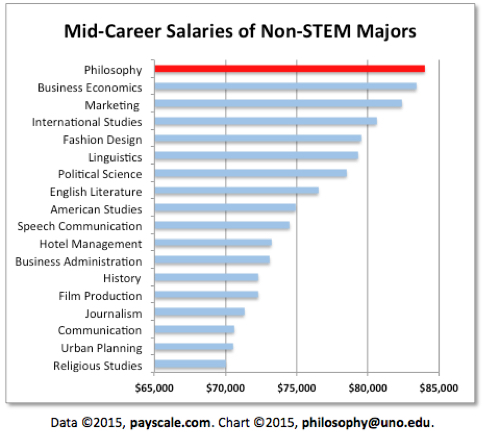
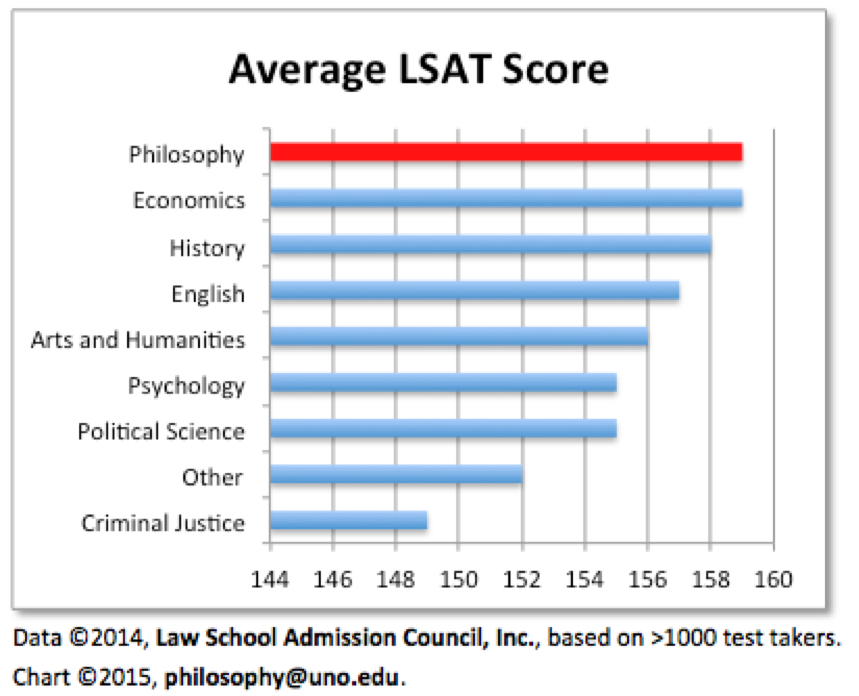
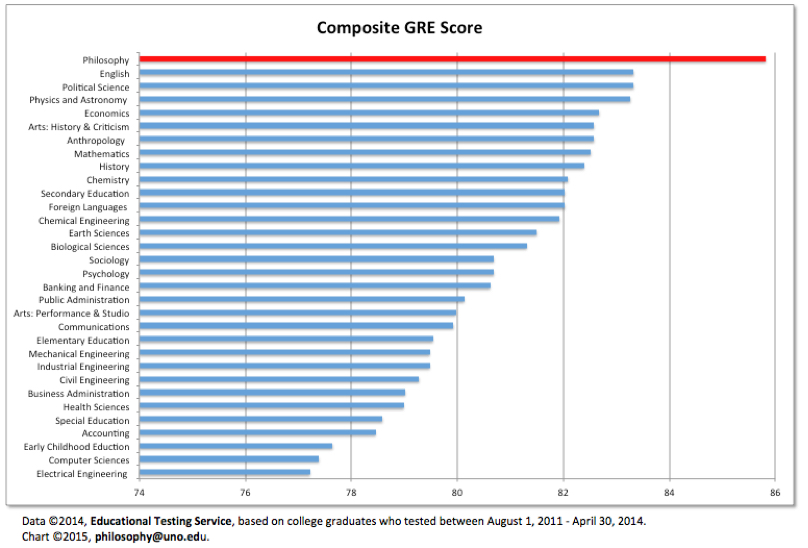
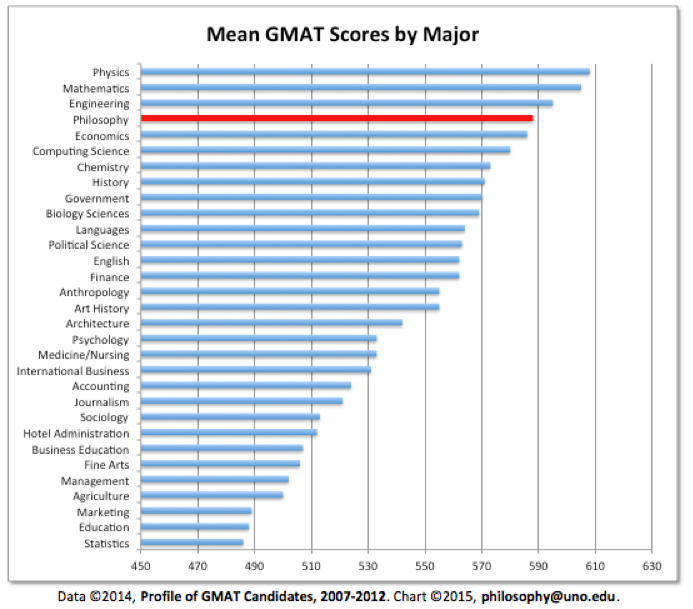


Follow Ramapo College