- About Ramapo
- Academics
- Admissions & Aid
- Student Life
- Athletics
- Alumni
- Arts & Community
- Quick Links
- Apply
- Visit
- Give
Can the IGG Center Assist in the Nancy Guthrie Case?
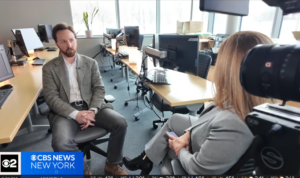
It’s possible. CBS News New York’s Christine Sloan sat down with Dr. David Gurney, director of the Ramapo College IGG Center, to learn more about what investigative genetic genealogy is and how it is used when law enforcement leads go cold.
What Is Investigative Genetic Genealogy?
IGG combines traditional genealogy and genetic genealogy to provide investigative leads in cases involving violent crime and unidentified human remains. IGG can also be used to help exonerate the wrongfully convicted.
Relying on informed consent and publicly available information, IGG begins with genetic genealogy databases that allow users to choose whether to make their DNA profiles available for IGG searching. First, a DNA profile derived from a biological sample belonging either to a perpetrator or an unidentified individual—either is referred to as the Subject—is uploaded to the databases. From those databases, IGG practitioners use statistical measures of relatedness based on amounts of shared DNA to determine likely relationships between the Subject and users in the databases. The bulk of IGG, however, relies on traditional genealogy – combing through public records to fill out the family tree belonging to the Subject in order to narrow in on that individual’s likely place in the tree.”
The IGG Center has solved more than 22 cases and has more than 50 active cases.

505 Ramapo Valley Road
Mahwah, NJ 07430
p: 201-684-7500
e: information@ramapo.edu
Copyright ©2026 Ramapo College Of New Jersey | Statements And Policies | Accessibility | Contact Webmaster.
Follow Ramapo