- About Ramapo
- Academics
- Admissions & Aid
- Student Life
- Athletics
- Alumni
- Arts & Community
- Quick Links
- Apply
- Visit
- Give
New Degree: Bachelor of Science in Pizza Studies
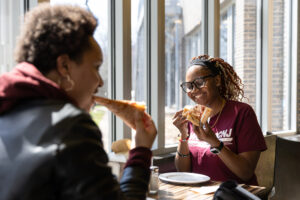
Fresh out of the oven: Earn a B.S. in Pizza Studies
About the Major
The Bachelor of Science in Pizza Studies at Ramapo College offers an interdisciplinary approach to understanding one of New Jersey’s, and the world’s, most influential foods. Drawing on coursework in biology, business, social science, humanities, and the arts, students explore pizza as a lens for examining culture, commerce, and community. From the science of fermentation to the global history of cuisine, from branding and consumer behavior to the psychology of comfort food, the program blends rigorous academic inquiry with hands-on, experiential learning. Whether analyzing supply chains or sampling regional styles, students develop critical thinking, research, and real-world problem-solving skills—one slice at a time.
A Bachelor of Science in Pizza Studies…it’s most certainly BS.
Program Requirements
CORE COURSES (8 Required)
PIZA 101 – Foundations of Pizza Studies
An introduction to the interdisciplinary study of pizza, including its cultural significance, economic impact, and scientific foundations. Students are introduced to key frameworks used throughout the major.
PIZA 120 – The Science of Dough: Fermentation and Food Chemistry
Explores the biological and chemical processes behind dough development, including yeast metabolism, gluten structure, hydration ratios, and baking conditions. Students will investigate how minor variations in technique can produce major differences in texture and flavor (and why everyone insists their preferred method is correct).
PIZA 150 – From Naples to New Jersey: A Global History of Pizza
Traces the evolution of pizza from its origins in Naples to its rise as a staple of American culture. Topics include migration, adaptation, and the emergence of regional styles, with particular attention to New Jersey’s rightful place in the national pizza conversation.
PIZA 210 – Pizza Economics: Markets, Pricing, and Supply Chains
Examines the economic systems behind pizza production and distribution, including commodity markets (wheat, dairy, tomatoes), pricing strategies, and small business models.
PIZA 230 – The Psychology of Comfort Food
Investigates the emotional and neurological factors that shape food preferences, including memory, nostalgia, and reward pathways. Special attention is given to pizza’s role in stress relief, social bonding, and late-night decision-making.
PIZA 260 – Branding the Slice: Marketing and Consumer Behavior
Focuses on how pizzerias build identity and customer loyalty in highly competitive markets. Students will explore branding, storytelling, and digital presence, as well as the subtle art of convincing someone that this is their new favorite place.
PIZA 310 – Pizza and Society: Community, Identity, and the “Third Place”
Explores the role of pizza shops as social and cultural hubs. Students will examine how pizzerias function as gathering spaces, neighborhood anchors, and informal institutions where conversations, connections, and occasional debates naturally occur.
PIZA 400 – Experiential Learning: Pizza Lab & Fieldwork
A hands-on course combining research, observation, and (responsible) sampling. Students will conduct site visits to local pizzerias, analyze operations and customer experience, and engage in applied learning through dough preparation and tasting comparisons. Final projects may include research papers, business analyses, or a well-supported argument for a “best slice.”
ELECTIVES (Choose at least 2)
PIZA 215 – Regional Styles: NY, NJ, Chicago, and Beyond
A comparative study of regional pizza styles, examining differences in crust, sauce, toppings, and preparation methods. Includes critical discussion of style authenticity and the boundaries of what can reasonably be called “pizza.”
PIZA 240 – Food Policy and Public Health
Explores issues of food access, nutrition policy, and public health, including debates around school lunch programs and dietary guidelines (yes, including that one).
PIZA 275 – Designing Appetite: Visual Communication in Food Culture
Examines how design influences perception and appetite, including menu layout, typography, packaging, and digital media. Students will analyze how visual cues signal quality, tradition, and, occasionally, oversized slices.
PIZA 325 – Music, Memory, and the Meal
Explores the relationship between music, memory, and dining experiences, with attention to Italian-American musical traditions, restaurant soundscapes, and the role of music in shaping atmosphere and nostalgia. Students will consider how what we hear influences what we taste (and why some songs make every slice feel more cinematic).
PIZA 330 – Entrepreneurship in the Food Industry
Covers business planning, financing, and operations for launching and managing a food-based enterprise.
PIZA 345 – Teaching Through Food: Pizza in the Classroom
Examines how food can be used as an engaging interdisciplinary teaching tool in elementary education. Students will explore lesson design incorporating math (fractions), science (states of matter), and social studies (culture and geography), with pizza serving as a highly effective—and widely appreciated—case study.
PIZA 355 – Pizza and Politics: Elections, Consumption, and Civic Life
Examines the relationship between food consumption and political behavior, with particular attention to reported spikes in pizza sales during major election events. Students will explore how stress, media consumption, and civic engagement influence eating habits, and how businesses respond to predictable patterns tied to debates, election nights, and other high-stakes moments. The course also considers the role of food in campaign culture, community gathering, and the informal rituals that accompany democratic participation (including where, when, and how people choose their election-night slice).
CAPSTONE
PIZA 450 – Senior Seminar in Pizza Studies
Students complete an interdisciplinary research project or business plan synthesizing knowledge from across the major.
Career Pathways in Pizza Studies
Graduates of the Pizza Studies program are uniquely prepared to pursue careers at the intersection of food, business, culture, and community—where analytical thinking meets excellent taste. With an interdisciplinary foundation and hands-on experience, alumni may go on to roles such as:
- Restaurant and hospitality management (with an advanced understanding of peak-hour slice logistics)
- Food entrepreneurship—opening the next must-visit pizzeria or late-night campus staple
- Brand strategy and marketing for food and lifestyle companies
- Supply chain and operations analysis (ensuring the strategic flow of dough, sauce, and mozzarella)
- Culinary research and product development
- Food journalism, criticism, and content creation
- Community-based food initiatives and nonprofit leadership
Graduates are also well-equipped for less formal—but equally important—roles, including:
- Office “pizza order lead” and consensus builder
- Trusted authority in all regional pizza debates (New Jersey, New York, and beyond)
- Menu strategist and group chat decision-maker
- Lifelong connoisseur of the perfect slice
Wherever their path leads, Pizza Studies graduates leave Roadrunners with the skills to think critically, engage thoughtfully, never settle for a subpar slice…and to always enjoy April Fool’s Day in the Ramapo College way!

505 Ramapo Valley Road
Mahwah, NJ 07430
p: 201-684-7500
e: information@ramapo.edu
Copyright ©2026 Ramapo College Of New Jersey | Statements And Policies | Accessibility | Contact Webmaster.
Follow Ramapo