(PDF) (DOC) (JPG)October 1, 2026
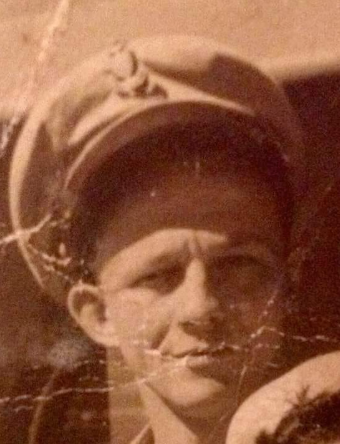
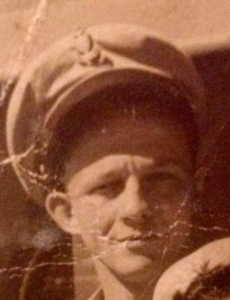
MAHWAH, N.J. – Forty-five years after an unidentified man was recovered from the Atlantic Ocean off Atlantic City, genealogical research conducted by the Ramapo College of New Jersey Investigative Genetic Genealogy Center helped restore his name: Glen Napoleon Burbage, a retired U.S. Coast Guard Chief Warrant Officer who disappeared in March 1981.
The identification marks another collaboration between the Ramapo College IGG Center and the New Jersey State Police, which have partnered on dozens of cases involving unidentified remains and missing persons.
On May 22, 1981, occupants of a recreational boat discovered the body of an unidentified man approximately one mile offshore from Raleigh Avenue in Atlantic City. Investigators believed he had died several weeks before his remains were recovered. Despite previous DNA testing and the entry of his DNA profile into the Combined DNA Index System, or CODIS, his identity remained unknown for more than four decades.
The Ramapo College IGG Center accepted the case from the New Jersey State Police in April 2026 after laboratory testing had produced a single nucleotide polymorphism, or SNP, profile that could be used for investigative genetic genealogy.
The case soon became part of an international hands-on learning experience led by Ramapo College in collaboration with the Centre for Forensic Science at the University of Technology Sydney and the New South Wales Police Force in Australia. During the weeklong investigative genetic genealogy bootcamp, undergraduate students and law enforcement professionals worked together on real-world casework while strengthening their IGG research skills.
Students working the Atlantic City case began building family trees and examining genetic and genealogical records in search of the unidentified man’s identity. Shortly after the bootcamp concluded, their research produced a significant lead: Glen Napoleon Burbage, born April 12, 1921, who had been missing since March 23, 1981.
The New Jersey State Police investigation subsequently determined that Burbage was a retired U.S. Coast Guard Chief Warrant Officer from Charleston, South Carolina. He had traveled by air to Atlantic City in March 1981 and was never heard from again.
To confirm the identification, the New Jersey State Police Missing Persons Unit worked with the South Carolina Law Enforcement Division to obtain a reference DNA sample from one of Burbage’s living children. A direct familial DNA comparison conducted by the New Jersey State Police Central Laboratory confirmed the identification in July 2026.
“For 45 years, Glen Burbage had a name and a family, even though investigators did not yet know who he was,” said Cairenn Binder, director of the Ramapo College IGG Center. “Investigative genetic genealogy gives us a way to revisit cases that once seemed to have reached the limits of available technology. It is especially meaningful to do that work alongside longtime partners like the New Jersey State Police and to give students the opportunity to contribute to a real investigation that can provide answers after decades of uncertainty.”
The identification builds upon a longstanding partnership between the Ramapo College IGG Center and the New Jersey State Police. Through their continued collaboration, Ramapo researchers and students apply investigative genetic genealogy to cases in which traditional investigative techniques have not produced an identification, while New Jersey State Police detectives pursue the investigative leads developed through that research and coordinate the forensic testing necessary for confirmation.
The Atlantic City investigation also demonstrates how the IGG Center combines casework with hands-on education. The Center’s collaboration with the University of Technology Sydney and New South Wales Police Force brought students and law enforcement professionals together to apply investigative genetic genealogy techniques to active cases—work that, in this instance, helped produce a lead within weeks.
“Students weren’t working through a hypothetical exercise,” Binder said. “They were contributing to an actual unidentified-person investigation, knowing that the research they were doing could ultimately help restore someone’s identity. That is an extraordinary learning experience, but it also comes with an extraordinary sense of responsibility.”
The investigation into the circumstances surrounding Burbage’s death remains open. Anyone with information regarding his disappearance or death is asked to contact the New Jersey State Police Missing Persons Unit at missingpinformation@njsp.gov. Anonymous tips are welcome.
To learn more about the Ramapo College Investigative Genetic Genealogy Center and its casework, research and hands-on learning opportunities, visit ramapo.edu/IGG.
###
About Ramapo College
Ramapo College of New Jersey is the state’s premier public liberal arts college and is committed to academic excellence through interdisciplinary and experiential learning, and international and intercultural understanding. The comprehensive college is situated among the beautiful Ramapo Mountains, is within commuting distance to New York City, was named one of the 50 Most Beautiful College Campuses in America by CondeNast Traveler, and boasts the best on-campus housing in New Jersey per Niche.com. Established in 1969, Ramapo College offers bachelor’s degrees in the arts, business, data science, humanities, social sciences and the sciences, as well as in professional studies, which include business, education, nursing and social work. In addition, the College offers courses leading to teacher certification at the elementary and secondary levels, and offers graduate programs leading to master’s degrees in Accounting, Applied Mathematics, Business Administration, Contemporary Instructional Design, Computer Science, Creative Music Technology, Data Science, Educational Leadership, Nursing, Social Work and Special Education, as well as a Doctor of Nursing Practice. To learn more about Ramapo College, visit ramapo.edu.

Press Release Archives
| 2026 | 2025 | 2024 | 2023 | 2022 | 2021 | 2020 | 2019 | 2018 | 2017 | 2016 | 2015 | 2014 | 2013 | 2012 | 2011 | 2010 | 2009 | 2008 | 2007 | 2006 | 2005 | 2004 | 2003 | 2002 | 2001 | 2000 | 1999 |
Follow Ramapo