The Bonnie Bornstein Fertel, z”l and Richard E. Fertel, z”l
Emerging Scholars Prize and Lecture in Holocaust and Antisemitism Studies
Each year, CHGS invites early-career scholars, who meet the conditions set forth below, to submit a proposal for a prize lecture to be delivered on Ramapo College campus in the spring semester. The lecture must draw upon original research in either antisemitism or Holocaust studies and from disciplines in the humanities and social sciences. Receipt of the award is conditional upon the in-person delivery of the lecture. Accommodations will be made for individuals with disabilities.
CHGS and the entire Ramapo Community would like to express our gratitude to Bonnie Bornstein Fertel z”l for endowing this annual lecture and prize in memory of her late husband, Richard E. Fertel, z”l. Mrs. Bornstein Fertel’s donation, given shortly before her own passing, reminds us that we can accomplish lasting achievements of consequence when we support each other.
Honors and Privileges
The 2026 Richard E. Fertel Scholar will offer an in-person lecture at Ramapo College at a time of mutual convenience during the months of March or April each spring semester.
The CHGS Director and a representative from Ramapo College will formally bestow upon the selected applicant the honor of having been selected as the year’s Richard E. Fertel Scholar. The honoree’s name and the title of their lecture will be listed on the CHGS website. Their name will be inscribed on a plaque hung in a location of distinction.
The Richard E. Fertel Scholar will receive an honorarium of $1,500. CHGS will also cover (reasonable) costs associated with return travel and accommodations in Mahwah, NJ.
The Richard E. Fertel Scholar may be invited to a small dinner in their honor, with Ramapo students, faculty, and staff, as well as members of the Fertel family and the local public.
Eligibility Requirements
This opportunity is open to:
- Graduate students who are ABD in the humanities or social sciences at the time of application.
- People who received their PhDs in the humanities or social sciences no earlier than May 2022, excluding tenured and tenure-track professors and academic center directors.
- All applicants must be based in (or traveling from within) North America.
To Apply
Email the following materials to holgen@ramapo.edu by 11:59 pm EST on October 31, 2026:
- Academic CV, not to exceed two pages.
- Lecture proposal including a title, theme(s), and primary contribution(s)/argument(s). Please also situate your lecture, as outlined, within your broader scholarly work. The proposal should not exceed 500 words.
Important Dates
Applications due by October 31, 2026
Winner announced by November 30, 2026
Lecture to be scheduled for March or April, 2027
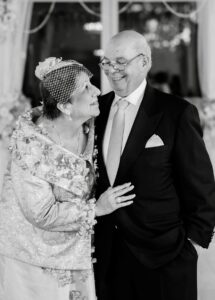
Bonnie and Richard Fertel
Richard E. Fertel z”l (March 29, 1951 – October 22, 2022) was born and raised in the Bronx, where he, his brother, and parents lived in the same walk-up apartment building as his grandparents, Helen and Oscar. Oscar, who immigrated to the United States from the Russian Empire in 1904, had a profound influence on young Richard. He took him, eight-years-old at the time, to the opening of the Guggenheim Museum and to AT&T shareholder meetings; they worshiped together each week at the neighborhood Orthodox synagogue for the Sabbath. Richard’s family never discussed any relatives lost in the Holocaust but he understood what it meant when letters from family members in Europe ceased during the war, forever.
Bonnie Bornstein Fertel z”l, Richard’s wife of fifty years, shared that her husband’s warmth and humor provided the foundation for many loving family tales. Richard and Bonnie married at the young age of twenty-one. In significant ways, they grew up together. Richard studied history and anthropology in college, reflecting his lifelong, insatiable hunger for knowledge and his particular interest in the Second World War. Bonnie recalls that Richard must have seen every Holocaust film multiple times. Richard, blessed with a flair for storytelling, shared what he learned and knew with Bonnie and their two daughters, Pamela and Jill.
To honor Richard’s lifelong interest in the history of the Holocaust and raising awareness about antisemitism, Bonnie has endowed an annual lecture and prize for emerging scholars working in the fields of Holocaust and antisemitism studies. We were devastated that Bonnie passed away before she could attend the inaugural lecture. We extend our condolences and gratitude to Richard and Bonnie’s family for their losses and continued support.
Follow CHGS