Notes on our Announcements
All times given in Eastern Standard Time
All events are free and open to the public
For more info and parking, email: holgen@ramapo.edu.
Fall 2026 Events
“The Holocaust by Bullets in Ukraine: A Photograph, a Family, a Massacre Revealed,” with Dr. Wendy Lower
Tue., Sep. 8 at 7:30 via Zoom (Click to register for free)
Join us for a fascinating discussion in preparation for our forthcoming exhibition, “The Landscape of our Memory.” Please join us for the opening on Wed., Sep 16 from 5:00 pm to 7:00 pm in the Kresge Gallery.
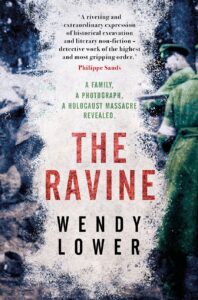
Dr. Lower’s latest book, The Ravine: A Family, a Photograph, a Holocaust Massacre Revealed, investigates a single photograph—a rare “action shot” documenting the horrific final moment of a family’s murder in Ukraine. Through years of forensic and archival research, Lower sought to uncover the identities of the photographed and in the process recovered new details about the Nazis’ Holocaust by Bullets in eastern Europe, the role of the family unit in Nazi ideology, and a rare case of rescue and postwar justice.
Wendy Lower is the John K. Roth Professor of History at Claremont McKenna College. She chairs the Academic Committee 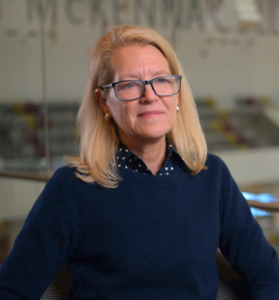 and has published several books on the Holocaust in Ukraine including Nazi Empire-Building and the Holocaust in Ukraine (2005), and co- editor (with Ray Brandon) of Shoah in Ukraine: History, Testimony, Memorialization (2008). Her work on gender and the Holocaust, Hitler’s Furies: German Women in the Nazi Killing Fields (2013) was a finalist for the National Book Award and has been translated into 23 languages. Lower’s The Ravine: A Family, A Photograph, A Holocaust Massacre Revealed (2021) received the National Jewish Book Award in the Holocaust category and was shortlisted for the Wingate Prize, and longlisted for a PEN. Lower just co-authored with Jonathan Petropoulos, Himmler’s Last Days: The End of Nazi Terror, appearing in 2027 with Mariner Books.
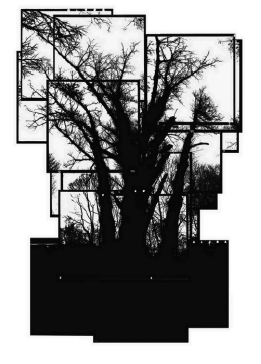
Witness and Living Memorial Tree
Gabriela Bulišová and Mark Isaac
An exhibition commemorating the “Holocaust by Bullets” and its more than two million victims.
The Landscape of our Memory is a haunting and original exhibition by Prague artists Gabriela Bulisova and Mark Isaac. It is part of a long-term project that addresses the “Holocaust by bullets” by commemorating the more than 2 million people who were murdered in or near their hometowns rather than in death camps. As every technique is rooted in the landscape, the project has an environmental sensibility that suggests a relationship between genocide and ecocide. (More on the artists’ website).
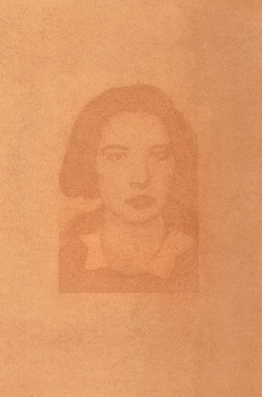
Anthotype Portrait
Gabriela Bulišová and Mark Isaac are multidisciplinary artists who collaborate on intimate projects designed to bridge the gap between fine art and documentary practices.
With Gratitude to our Co-Sponsors
- Center for Holocaust and Genocide Studies, Ramapo College
- Ramapo College Art Galleries and the Berrie Center
- Sam & Sara Schoffer Holocaust Resource Center, Stockton University
- Stockton University Art Gallery
“… Cursed be the ground because of you; By toil shall you eat of it all the days of your life… until you return to the ground—for from it you were taken. For dust you are, and to dust you shall return.” – Genesis 3:17-19
“What have you done? Hark, your brother’s blood cries out to Me from the ground! Therefore, you shall be more cursed than the ground, which opened its mouth to receive your brother’s blood from your hand. If you till the soil, it shall no longer yield its strength to you. You shall become a ceaseless wanderer on earth.” – Genesis 4:10-12*
The Landscape of our Memory questions the artificial separation of blood and soil. So too do the Edenic allegories, which open in divine harmony. We meet the earth as the material source of human life and the physical locus of its oblivion. The first humans—the parents of us all—achieve discernment, against their creator’s will. Humanity thus learns to distinguish (and therefore must choose) between good and evil, and between the necessity of life and inevitability of death. No longer in balance with nature, much less each other, we sweat against the land, suffer for new life, and fear for our earthen bodies. Terror leads Cain, the first human child, to murder his younger sibling. The latter’s blood—his lifeforce, in biblical terms—calls to the heavens from the very earth into which it should have naturally returned. Human hands rent the vestiges of prelapsarian harmony, and so we carry the curse of alienation from the earth and each other.
One by one, the Nazis and their collaborators shot to death over two-million Jews and members of other targeted minorities, notably Roma, as they built an empire of blood and soil across Eastern Europe. They sought to resolve existential fear by rendering humanity into distinct races arranged along a hierarchy of moral worth. The intimacy of these murders scarred the earth, like the mass graves they left behind. Generations later, they reveal Cain’s lasting mark upon us.
With The Landscape of our Memory, Gabriela Bulišová and Mark Isaac offer stunning glimpses of reharmonization. They help us sense the blood that still calls out from the killing fields of the Holocaust, flows through nearby rivers, and whistles among trees that witness but cannot see. Anthotype victim portraits, created with flora from sites of mass murder, reterritorialize the dead and imbue earthen materials with lives cut short. Through the artists’ edenic lens, genocide and ecocide appear almost indistinguishable. The Landscape of our Memory points to the fundamental wholeness of our world and humanity, at a moment of profound rupture—a reminder of the responsibility we collectively assumed when we endeavored, in our imperfection, to tell good from evil.
The Center for Holocaust and Genocide Studies at Ramapo College of New Jersey (CHGS) is committed to helping its students and patrons approach humanity’s greatest horrors through the arts. As the preeminent Holocaust scholar and survivor Yehuda Bauer (1926-2024) indicated in Rethinking the Holocaust, a handful of academic disciplines cannot fully satisfy our need to understand and work through the Holocaust (along with other genocides and mass atrocities). We also depend, he explains, upon the vision of the artist, the wisdom of the philosopher, and the care of the therapist. It is an honor to have worked with so many talented organizations and individuals to bring this exhibit to life. On behalf of CHGS, I would like to thank Gabriela Bulišová and Mark Isaac for their kindness, generosity, and cooperation, not to mention their artistry. We are grateful to Sydney Jenkins, Robert Modafferi, and the Ramapo College Galleries. CHGS also owes special thanks to Irvin O. Moreno-Rodriguez and our colleagues at the Sara & Sam Schoffer Holocaust Resource Center at Stockton University.
* Translation from the Revised JPS Edition (2023).
Convo: Gabriela Bulisova and Mark Isaac (Prague)
Join us for an informal conversation with the artists who created The Landscape of our Histories, a fantastic, multimodal exhibition commemorating the victims of the “Holocaust by Bullets” and pointing to the entwinement of genocide and ecocide.
This talk will appeal to students, faculty, staff, and community members interested in the artistic process, managing a career as a working artists, producing art in foreign countries, and the personal connections of the artists to their work.
The Landscape of our Memory will open on September 16, with a reception from 5:00-7:00 pm in the Kresge Gallery at Ramapo College. The exhibition will remain open through December 4, 2026.
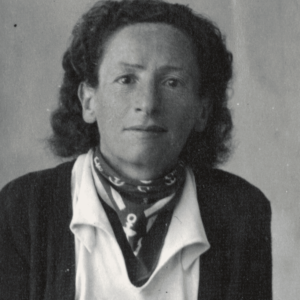 In 1912, Chawa Złoczower, a Jewish Polish immigrant made her way to the US and soon helped publicize the anarchist speeches of Emma Goldman. Later, Złoczower took the name Eve Adams, and toured America, getting paid to sell radical leftist magazines. In 1925 she published a unique, pioneering book, Lesbian Love, containing stories of women she had met. Her activism drew the Ire of US FBI Director J. Edgar Hoover, ultimately leading to Adams’ deportation back to Poland and tragic murder in Auschwitz. Join Jonathan Ned Katz, historian and author of the 2021 biography, The Daring Life and Dangerous Times of Eve Adams, for a conversation about Adams’ adventurous life, his work to uncover her story as a vibrant resistor, and what it means in today’s troubled social world.
This event is part of the 2026-27 Harriet & Kenneth Kupferberg Holocaust Center (KHC) and National Endowment for the Humanities Colloquium (NEH), “Storytelling in/as Resistance.” The CHGS at Ramapo College is a proud cosponsor.
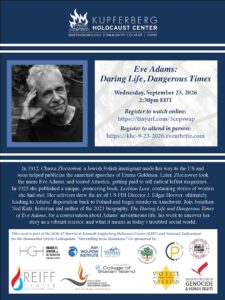
Click Here to Register for the Zoom Webinar
You may also attend in person (in Queens).
The first written account of an anti-Jewish folktale is a tale of English or German origin, published in 1228. From the Middle Ages to the Modern Era, these folktales helped fuel the anti-Jewish prejudice prevalent within and beyond Western society. By the nineteenth century, the tales assisted in paving the way for anti-Judaism to transition into antisemitism; subsequently, the Nazis were then able to capitalize on these stories as objects of antisemitic propaganda. Join Dr. Sofia Lago, Lecturer of English for Academic Purposes at Suzhou University, for a discussion about how these counternarratives served to inflame rampant antisemitism perpetuated by Hitler’s Nazi party.
This event is part of the 2026-27 Harriet & Kenneth Kupferberg Holocaust Center (KHC) and National Endowment for the Humanities (NEH) Colloquium, “Storytelling in/as Resistance.” CHGS is a proud cosponsor.
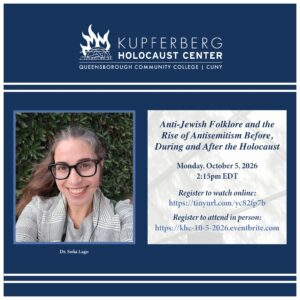
KHC Graphic announcing the event with headshot of the speaker. All text is copied in the website.
Click Here to Register for the Zoom Webinar
You may also attend in person (in Queens).
Join the Ramapough Munsee Indigenous Partnership Task Force in honoring June VanDunk and the artwork she generously gifted to our school. Hear from June and the other guest speakers as they share stories and perspectives celebrating Ramapough history, culture, and community.
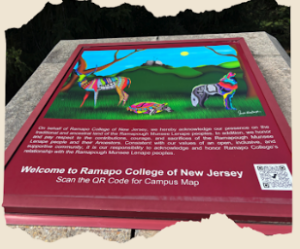 CHGS proudly co-sponsors initiatives like this one because they draw attention to communities victimized by genocide and racism by focusing on their cultures and histories. This helps prevent us from seeing them as objects of history, rather than its actors. It defies the tendency to flatten complex societies into the category of “victim.” If genocide is a process of physical and historical erasure, programs like this one should be seen as an act of prevention against long-term effects of genocide and historical silencing.
Co-sponsored by the Office of Access, Belonging and Community, the Center for Holocaust and Genocide Studies, and Allies of the Ramapough Munsee.
Rain location: Friends Hall
 Register for the Zoom webinar here (no cost)
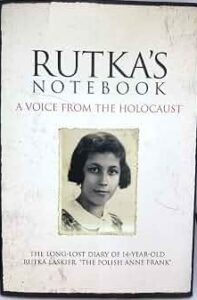
Rutka Laskier shares a birthday (including the year) with Anne Frank. She left behind a diary as well, detailing her experiences as a Jewish youngster coming of age under Nazi rule. Like Anne, Rutka was murdered in the genocide of European Jews. This year, the students in Dr. Labendz’s Holocausts course will discuss the similarities and differences in the experiences of these two girls, what they can teach us about the Holocaust, and their implications for how we thing about Holocaust memory.
Join us for a discussion with theater producers, Amy Langer and David Schwartz, who are preparing a stunning, contemporary indie-rock opera based on Rutka’s Notebook.
The producers describe their project, “Someday Soon,” as follows:
Fourteen-year-old Rutka Laskier is determined to live like any other teenager. She falls in love. She pushesboundaries. She dreams about tomorrow. But, as Nazi rule tightens around her, simply continuing to live, love and imagine a future becomes an act of courage. When the future she imagines is no longer hers to choose, Rutka sets in motion a plan with her Polish Catholic friend, Stasia, to ensure that her words, and the people she loves, will not disappear. Inspired by Rutka’s real and unforgettable diary, Someday Soon brings her teenage voice vividly to life through a stunning contemporary indie-rock score that connects with audiences across generations. Join us for a behind the scenes look from diary to stage with the producers, Amy Langer and David Schwartz. Instagram: @someday soon_musical Website: www.somedaysoonmusical.com
The Open Classroom series invites scholars and other luminaries into Ramapo Classrooms and livestreams their conversations for the benefit of the public.
Rutka’s Notebook is currently out of print. We advise you to purchase through resellers.
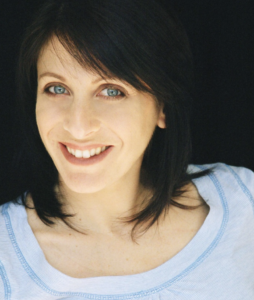

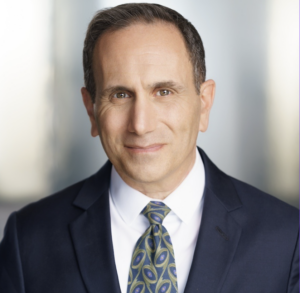
Beyond Unity – Bridging Gaps in Polarized Times. We live in polarizing times, which can strain our relationships, institutions, and communities. The upcoming midterm elections promise to exacerbate this problem further, even as experts debate root causes. Rather than pine for (mostly imagined) days of unity and civility, we will discuss strategies for productive outreach and communication, based in empathy, mutual benefit, and a commitment to learned understanding.
 Paths to Understanding is our semesterly collaboration with Ridgewood Public Library. We come together to discuss our shared society, the challenges we face, and strategies for navigating polarizing times.
Register for the Zoom Webinar (Free)
October 22, 2026 / 7:00 – 8:00 p.m.
Our Panelists
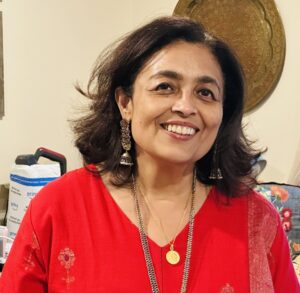
Dr. Ruma Sen
Professor of Communications
Ramapo College
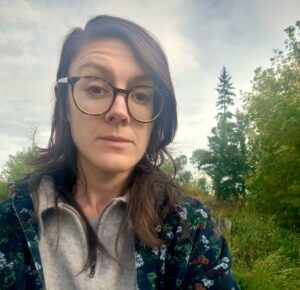
Celeste Inez Mathilda
Analog printmaker, farmer and mental health counsellor, Manitoba, Canada
Moderated by Dr. Jacob Ari Labendz, CHGS Director
Register Now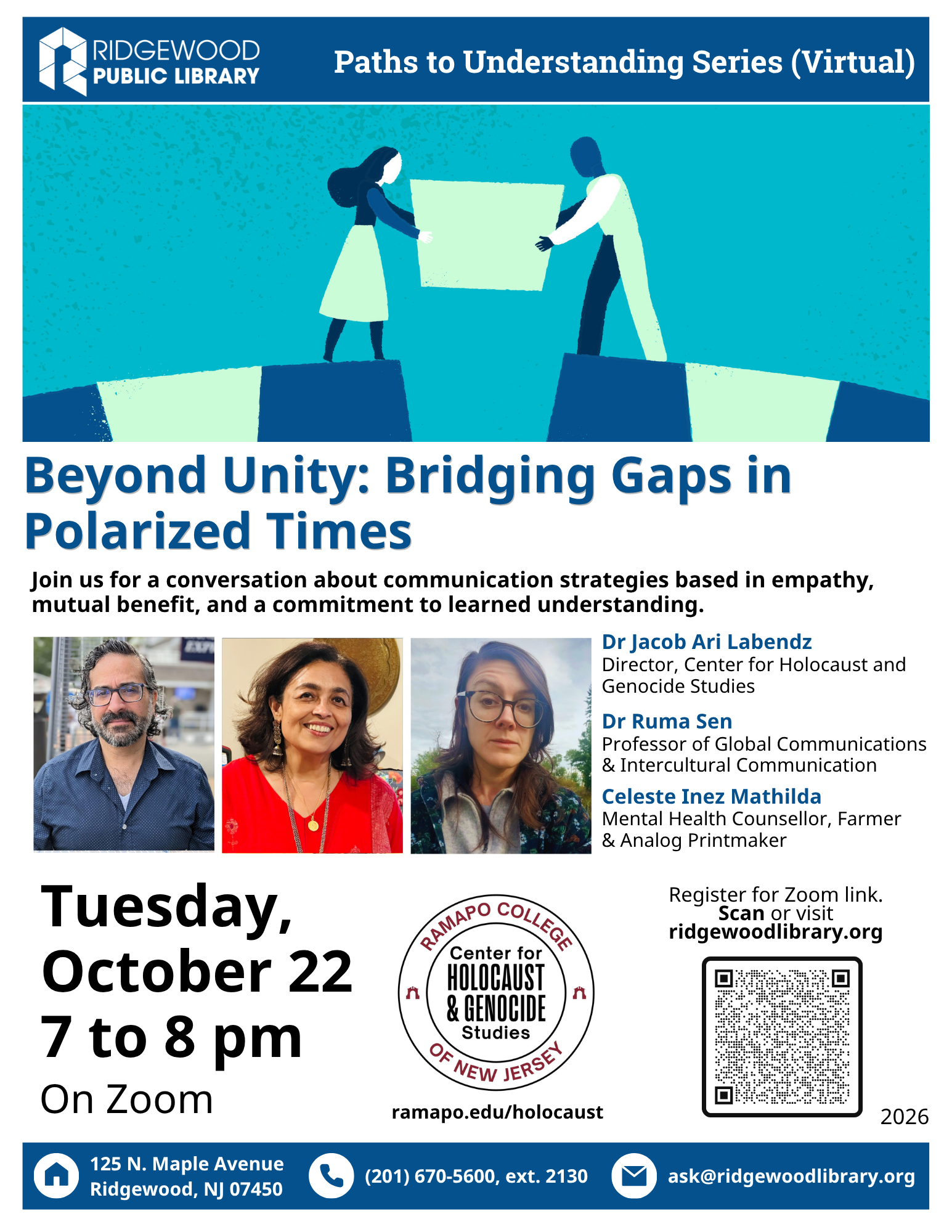
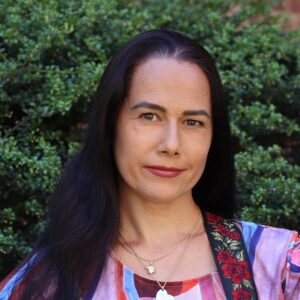
Dr. Petra Gelbart, a Ramapo professor, ethnomusicologist, and therapist, will speak about the Samudaripen (the genocide of Roma during the Second World War) and her experiences as a Romani scholar and activist in this semester’s course on the Holocaust taught by CHGS Director Jacob Ari Labendz.
We will engage with a difficult past and explore the ongoing racism faced by Roma in their home countries, including (and entwined with) their decades-long struggle to have the history of their victimization and genocide acknowledged by the general public. Emphasis will be placed on the Czech and Slovak cases, reflecting Dr. Gelbart’s heritage and experiences.
The Open Classroom series invites scholars and other luminaries into Ramapo Classrooms and livestreams their conversations for the benefit of the public.
Presented by Stuart Weinstock, who will introduce the film and lead a discussion afterwards.
The event will take place in Friends Hall.
Dir. Eric Friedler and Michael Lurie, From Darkness to Light (The Syndicate, 2024)
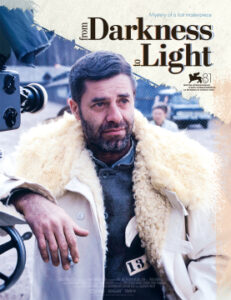 From the producers, “… From Darkness To Light provides never-before-seen insights into one of Hollywood’s greatest mysteries: comedy legend Jerry Lewis’ last self-directed movie, The Day The Clown Cried, a project that was publicized and anticipated worldwide in 1972, but suddenly disappeared under the most mysterious circumstances, never to be seen… For more than 50 years dubious theories swirled around this so-called “lost movie”, but new light has been shed on the darkness of what really happened. Our historical treasure hunt unfolds with numerous celebrities and Hollywood companions of Lewis’ weighing in on his enduring legacy and ambition. Witness extensive never-before-seen production footage and behind-the-scenes impressions from the original “lost masterpiece” itself, presented in a comprehensive, entertaining and lively narrative structure.
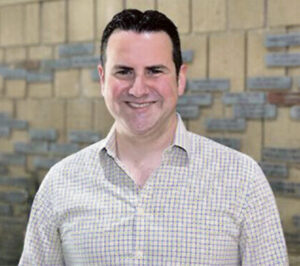
Stuart Weinstock directs the NJ Jewish Film Festival, as well as film programming for the JCC in MetroWest. Mr. Weinstock is an award-winning filmmaker. He also teaches film-related courses at Columbia University and Ramapo College of New Jersey.
Previous Years’ Programs
Lectures and Programs, 2025-2026
Lectures and Programs, 2024-2025
Follow CHGS